






A card vending route is easy to start and hard to run well. The difference between the two is almost never the machine — it is whether anyone sat down beforehand and wrote a plan that survived contact with a real venue. A business plan for a card vending route is short by nature: one page of numbers, one page of site assumptions, one page of operating routine. This article sets out what belongs on each page.
1. Start from vends per day, not from the machine price
Every plan begins with an estimate of how many vends a day a site will produce, and this is where most plans quietly lie to themselves. Do not use a supplier's “typical” figure. Count footfall at the exact location, on the exact days and hours the venue trades, and discount it hard for the share of people who are collectors, who are carrying payment, and who will notice a vending machine.
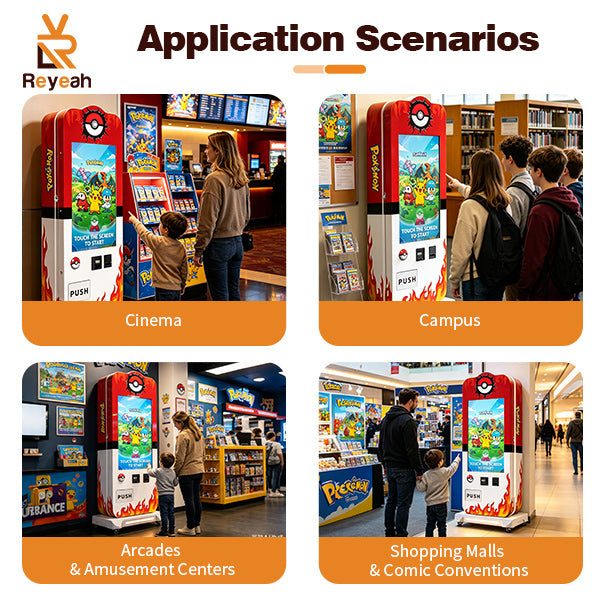
For context on what different venues produce, our guide to where to place a TCG vending machine ranks seven venue types by traffic pattern rather than by raw headcount. A station concourse and a hobby shop entrance can have similar footfall and completely different conversion.
2. Model the unit before you buy the unit
Once you have a vends-per-day estimate, the rest is arithmetic. The minimum viable model needs six inputs: price per vend, product cost per vend, vends per day, location commission, fixed monthly costs and landed machine price. Everything else is derived — monthly gross, monthly net, annual net, payback.
Two discipline points make the model credible. First, model payback at half your expected volume and check the business still works; if it only works at the optimistic number, you do not have a margin, you have a hope. Second, put your own currency and your own freight into the model, because imported hardware makes landed cost meaningfully higher than the list price. The cost and ROI calculator runs exactly this model and will produce the payback figure your plan needs.
3. Write down the site assumptions you are betting on
A plan is only as good as the assumptions it records. Write them explicitly, because six months from now you will want to know whether you were wrong about the venue or wrong about the machine. The assumptions worth recording for every site:
- Footfall counted, on which days, at which hours, and by whom.
- Written commission or rent terms — a verbal agreement is not a term.
- Who restocks, how often, and the travel time from your other machines.
- Power and access: socket type, loading access, lift or stairs.
- Permission: who signs, and whether the venue can ask you to remove the machine at short notice.
That last point matters more than operators expect. A site that can terminate in thirty days changes your payback calculation, because the machine has to earn its cost back inside the occupancy you can actually count on.
4. Plan the first ninety days as an operating routine
Most new routes fail operationally before they fail financially: stock runs out on a Saturday, a jam goes unreported for a week, or nobody knows which channel sells. The first ninety days should be written as a routine rather than a target.
Practically that means a restocking cycle fixed in advance (weekly is common for a busy card site), a stock threshold per channel, a named person responsible for responding to machine alerts, and a weekly review of sales by channel. That review is where the machine pays for itself over time, because it tells you which series to widen and which to drop. Our guide to choosing card vending hardware covers the telemetry features that make this routine cheap to run.
5. Budget the numbers people leave out
Three costs sit outside the machine invoice and inside every realistic plan: card processing (a percentage plus a fixed fee per transaction, which bites hardest on low-priced packs), restocking labour (hours per visit times visits times your hourly rate), and a maintenance and spoilage reserve. The third one is not optional. Cards are a product with a secondary market, and a damaged pack is a refund, not a sale.
Add those three before you compute payback, not after. A plan that omits restocking labour typically overstates monthly net by a fifth or more.
Conclusion
A card vending business plan does not need to be long, but it does need to be specific: counted footfall, a modelled payback at half volume, written site terms, a ninety-day operating routine, and the three forgotten costs. Write it before you order hardware — the exercise will tell you whether the site is worth the machine. When you have your numbers, send them to us and we will match a configuration to the space and volume you are actually projecting.