






Ask two operators with identical perfume vending machines why one clears $900 a month and the other clears $180, and the answer is almost never the machine. It is where the machine stands. This guide ranks eight venue types by the three numbers that actually decide a location — footfall, the share of that footfall willing to spray a fragrance in public, and the rent or commission the venue charges — and answers the question every new operator asks first: where to place a perfume vending machine.
1. The three numbers that decide a perfume vending site
Before ranking venues, fix the arithmetic. A perfume vending machine earns from vends, and vends come from a chain you can estimate in advance:
- Footfall. How many people pass within three metres per day, and at what hours.
- Dwell and intent. People in transit (a station corridor) convert far worse than people already in a browsing mood (a mall concourse, a hotel lobby at check-in). A 2,000-person transit footfall can earn less than a 400-person browsing footfall.
- Cost of the space. Fixed rent, revenue share, or both. A 15% site commission on a $2.00 spray is $0.30 — meaningful but survivable. A $600 monthly minimum against a site doing 150 sprays is not.
Run the contribution model first: at a 0.13 ml dose, fragrance at $0.30/ml costs about $0.039 per spray; add a 15% site commission and 3.5% payment fees and a $2.00 vend contributes roughly $1.59. Every venue below is then judged on how many $1.59 contributions it can plausibly produce per month. Our cost per spray breakdown has the full model if you want to plug in your own fragrance cost.
2. Tier 1 — hotels and airports
Hotels. The single best venue type for perfume sampling, because three conditions line up: guests are away from home and did not pack a full fragrance wardrobe, they are in a dwell state rather than a hurry, and the lobby is a waiting room by design. A 4-star city hotel lobby with 300–600 guests a day is a realistic 10–25 vends a day site. Airport hotels and resort hotels with pools convert better than business hotels, where guests arrive late and leave early.
Airports. Highest footfall of any venue on this list and the highest rent. Airports also carry a structural problem: duty-free retail already sells fragrance inside the terminal, and airport authorities frequently grant category exclusivity to the duty-free operator. Before you price an airport deal, confirm in writing that fragrance sampling is not an excluded category. Where it is permitted, the wall-mounted format usually wins because floor space in a terminal is priced per square metre and rarely available.
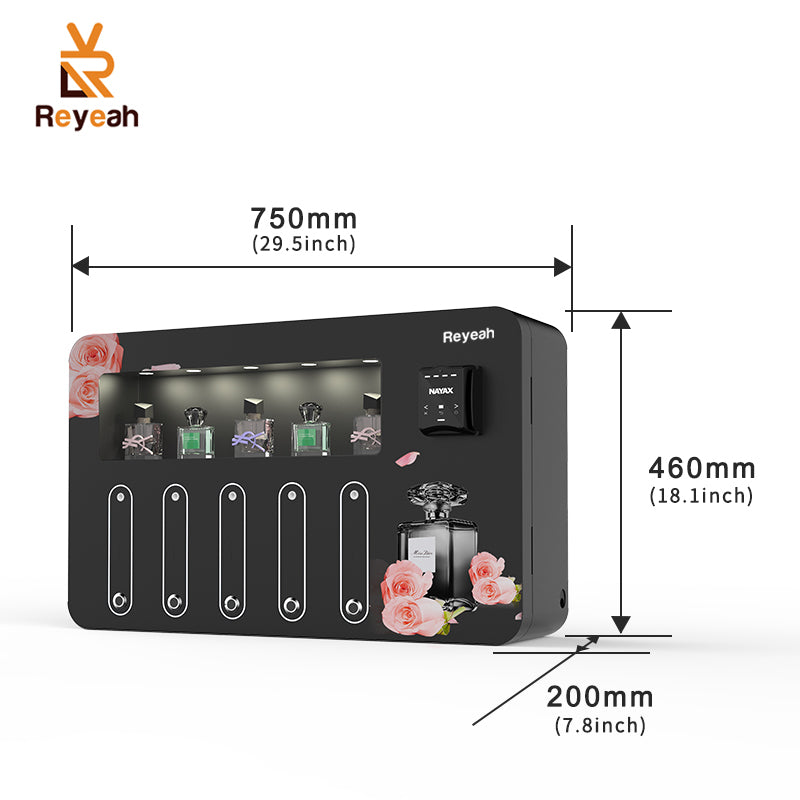
Both venue types reward a machine with a screen: a hotel guest who has never seen a fragrance vending machine needs to be told what it does in about two seconds. The P02 PRO wall-mounted unit with advertising screen exists for exactly this placement.
3. Tier 2 — shopping malls and department store concourses
Malls remain the default answer for perfume vending, and the traffic is genuinely good — but the economics are decided by where inside the mall you stand. A kiosk position on the main concourse can cost ten times a position in a service corridor, and the service corridor usually earns a tenth as much. The only defensible mall positions are those within sight of a beauty, pharmacy or fashion anchor tenant, because that is where the browsing intent already is.
Ask the mall three questions before discussing rent: what is the permitted trading footprint, is there a power outlet within cable reach on the intended wall, and does the lease allow a wall-mounted unit at eye height rather than a floor-standing unit. Malls also commonly cap the number of vending units in a zone, so check whether a competitor already holds a position in the same corridor.
4. Tier 3 — nightlife, casinos and entertainment venues
Nightlife venues and casinos produce the highest vends per hour of any site type, because the customer is dressed for the occasion and fragrance is part of the night out. A casino floor, a large nightclub, a cocktail bar or a KTV (karaoke box) chain can deliver 30–60 vends on a Friday night. In East Asian markets the KTV box is the nightclub equivalent: private rooms, a captive audience, and a corridor where a wall-mounted unit fits without taking floor space. Two constraints keep this tier out of first place: hours are concentrated into two or three nights a week, and the venue's own security requirements usually mean a staffed or supervised position rather than an unattended one.
For these sites, price per spray matters more than anywhere else. A $2.00 spray in a nightclub is an impulse purchase; a $4.00 spray invites a queue argument. Model the site at the price the crowd will actually pay, not the price your other sites support.
5. Tier 4 — beauty salons, barbershops and pharmacies
Small-footprint, high-intent venues. A salon sees 30–80 clients a day, but those clients are already thinking about how they smell, and the staff become your best salespeople for free. Pharmacies sit in the same tier: health-and-beauty footfall, a queue to stand in, and a natural fit between the counter and the exit.
Where this tier wins is cost. Rent is often a flat $100–$300 a month, or simply a favour in exchange for the machine's data and a small commission. Three salons at $250 rent each can beat one mall kiosk at $900 for the same capital. What you give up is ceiling: a salon site will not scale past its own client list.
6. The venue comparison table
| Venue type | Daily footfall | Realistic vends/day | Typical space cost | Main risk |
|---|---|---|---|---|
| Airport terminal | 10,000+ | 20–60 | High fixed rent or revenue share | Duty-free category exclusivity |
| 4-star hotel lobby | 300–600 | 10–25 | Low rent or commission only | Seasonality; brand standards approval |
| Mall concourse (anchor-adjacent) | 2,000–8,000 | 15–40 | Mid to high fixed rent | Position quality; zone exclusivity |
| Casino or nightclub | 500–3,000 | 0–60 (weekend heavy) | Commission or supervised position | Compressed trading hours |
| Beauty salon / barbershop | 30–80 | 2–6 | $100–$300 flat | Low ceiling per site |
| Pharmacy | 300–1,200 | 4–12 | Low flat rent | Counter staff turnover |
| Transit corridor | 5,000+ | 3–10 | Mid rent | Zero dwell; almost no conversion |
| Office lobby | 200–800 | 3–9 | Very low | The same faces every day, so demand saturates |
Read the table by contribution, not by footfall. The transit corridor has the second-highest traffic and the worst realistic revenue, because nobody stops in a corridor to try a fragrance. A perfume vending machine location is only worth its rent when the people passing have a reason to stop, and that is the single filter to apply to every site on your list.
7. The contract terms that decide whether a site works
Five clauses decide the deal, and none of them is the headline rent:
- Commission basis. Percentage of gross vends, or percentage after payment fees? Put it in writing as a formula, not a number.
- Category exclusivity. Both directions — can the venue place another fragrance unit, and are you excluded from selling near an existing fragrance tenant?
- Power and connectivity. Who pays for the outlet, and is there a usable mobile signal where the machine stands. A machine placed in a basement level with no signal needs an alternative telemetry path.
- Access hours for restocking. A site that only allows refills before 08:00 adds a real labour cost to every visit.
- Termination notice. Thirty days is workable. Ninety days on a site that does six vends a day is an expensive mistake.
8. Test the site before you sign a year
Place a machine on a one-month trial wherever the venue will allow it, and set the trial price at what you intend to charge. Judge the site on three readings from the machine's own dashboard: vends per trading hour (which tells you whether the footfall converts), sell-through by channel (which tells you whether your five or ten fragrances match the crowd), and refunds or failed vends (which tells you whether the placement is causing jams or confusion). Our maintenance and refill guide explains how to read those three signals on a weekly route.
A site that produces under five vends a day for a month will not double in month three. Move the machine rather than discount the spray.
FAQ
Where is the best place to put a perfume vending machine? A 4-star hotel lobby or an anchor-adjacent mall concourse — venues with real dwell time and moderate rent. Airports have the most traffic but the highest rent and the most category restrictions.
How much does a good perfume vending machine location cost? Salons and pharmacies often lease space for $100–$300 a month, hotel lobbies usually accept a commission-only arrangement, and mall concourses typically start at several hundred dollars a month. Airport positions are priced per square metre and are rarely available to independent operators.
Do I need a beauty salon or pharmacy to sell perfume legally? No. A vending machine dispensing fragrance samples is retail, not pharmacy practice, but you do need product labelling that meets the destination market's cosmetics rules — see our compliance checklist for perfume sampling machines.
How many sprays a day should a site produce? A well-placed hotel or mall site produces 10–25; a salon 2–6; a nightlife site is highly variable between weekdays and weekends. Under five a day for a month means the placement, not the price, is the problem.
Can one venue host more than one machine? Rarely worth it. A second unit in the same lobby splits the same footfall and doubles the rent conversation. Add machines across venues, not inside them.
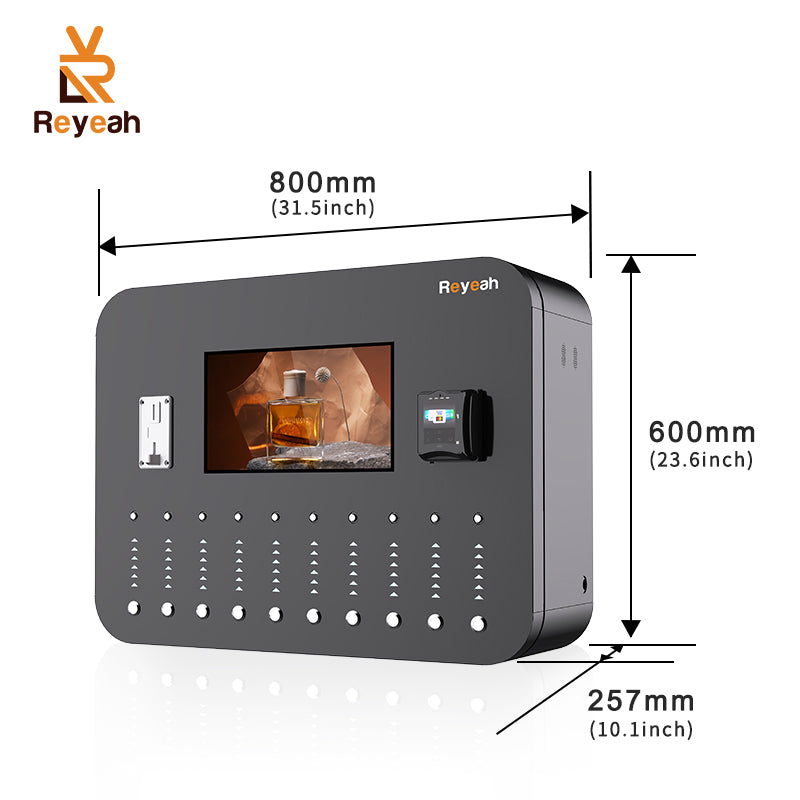
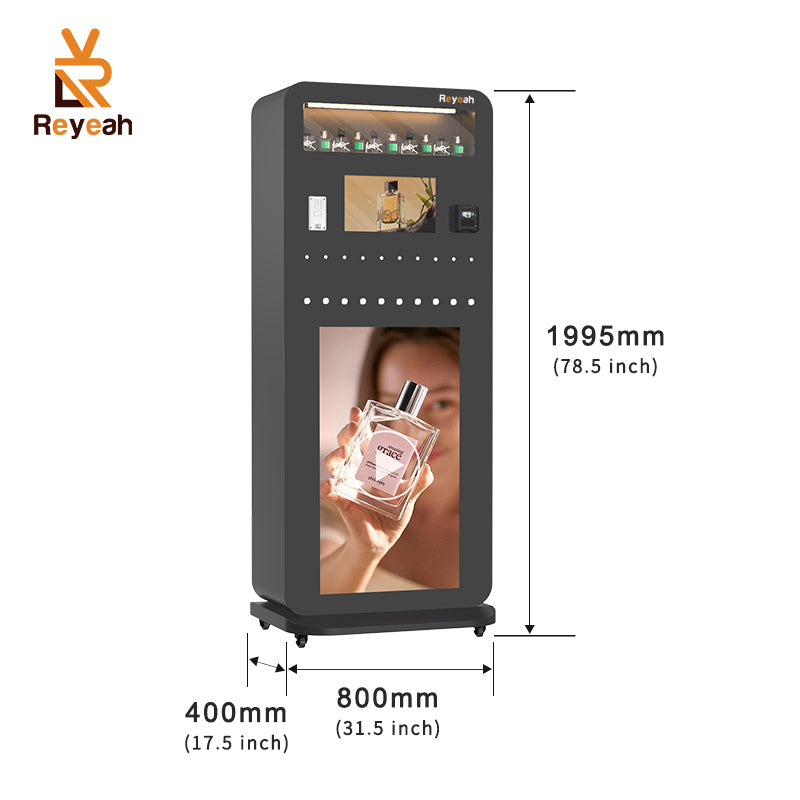
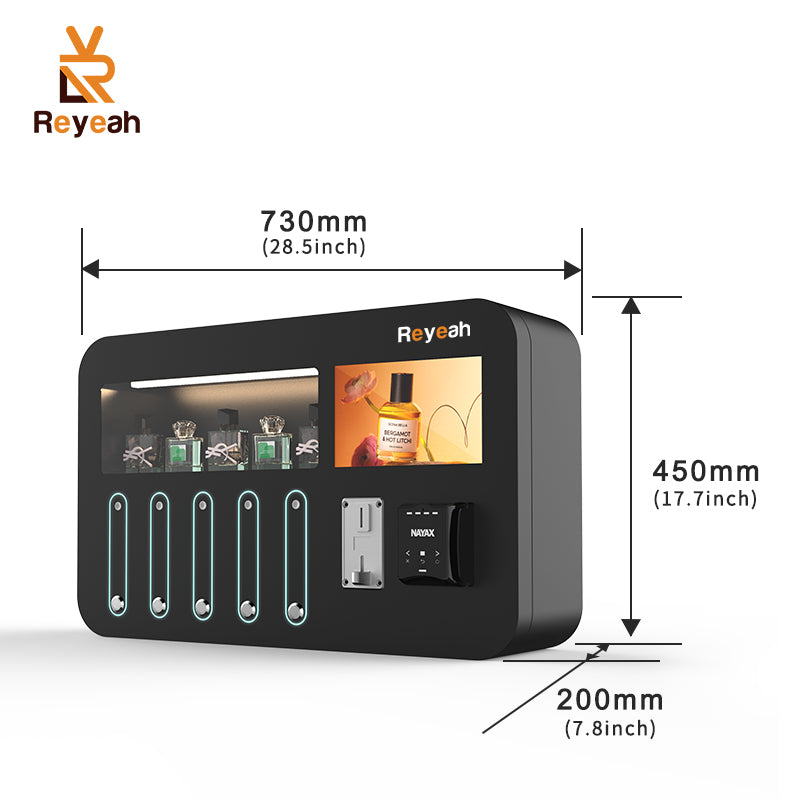
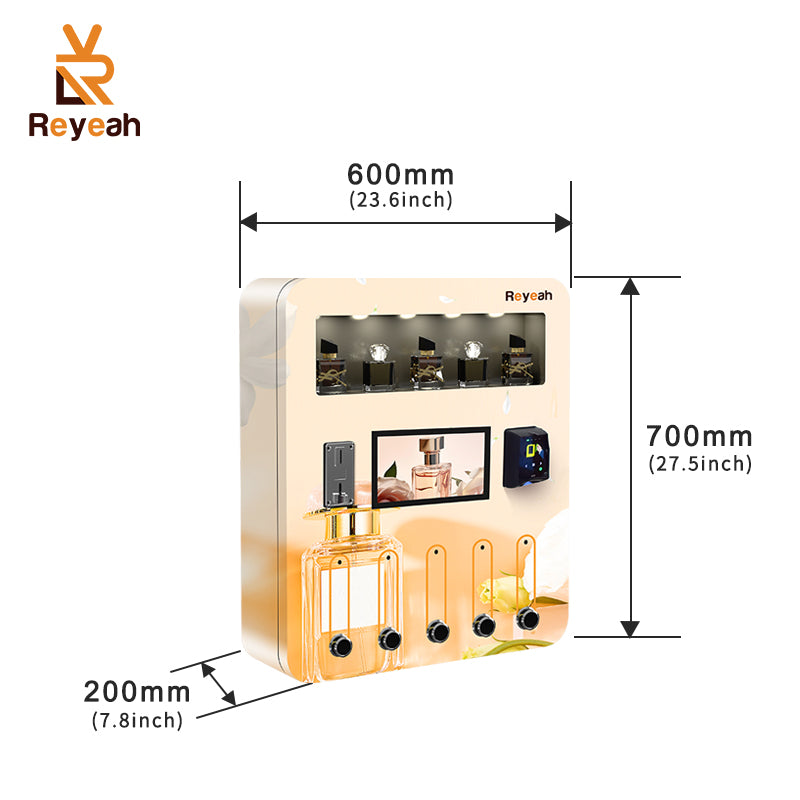
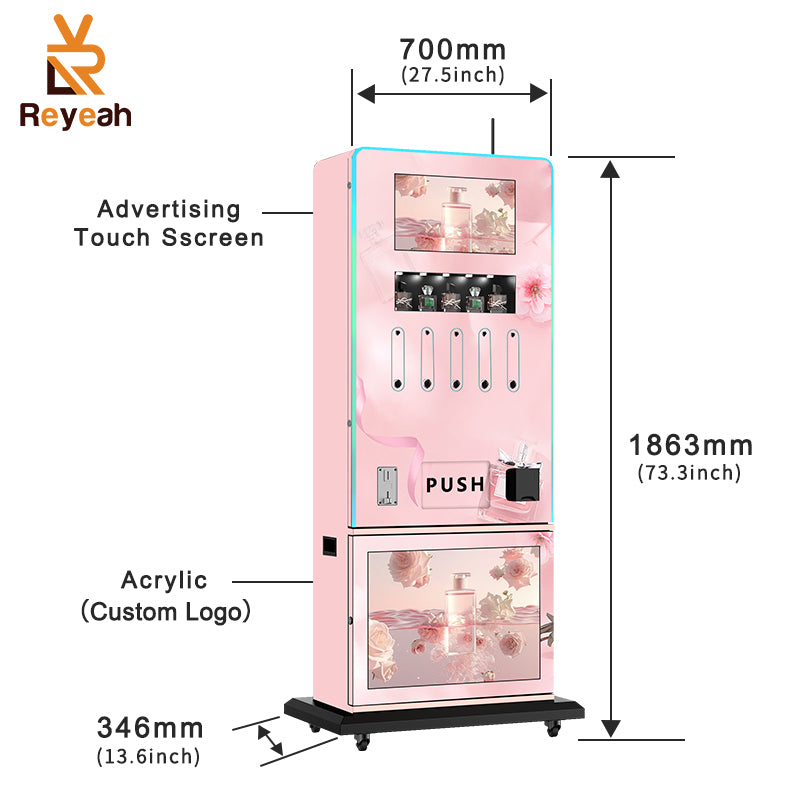
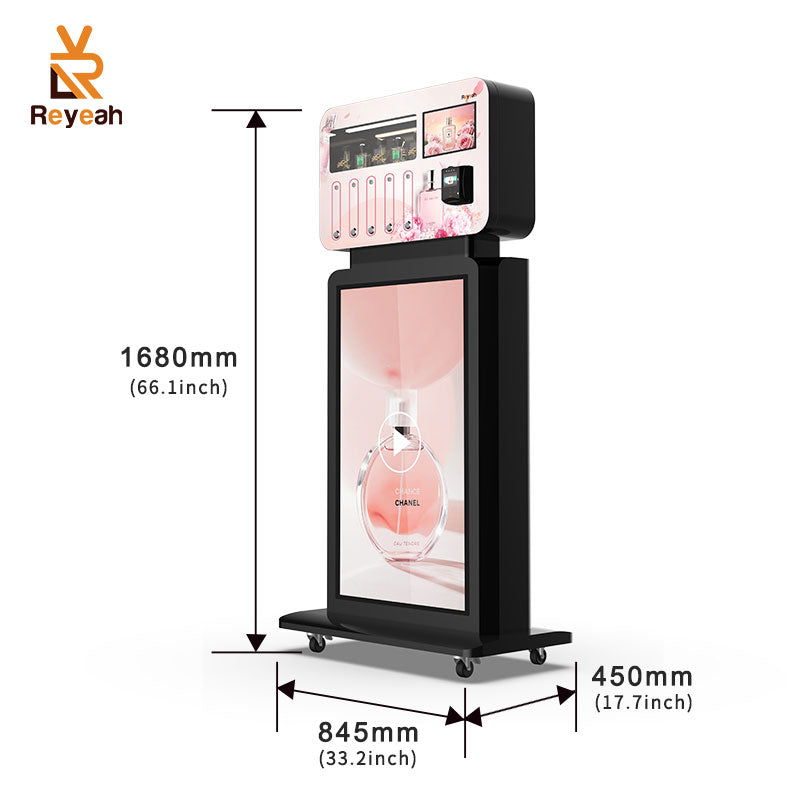
What footprint does a machine need? A wall-mounted model needs roughly the width of a doorway and a power outlet; a floor-standing ten-nozzle unit needs about one square metre of floor. Confirm both with the venue before signing.
Conclusion
Placement is a filtering exercise: rank venues by dwell time first, footfall second, and cost third, then sign one-month trials instead of annual leases. Hotels and anchor-adjacent mall positions carry the best blend of dwell and rent; airports are the biggest prize and the most restricted; salons and pharmacies are the cheapest way to prove the model before you commit to bigger sites. Reyeah builds both wall-mounted and floor-standing formats — start with the perfume vending machine range, run your site numbers through the cost and ROI calculator, or send us your venue details and we will size the configuration to the space.