


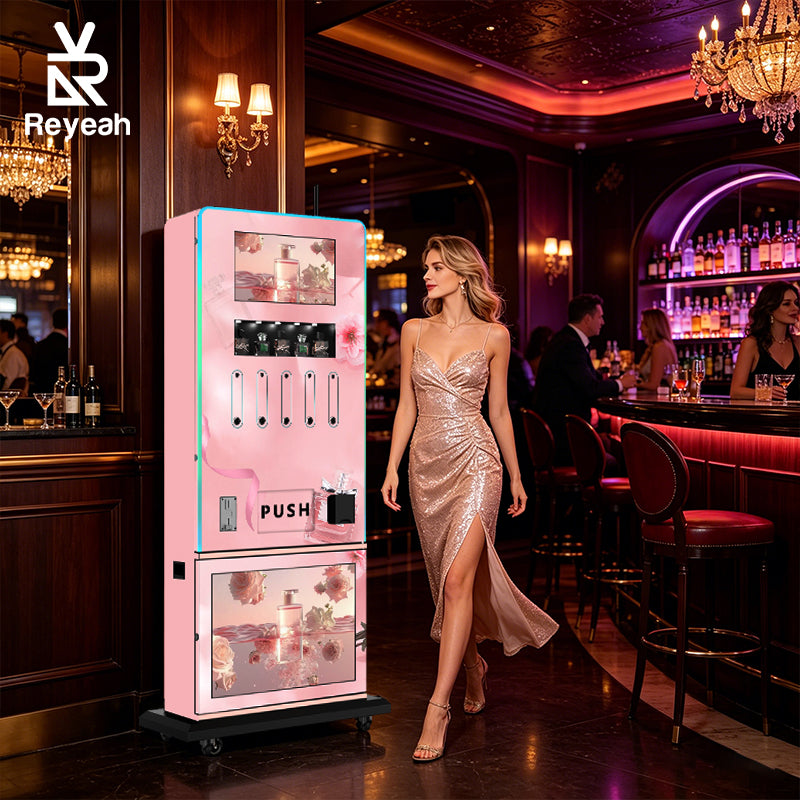


Short answer: channel count should follow the number of SKUs you actually restock weekly, not the biggest number in the brochure. Under roughly 15 active SKUs, a 24-channel floor unit is the right size. At 30+ SKUs — packs plus tins, boxes, accessories and graded slabs — a 48-channel glass showcase pays for itself by removing constant re-merchandising. If floor space is the constraint, a wall-mounted slim unit beats both, at the cost of capacity.
Below is a spec-level comparison of the four formats Reyeah builds, followed by the arithmetic that decides which one you should order.
What are the main TCG vending machine formats?
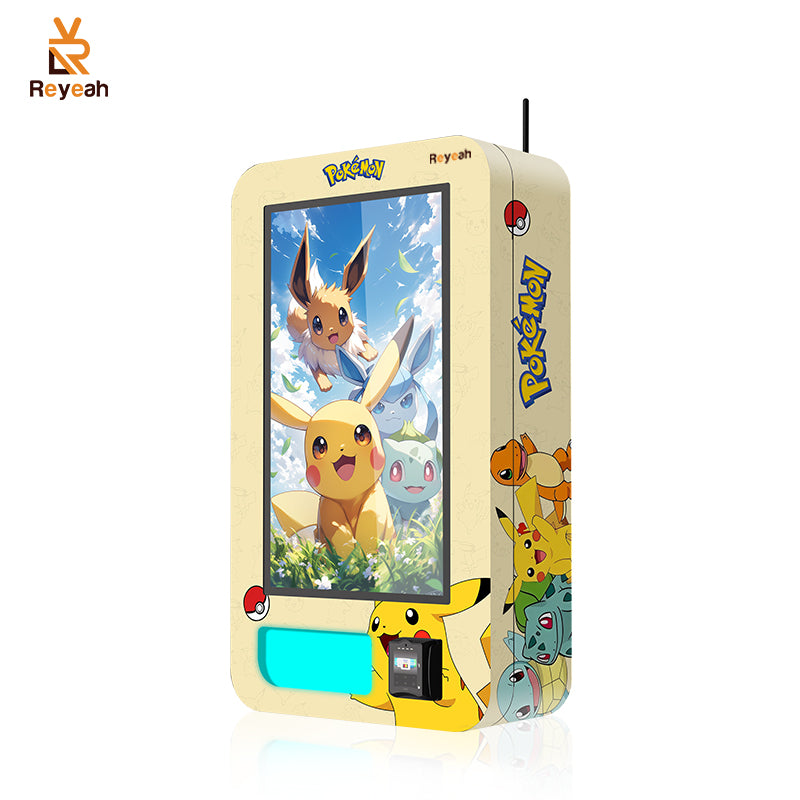
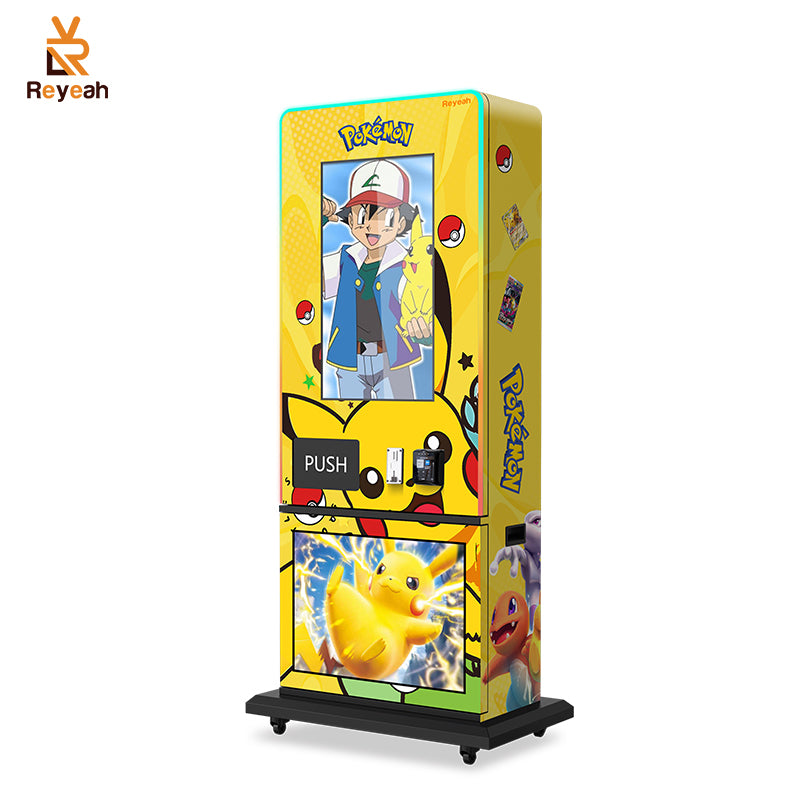
| Floor, screen-led | Floor, showcase | Wall-mounted | Floor, slim dual-screen | |
|---|---|---|---|---|
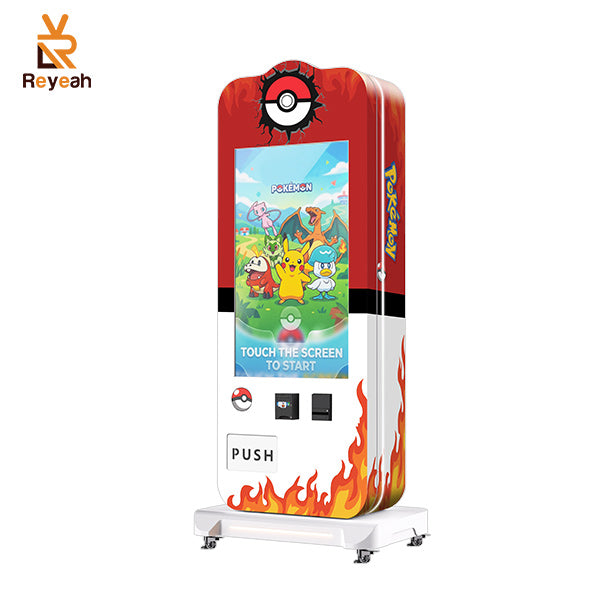
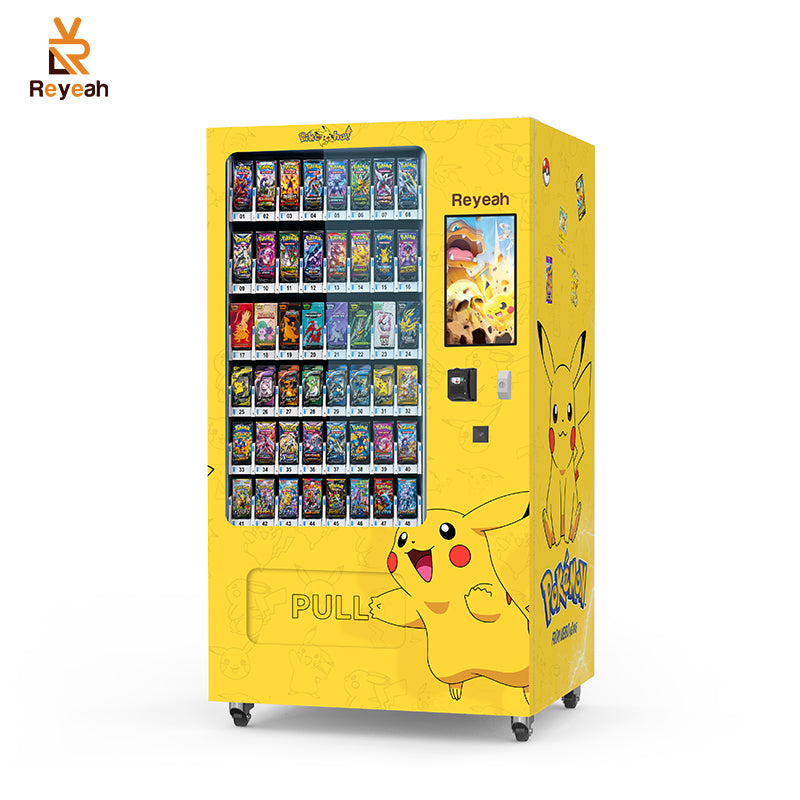
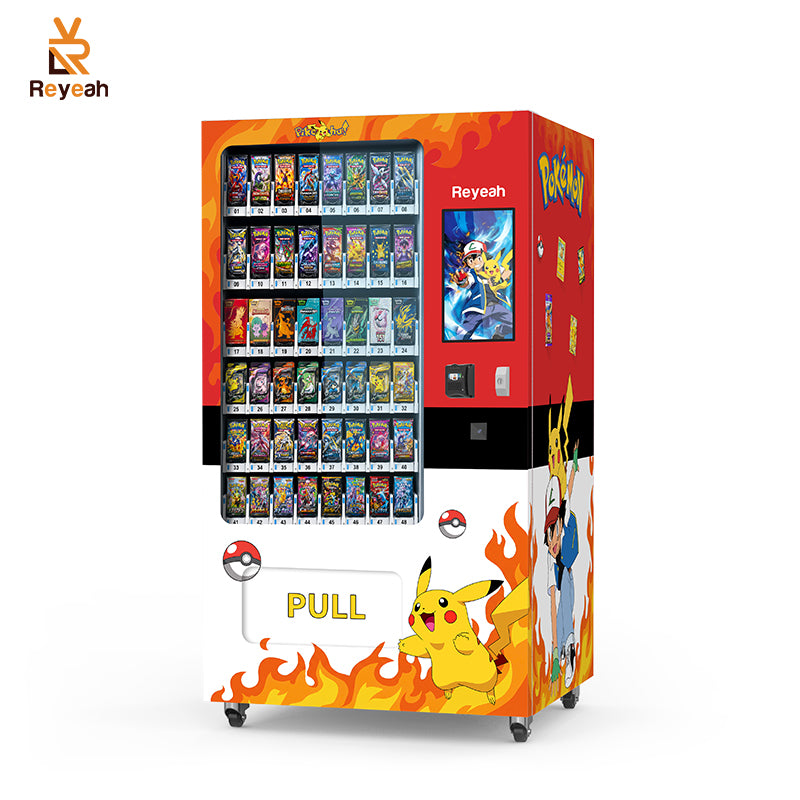
| Model example | TCG-11 | CUZ016 | G02 | D12 |
| Channels | 24 adjustable spiral lanes (8 shelves × 3) | 48 lanes (6 shelves × 8) | Configured to order | Configured to order |
| Display | 43" networked touchscreen, Android | Full-view tempered glass + side touch panel | Compact front panel | Dual-screen interactive |
| Footprint | 1998 mm H × 700 mm W (845 mm with base) × 350 mm D (590 mm with base) | Full-height cabinet on castors | Zero floor space | Slim floor cabinet |
| Delivery | Bottom collection bin | Anti-tamper baffle + bottom pull flap, drop-sensor verified | Collection flap | Floor-standing draw |
| Best product mix | Sealed packs, blisters, sleeved packs | Packs + tins + boxes + accessories + slabs | Packs only, tight assortments | Packs + mid-size boxes |
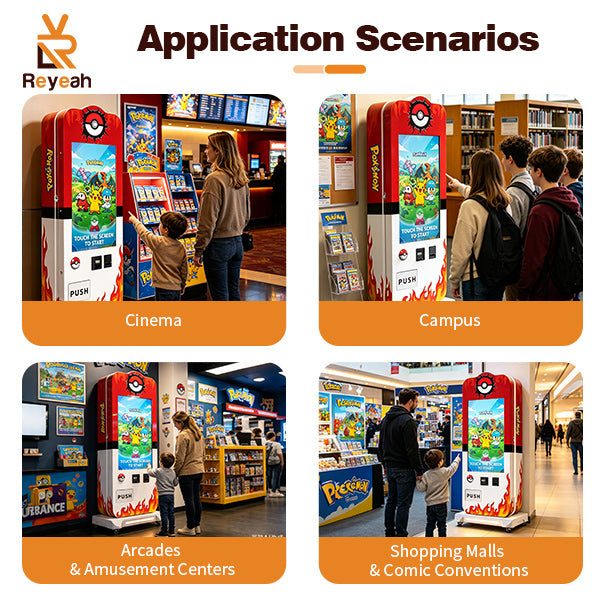
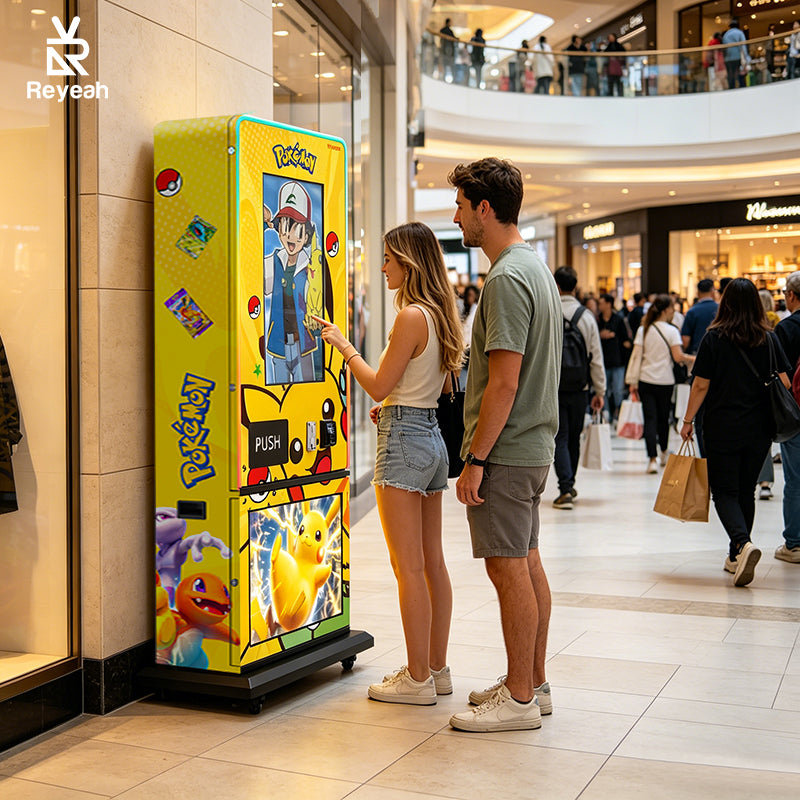
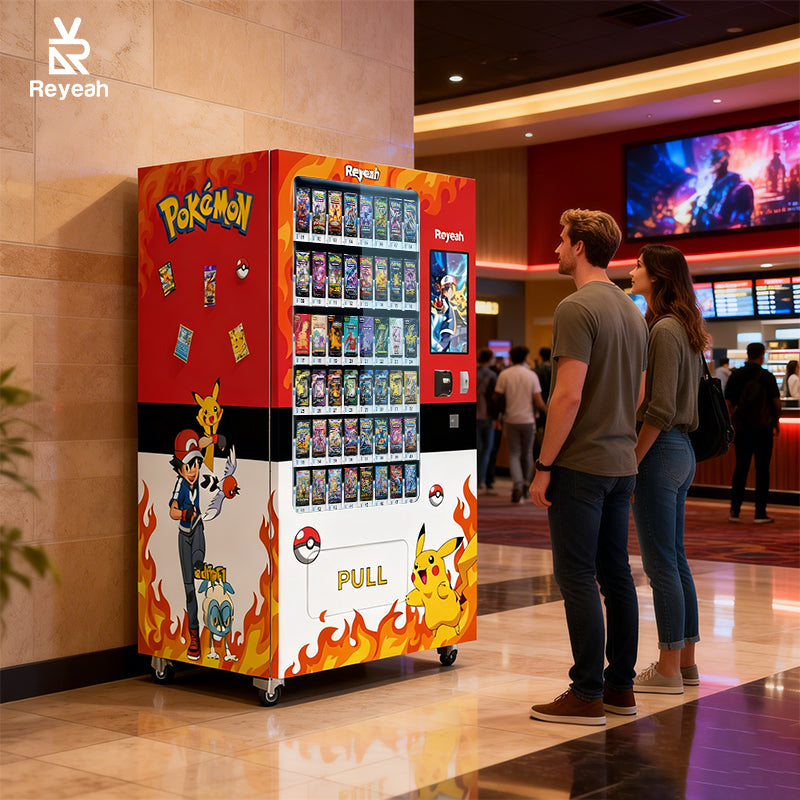
| Best venue | Hobby shop, arcade, cinema lobby | Mall walkway, anime retail, high-footfall store | Corridor, store wall, small footprint sites | Narrow aisles, pop-up units |
| Main trade-off | Fewer SKUs per restock | Higher capital and stock tied up | Lowest capacity | Middle capacity, premium look |
Wall and slim formats are built per order, so channel count and lane width are confirmed at quote stage rather than fixed by a catalogue number. Do not accept a channel count in a proposal that is not on the proforma invoice.
How many channels do you actually need?
Run this before comparing models:
Channels required = active SKUs × facings per SKU- Facings per SKU = how many lanes of the same product you want loaded. Fast movers (current set booster packs) usually need 2–4 facings; slow movers need 1.
- Active SKUs = products you restock at least weekly. Anything slower than that occupies a lane and blocks a better seller.
Three typical mixes:
| Operator profile | Active SKUs | Facings | Channels needed |
|---|---|---|---|
| Single-set hobby shop, 6 products | 6 | 3–4 on top sellers | 20–24 |
| Multi-TCG store (Pokémon, MTG, One Piece, Yu-Gi-Oh!) | 18–24 | 2 average | 36–48 |
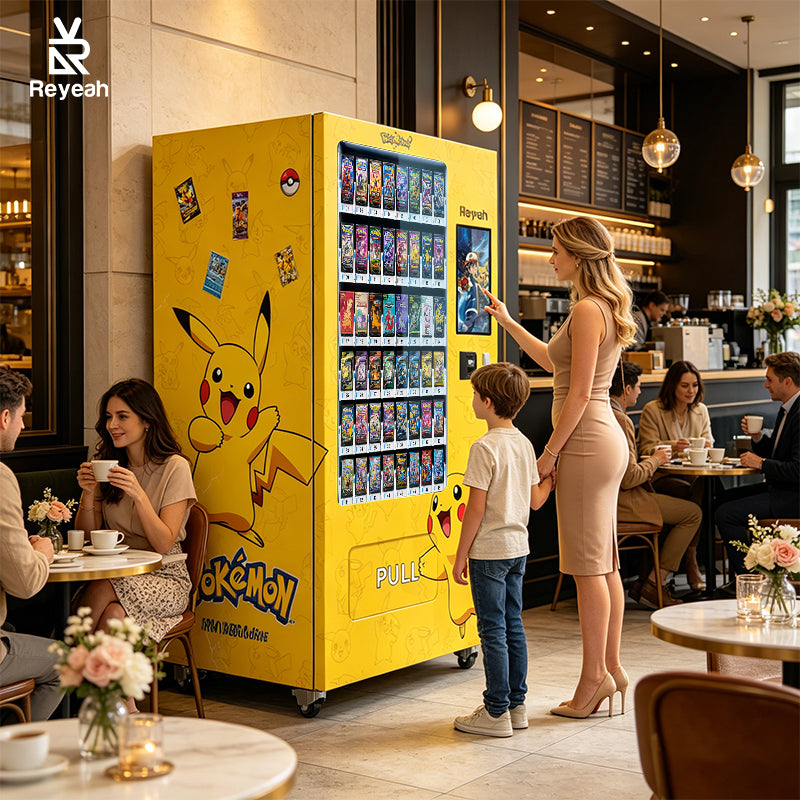
| Mall unit with boxes, tins and slabs | 30–40 | 1–3 | 48+ |
The mall profile is where a 24-channel unit fails: not because 24 is too few products, but because it forces weekly re-merchandising while leaving popular SKUs empty between restocks.
Why is 48 channels not automatically better?
Three real costs come with more channels:
- Stock depth. Every lane must be filled to look credible. 48 lanes of sealed product is a materially larger inventory position than 24 — and card sets rotate.
- Restock time. Filling 48 lanes takes roughly double the labour of 24, and labour is the bottleneck on a multi-site route.
- Slow-lane drag. More channels means more chances to merchandise a product that does not sell. Data from per-channel telemetry usually shows 20–30% of lanes contributing a small fraction of revenue in month one.
The fix is not fewer channels; it is per-channel sales data. Reyeah machines expose revenue and depletion by channel through cloud telemetry, so slow lanes can be re-assigned within the first month instead of at the next stock order.
Floor-standing or wall-mounted?
Wall-mounted units win on three criteria and lose on one.
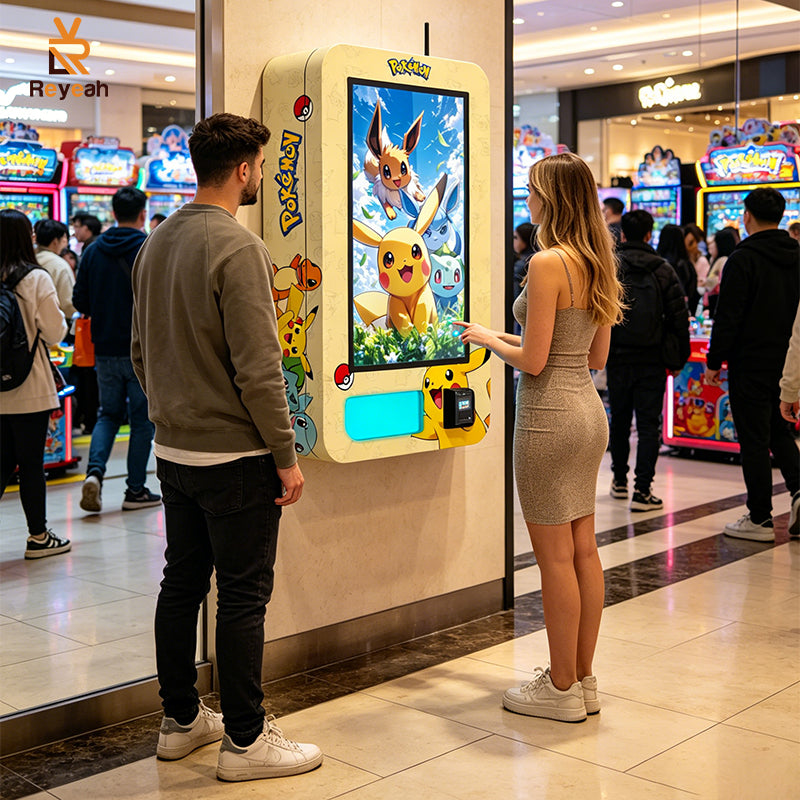
Win: zero floor rent exposure (landlords charge for floor area, not wall area), no trip hazard in narrow corridors, and a smaller visual footprint that gets approved faster in mall common areas.
Lose: capacity. A wall unit holds a tighter assortment, so it suits a store that already carries the full range inside and wants an after-hours sales point — not a venue where the machine is the store.
A practical pattern: wall unit at the store entrance for impulse packs, floor showcase inside for the full range. The two share one telemetry dashboard, so replenishment is a single route.
What specifications actually protect card condition?
Card buyers inspect packaging. A machine that crimps a foil pack creates a customer complaint and a discount, so specify these five points:
- Adjustable lane width and pitch — a booster pack, a tin and a slab need different geometry. Fixed lanes force you to standardise on one format.
- Optical drop sensor — confirms the product actually left the lane; without it, a mis-dispense is charged but not delivered.
- Cushioned collection bin — packs land, they do not drop onto steel.
- Anti-tamper baffle / pull flap — prevents "fishing" product out of the delivery opening.
- Electronic lock + reinforced cabinet — the machine holds sellable inventory; treat the lock as a security component, not a hinge.
For graded slabs, add lane padding and confirm the maximum slab thickness in writing. PSA-graded cards are encapsulated, and the holder thickness — not the card — is what the lane must clear. PSA publishes its grading standards and holder conventions at psacard.com/gradingstandards.
Which configuration fits which venue?
| Venue | Recommended format | Reason |
|---|---|---|
| Local game store, 6–10 SKUs | 24-channel floor | Fits the range, screen drives impulse at the door |
| Multi-TCG hobby retailer | 48-channel showcase | Merchandises the full catalogue in one cabinet |
| Mall common area, tight footprint | Wall-mounted slim | Zero floor rent, fast landlord approval |
| Arcade / FEC | 24-channel with 43" screen | Screen time is part of the entertainment |
| Pop-up and convention | Slim floor, castors | Moves between events without a pallet |
| Cinema or transit lobby | 24-channel, cash + card | Speed of transaction matters more than range |
How does the screen change revenue?
A 43" networked touchscreen does three jobs a button panel cannot: it shows pack art at a readable size, it runs set-release promotion loops, and it sells advertising space to the card distributor whose product sits behind the glass. For a mall unit, ad revenue can cover a meaningful share of site commission.
The trade-off is content operations. Someone has to update the loop when a set releases. Budget an hour a month, or the screen becomes a static poster.
What should be on the purchase order?
Whether you order 24 or 48 channels, these lines belong in the contract:
- Channel count, lane width range, maximum product thickness
- Screen size, OS version and remote content-update capability
- Payment stack: reader brand, currencies, NFC, bill/coin acceptance
- Connectivity: 4G / Wi-Fi / Ethernet, and telemetry subscription cost after year one
- Certification (CE and destination equivalents), warranty scope and exclusions
- Spares kit contents and lead time
- OEM/ODM artwork, tooling and minimum order for branded wraps
- Delivery date, Incoterm and who clears customs
Reyeah quotes are configured line by line for exactly this reason. Compare the card range or read how to choose a trading card vending machine for the mechanism-level checks.
FAQ
Is 24 channels enough for a Pokémon-only machine? For a single active set plus a few accessories, yes. 24 lanes with 3–4 facings on the top sellers covers a focused range. It becomes limiting when you add tins, boxes and a second TCG.
Can a wall-mounted TCG machine hold booster boxes? Wall units are built for packs, blisters and slim boxes. Full booster boxes and large tins need shelf depth that a wall cabinet does not have — use a floor showcase for those.
Do I need a touchscreen if the machine only sells four products? No. A button or small-panel interface transacts faster and costs less. Screens pay off when you merchandise 10+ SKUs or sell advertising.
How many packs fit in one lane? Capacity depends on pack thickness and lane pitch, which is why it is confirmed per configuration. Ask for "packs per lane at 20 mm and at 35 mm thickness" in writing — that single number tells you restock frequency.
Can the same machine dispense graded slabs and loose packs? Yes, with adjustable lanes and padding, but not in the same lane. Slab lanes are wider and shallower; mixing formats per lane is the practical approach.
What happens when a lane jams? A drop sensor flags the failed vend and telemetry reports the channel. Physical clearance depends on access to the shelf — confirm the service door layout and whether lanes can be cleared without unloading the shelf above.
Sources
- PSA, "Grading Standards" — grading criteria, centering tolerances and encapsulation conventions: https://www.psacard.com/gradingstandards
- Circana, "U.S. Toy Industry Returns to Growth in 2025" (3 Feb 2026) — collectible card demand context: Pokémon reached $2.5B in U.S. sales, +87% YoY: https://finance.yahoo.com/news/u-toy-industry-returns-growth-170500214.html
Specifications quoted for TCG-11 and CUZ016 come from Reyeah product documentation; wall and slim formats are configured per order.
Leave a comment