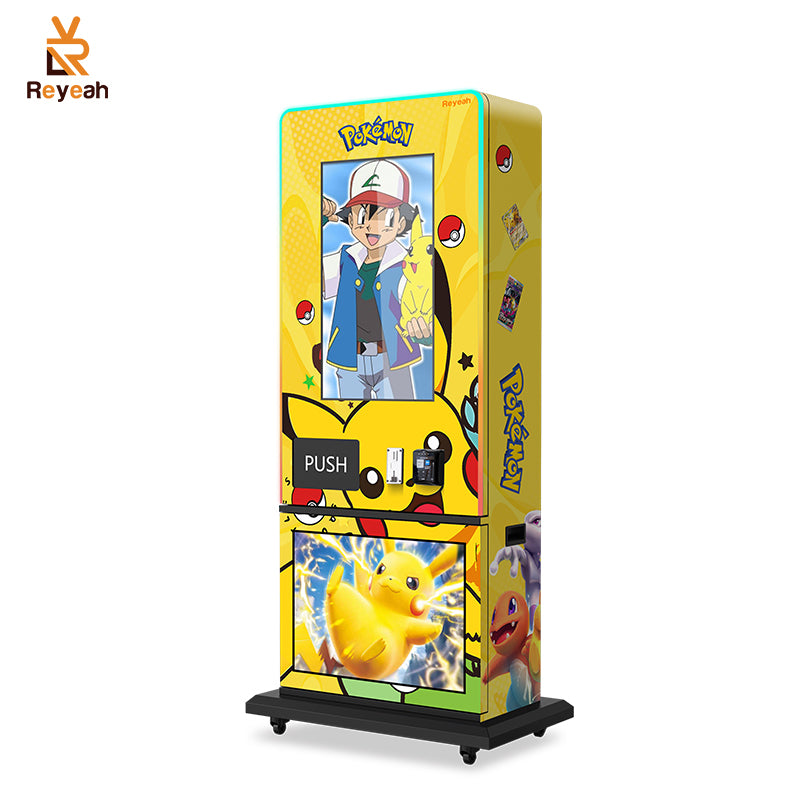







Two card vending machines can share a price, a footprint and a colour scheme, and still behave completely differently after six months of trading. The difference is in the specification sheet: how many channels, how the pack leaves the machine, and what stops a card from arriving bent. This guide reads a vending machine specifications sheet for a trading card machine in the order that affects your money.
1. Channel count: refill interval, not capacity
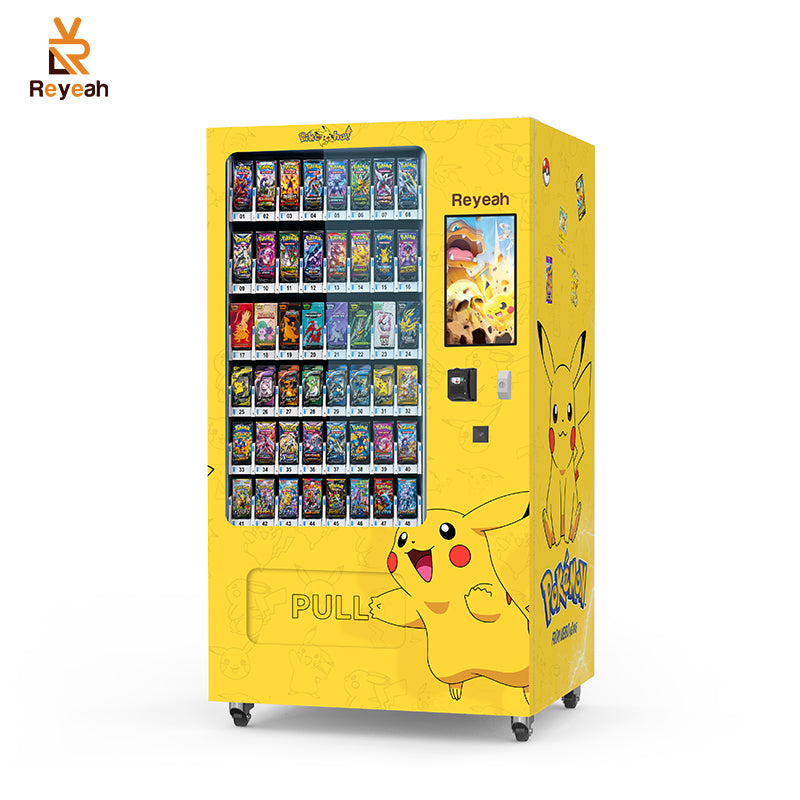
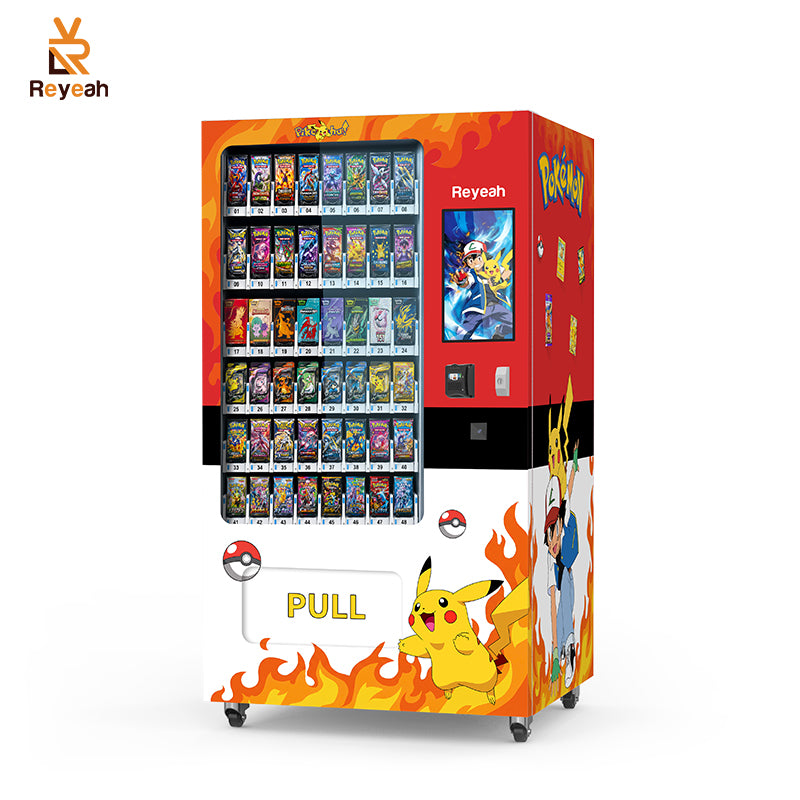
A 24-channel trading card vending machine can carry up to 24 product positions; a 48-channel machine carries 48. It is tempting to read that as capacity, but the number that matters is how many vends a full load supports divided by your daily volume — in other words, the days between restocks.
A site doing ten vends a day needs a different configuration from one doing fifty. Choosing 48 channels for a quiet venue buys you a longer refill interval and a much larger stock commitment sitting inside the cabinet; choosing 24 for a busy venue buys you more restocking visits than the margin can absorb. Our 24 vs 48 channel comparison works this through with volumes.
2. Dispensing mechanism and the jam rate
This is the most important line on the sheet and the least visible in a brochure. Coil or spiral dispensing is simple and cheap and works for boxed product, but a booster pack is a soft, light, irregular package — exactly the shape a coil handles worst. Look for a mechanism designed around flat packs: a pusher or a lift-based delivery, or a drop path with a controlled fall.
Ask two specific questions. First, what is the field jam rate, and how is it measured. Second, when a jam happens, does the machine detect it and stop taking payment, or does it keep selling into a blocked path? A machine that detects jams and self-cancels the sale is worth more than a cheap machine that leaves a queue of disappointed customers and refund requests.
3. How the card leaves the machine
Card condition is the hidden specification. Collectors inspect packs, and a scuffed corner or a crease on the foil is enough to turn a sale into a complaint. Three design details decide this:
- Drop height and landing surface. A short drop onto a padded or ramped surface protects the pack; a long free fall onto hard plastic does not.
- Contact surfaces in the delivery path. Rollers and guides should not press on the foil face.
- Retrieval door design. A wide, lit retrieval bay lets the customer see the pack before taking it and reduces the temptation to pull.
Where a machine offers graded slab positions as well as packs, confirm the slab dimensions it accepts. Slabs vary, and a channel sized for one grading company's holder may not take another's.
4. Payment hardware and telemetry
Payment is specified, not assumed. Confirm the reader model, whether contactless and mobile wallets are accepted, and whether the reader reports into the same system as the machine. Integrated payment means one reconciliation; bolted-on payment means two, and the difference shows up as a monthly chore rather than a line item.
Telemetry matters more for card machines than for most vending, because the inventory turns fast and the best-selling series changes with each release. A dashboard reporting sales by channel, stock level and fault status is what lets you widen a channel before it empties rather than after. Our guide to choosing card vending hardware covers the anti-jam and cashless requirements in more detail.
5. Physical specifications your venue will ask about
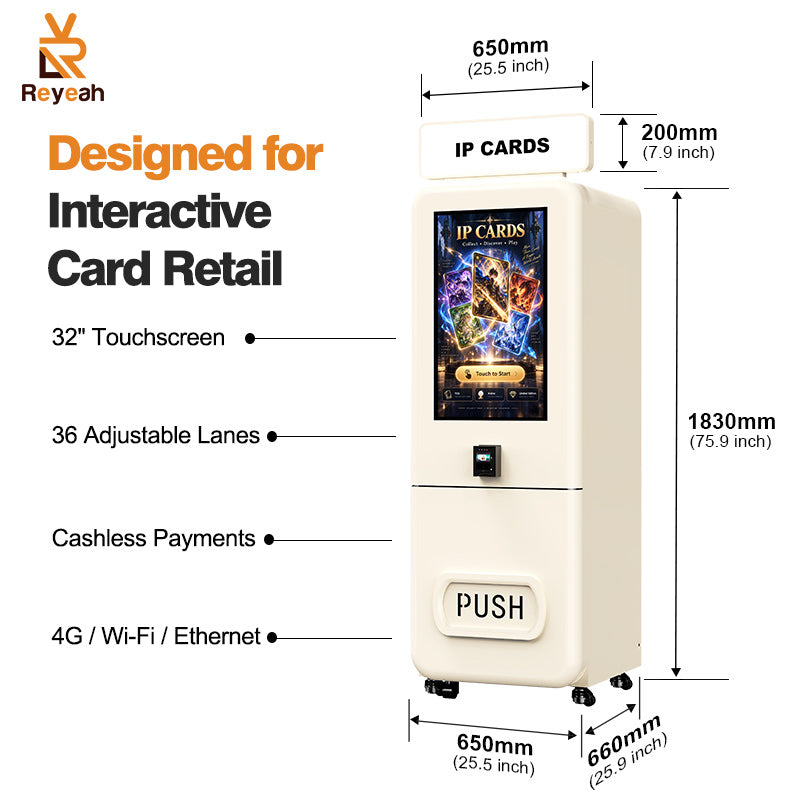
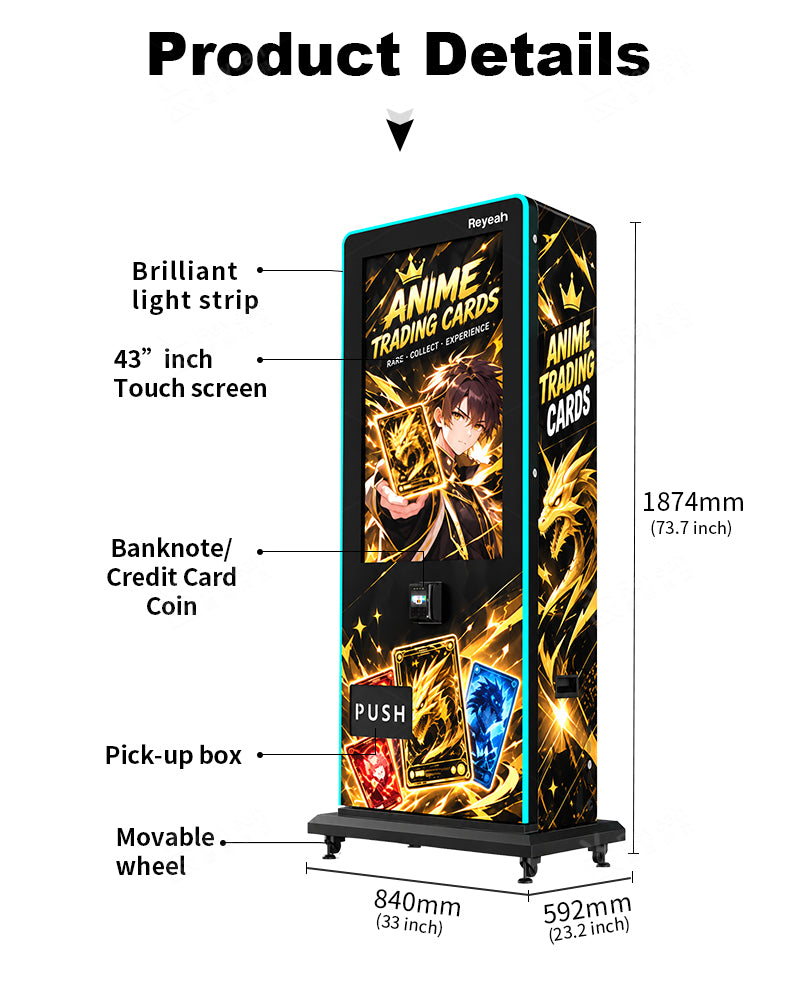
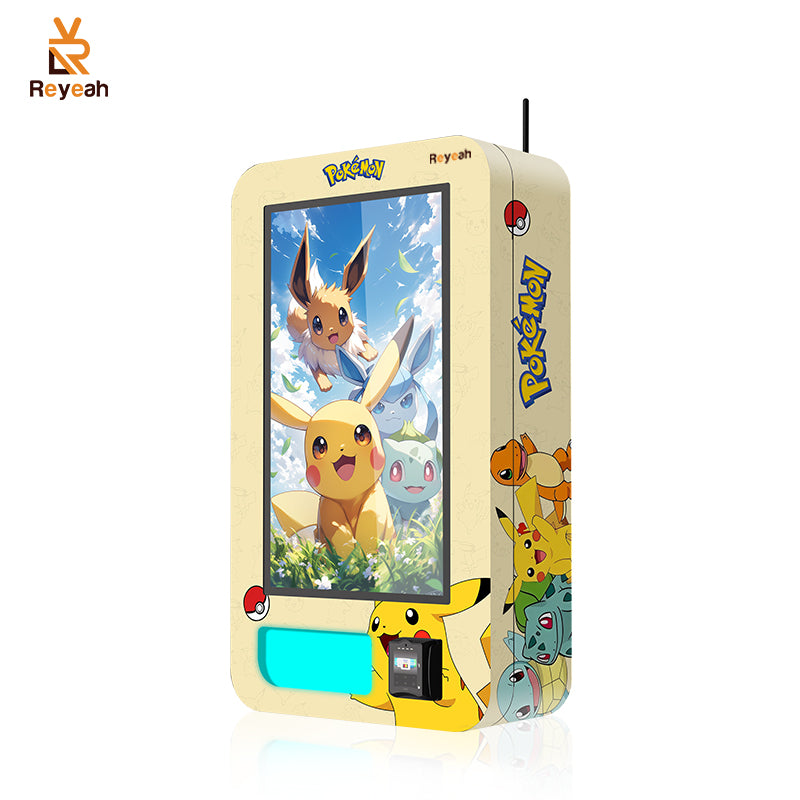
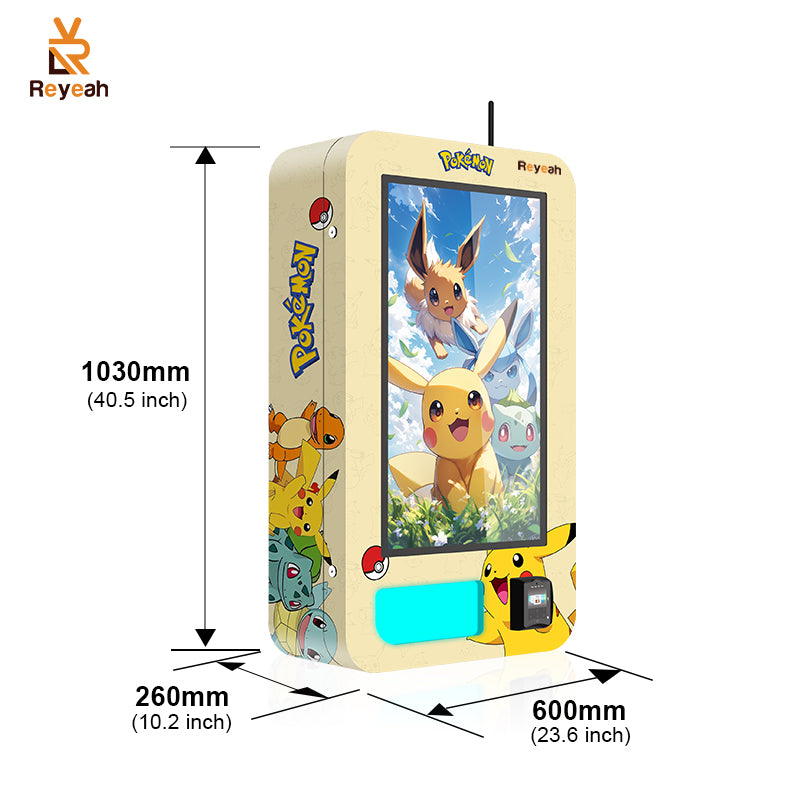
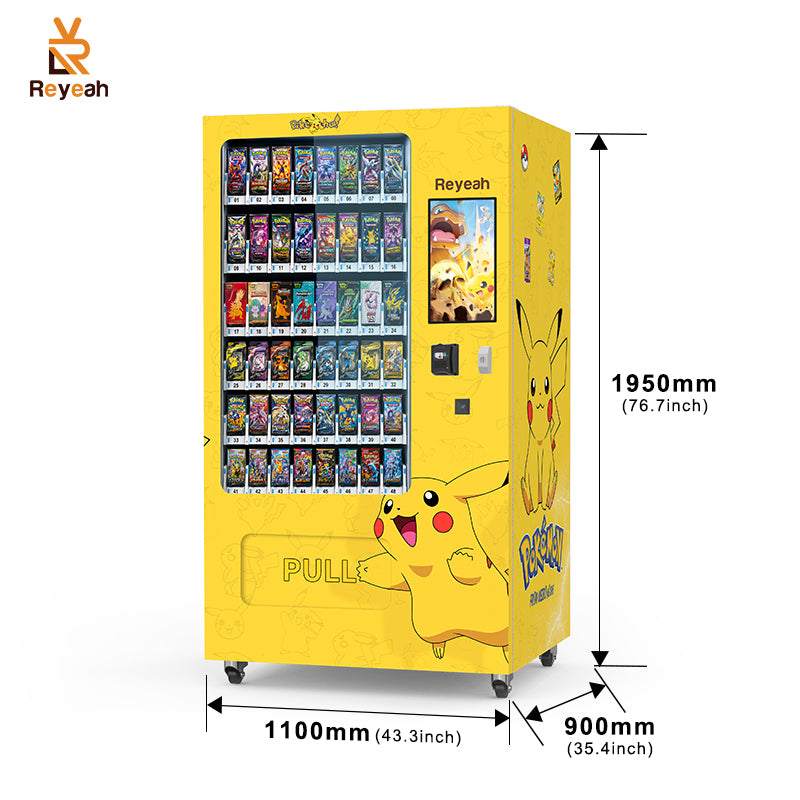
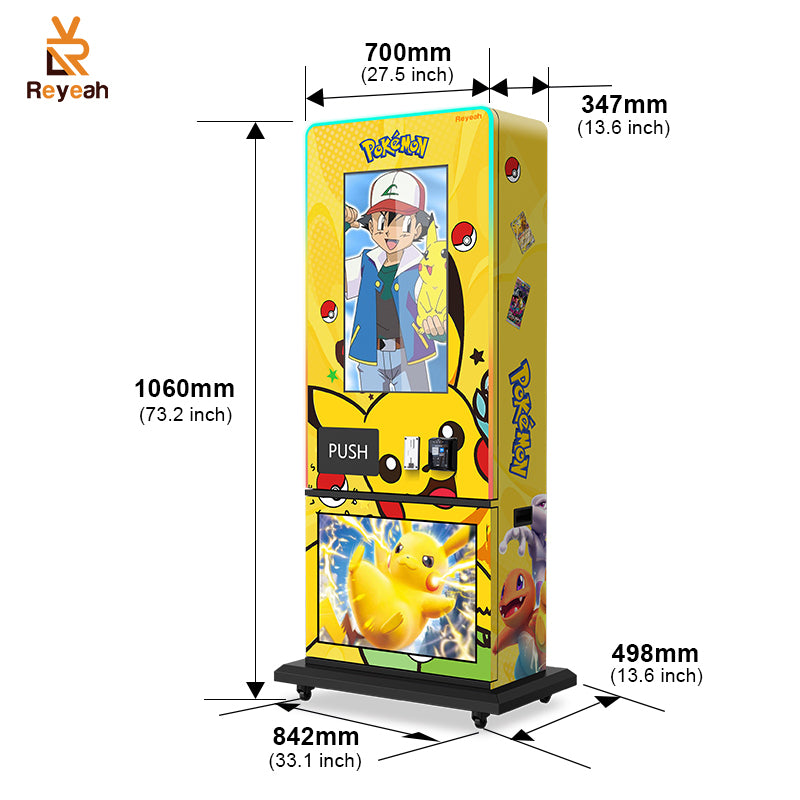
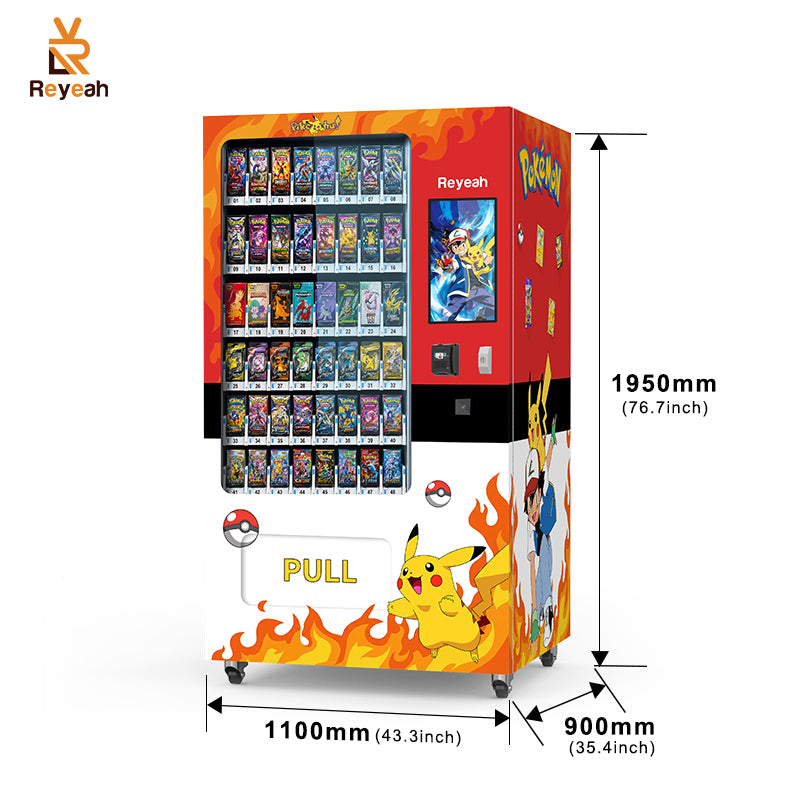
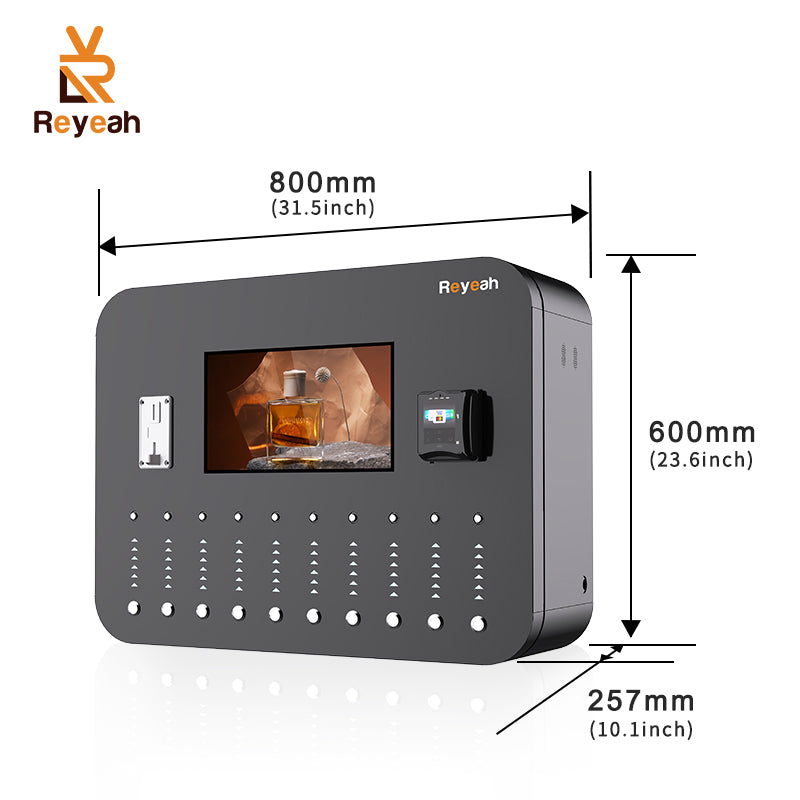
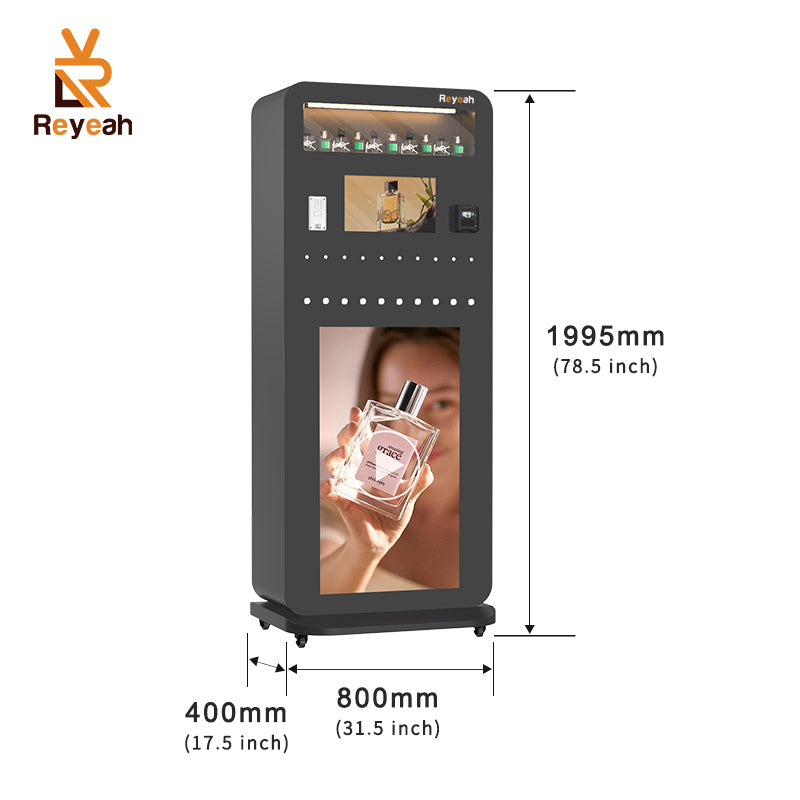
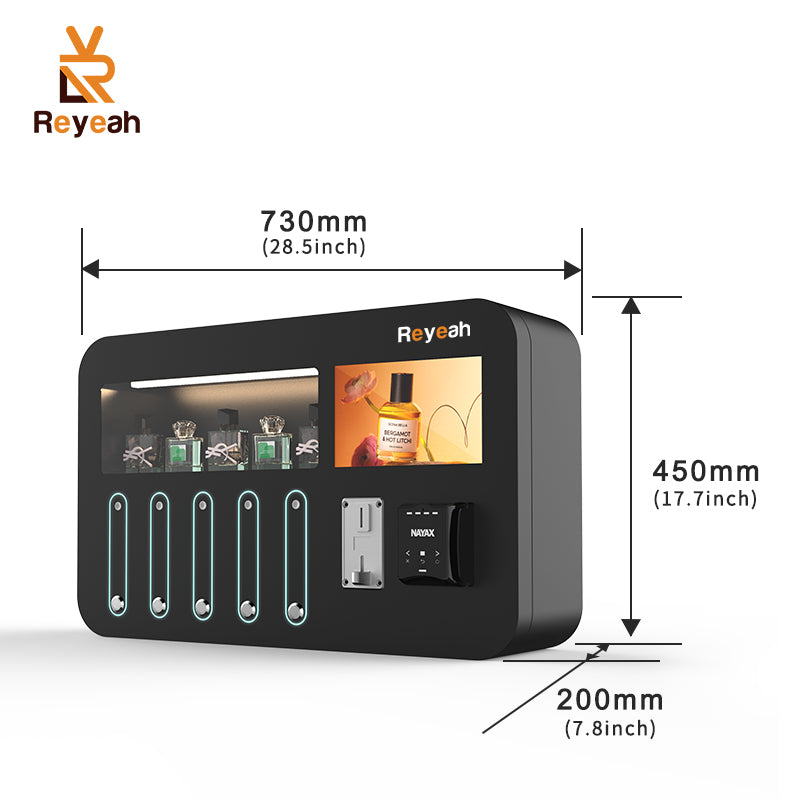
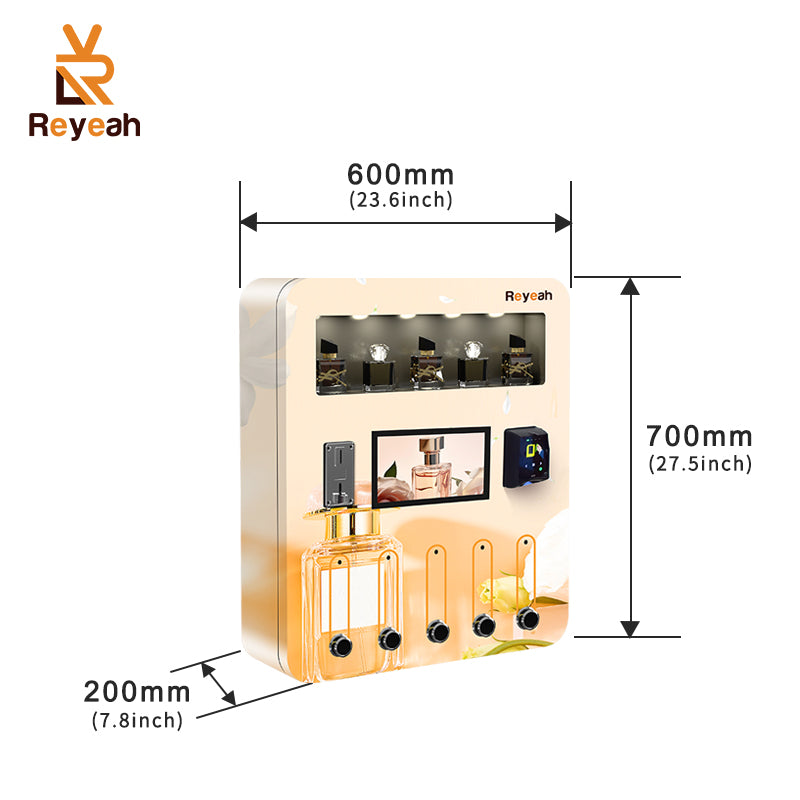
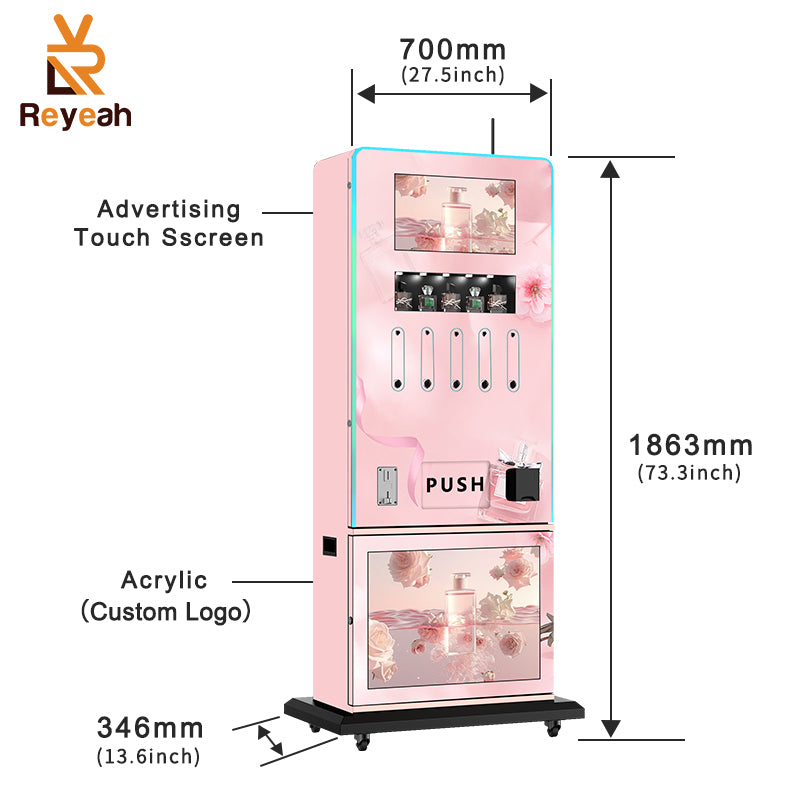
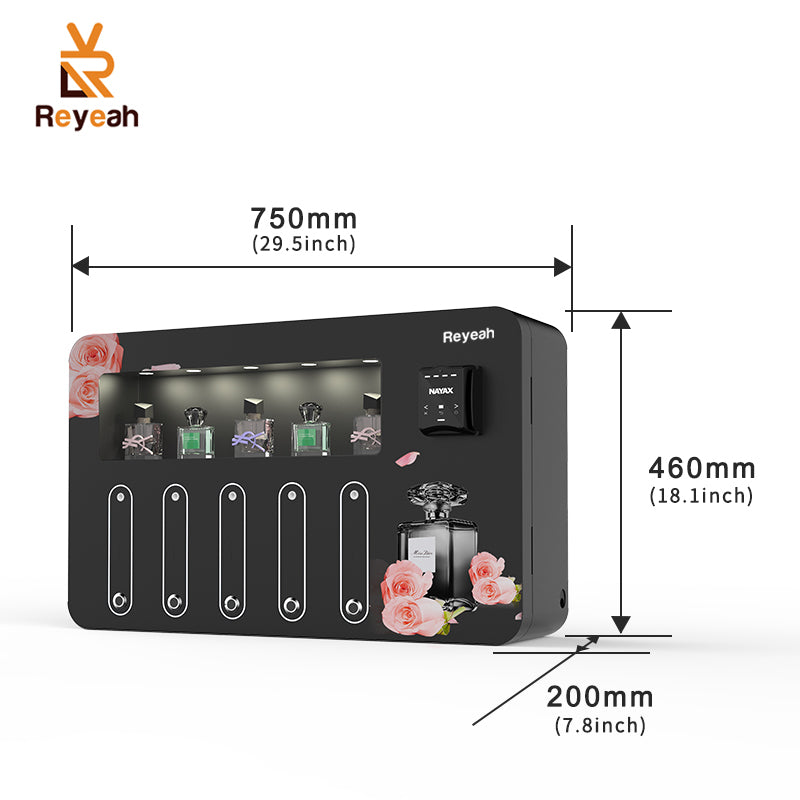
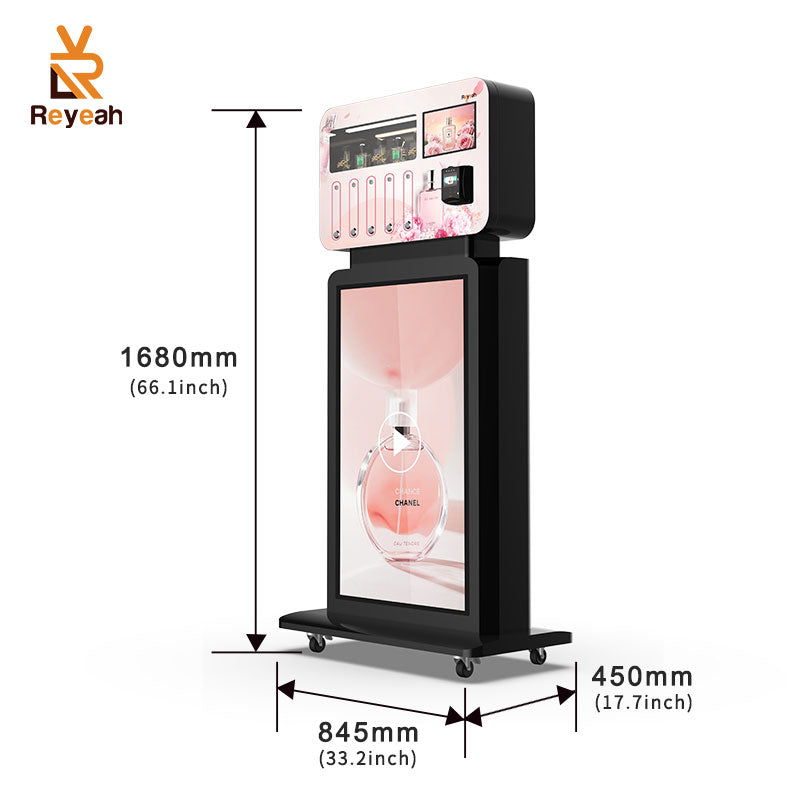
Before a venue signs, someone will ask for dimensions, weight and power. Have them ready: cabinet width, depth and height, weight when fully loaded rather than shipping weight, voltage and current draw, and the operating temperature range. A machine placed in an unheated corridor or beside a west-facing window will see its internal temperature move far outside a comfortable range, and heat is not kind to sealed foil or to displays.
Conclusion
The four specification numbers worth arguing about are channel count, jam detection, delivery path design and integrated payment. Everything else is cosmetic or negotiable. Get those four right and the machine's economics follow from your volume; get them wrong and no amount of discount recovers the operating cost. Reyeah card machines ship with a one-year manufacturer warranty and lifetime remote technical support, with OEM/ODM branding available at order. Put your projected volume into the cost and ROI calculator before you choose a configuration, or send us your site details and we will size it for you.