




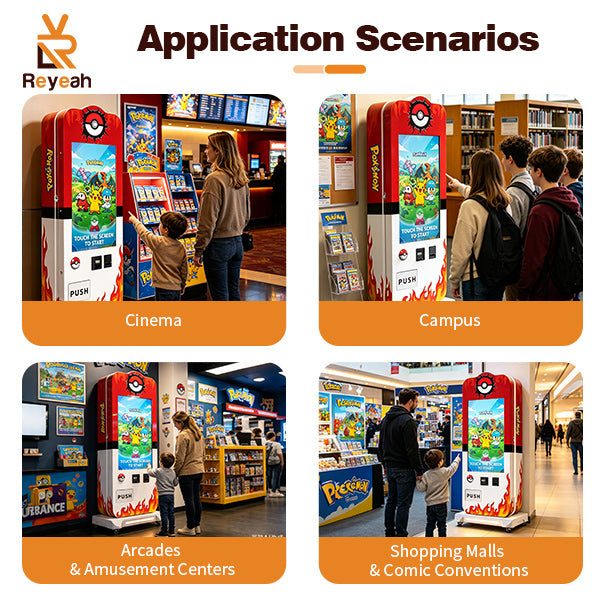
Short answer: the highest risk-adjusted return usually comes from a local game store or hobby shop — not because it has the most foot traffic, but because everyone walking past already buys cards. A mall common area produces more absolute revenue but takes 10–20% commission and carries the highest theft exposure. Arcades and FECs sit in between: strong dwell time, moderate commission, and a customer who is already in a spending mood.
The ranking below scores seven venue types on the variables that actually move money, then covers the site agreement terms and compliance points that decide whether a placement works long term.
How do the seven venue types compare?
Scores are 1–5, higher is better except "theft risk", where higher is worse.
| Venue | Purchase intent | Traffic volume | Commission | Theft risk | Power / logistics | Overall |
|---|---|---|---|---|---|---|
| Local game store / hobby shop | 5 | 3 | 1 | 1 | 5 | Best risk-adjusted |
| Mall common area | 3 | 5 | 4 | 3 | 4 | Best absolute revenue |
| Arcade / FEC | 4 | 4 | 3 | 2 | 4 | Strong all-round |
| Anime / collectible retail | 5 | 3 | 2 | 1 | 5 | High conversion |
| Convention / pop-up | 5 | 5 (burst) | 4 | 3 | 2 | Highest revenue per day |
| University student centre | 3 | 3 | 2 | 2 | 4 | Seasonal |
| Transit (airport, station) | 1 | 5 | 4 | 4 | 3 | Weakest fit |
The transit row is the most counter-intuitive. Foot traffic is enormous, but the buyer is moving, carries luggage or a commuter bag, and has no time to browse pack art. TCG is a considered impulse purchase — it needs a person who is already in a hobby mindset.
Why does a hobby shop outperform a mall on payback?
Because intent compounds. In a card shop, the machine sits beside the counter that already sells the same product at the same price. It does three things:
- Captures after-hours demand. The shop closes; the machine does not.
- Absorbs overflow. Friday-night tournament queues convert into pack purchases without staffing.
- Removes the labour cost of small transactions. A $4.99 pack sale takes 40 seconds of staff time otherwise.
Commission is usually zero or nominal inside your own or a partner store, which is the single largest margin advantage available. Twenty packs a day at a $1.42 contribution is roughly $850 a month with no site rent.
What does the mall placement actually cost?
Mall agreements typically take one of three forms: fixed monthly rent, percentage of gross revenue, or a minimum guarantee against a percentage. Expect the percentage to sit in a low-to-mid teens band, with a monthly minimum that applies whether you sell or not.
| Item | Hobby shop | Mall common area | Convention (3 days) |
|---|---|---|---|
| Site cost | $0–100/month | 10–20% of revenue, plus minimum | Flat booth fee |
| Packs/day (illustrative) | 20–40 | 40–80 | 150–300 |
| Contribution/pack | $1.42 | $1.10 (after commission) | $1.25 |
| Monthly contribution | $850–1,700 | $1,300–2,600 | event-based |
| Break-in exposure | Low | High (unsupervised nights) | Medium |
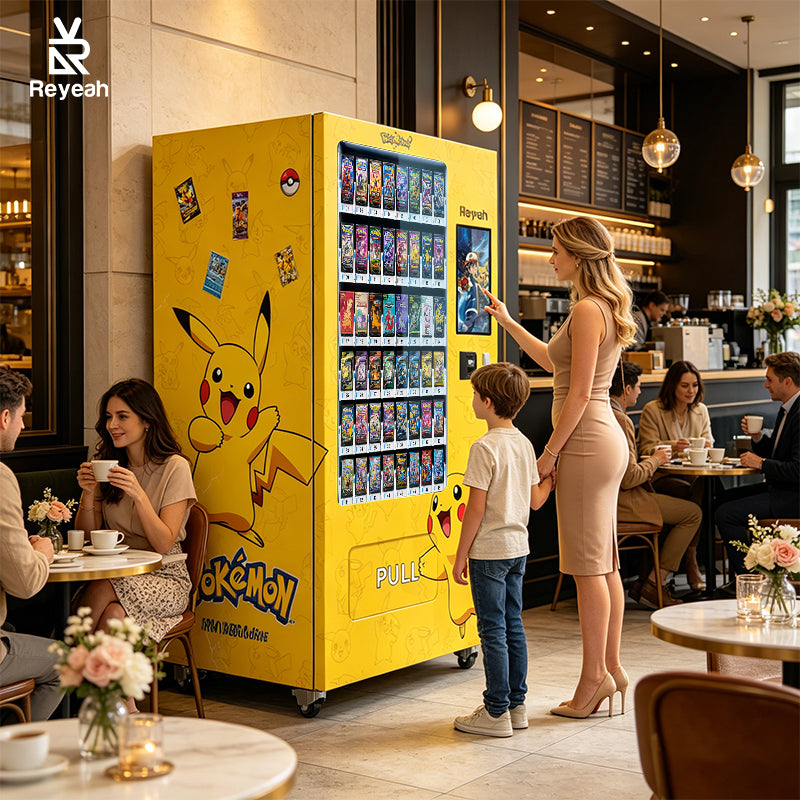
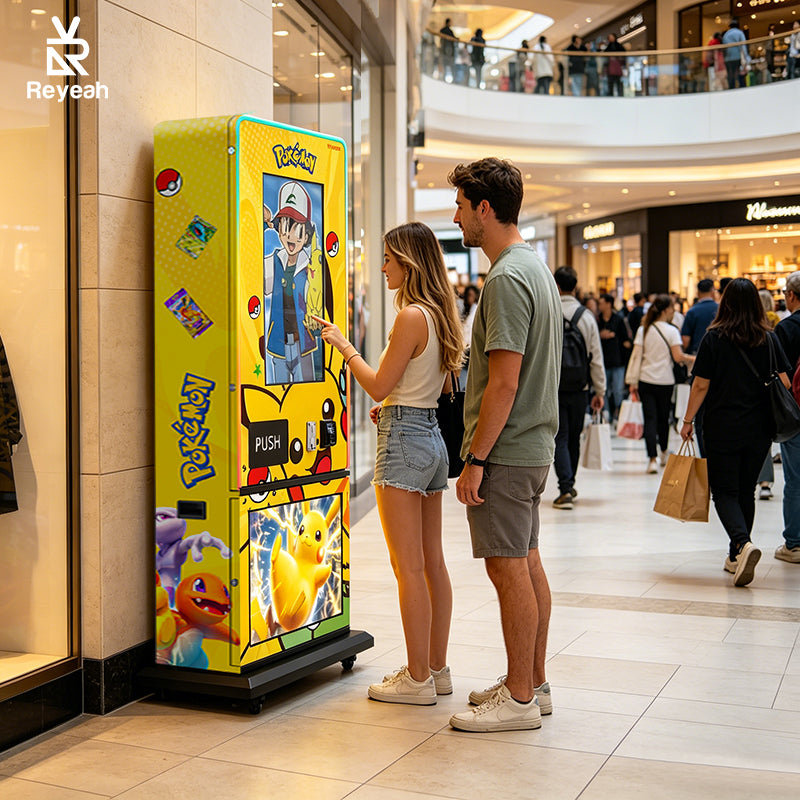
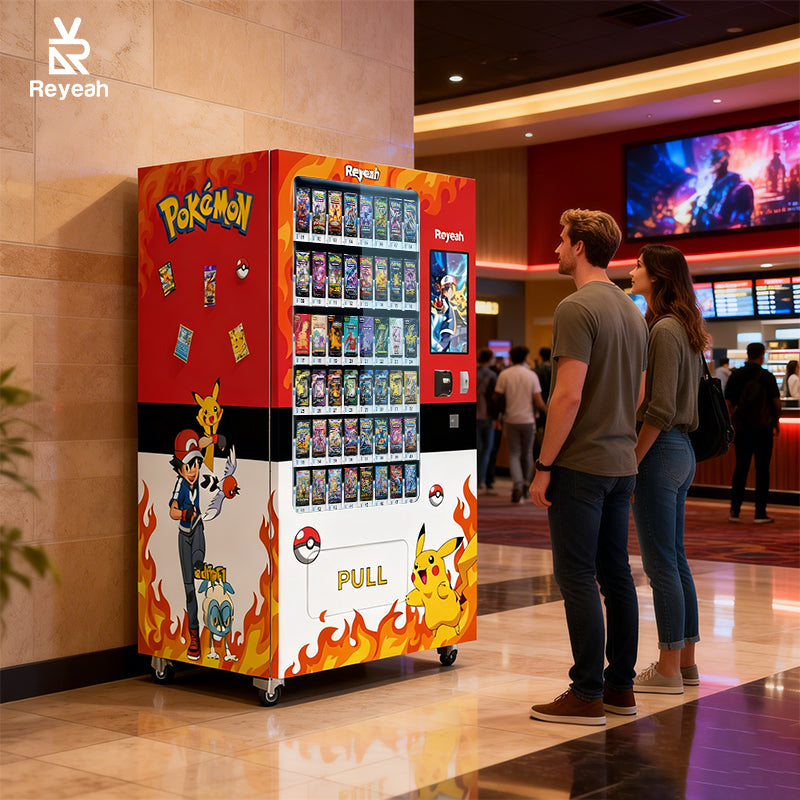
Mall revenue is higher and less stable. If you take a mall site, budget for a higher-grade cabinet — reinforced steel, tempered glass, electronic lock, anti-tamper delivery flap — and confirm overnight security rounds in writing.
What should be in the site agreement?
Six clauses decide whether a placement is an asset or a trap:
- Term and exit. Twelve months with a 30-day exit after month six is workable; a locked three-year term with a minimum guarantee is not, for a first site.
- Commission basis. Percentage of gross or net of payment fees? Get it defined, and get the reporting method defined too.
- Exclusivity radius. If you place a second machine in the same mall, does the first agreement forbid it?
- Power and connectivity. Who pays for the electrical connection, and is there a network drop or must you run 4G?
- Installation and removal. Wall-mounted units need landlord approval for the backplate. Get written approval before drilling.
- Damage and liability. Whose insurance covers the cabinet, and who is responsible if a customer is injured by a fallen unit?
Which regulations apply to a card vending machine?
Rules vary by country and often by state or city, so treat this as a checklist to verify locally rather than legal advice:
- Business licence and sales tax registration. Card sales are taxable retail in most jurisdictions; the machine must issue or log a compliant receipt.
- Age and content rules. Sealed manufacturer product is normally treated as a toy or collectible, but a small number of jurisdictions regulate blind-box or "mystery" formats. If you merchandise repackaged or repack products, check first — this is where enforcement tends to land.
- Trademark and IP. Selling sealed Pokémon, Magic or One Piece product is normal retail. Wrapping the machine in those brands, or implying an official partnership, is a different legal position. Use your own store branding on the cabinet unless you hold a licence.
- Accessibility. Controls and the delivery opening need to be reachable; check local accessibility guidance for mounting height.
- Signage and lighting. Mall common areas usually require approval for illuminated toppers.
Reyeah supplies CE-certified machines, but certification of the hardware is not certification of your business. Those are separate filings.
How do you survey a site in 20 minutes?
Bring a tape measure, a phone and this list:
- Measure the exact footprint — width, depth, and the swing of the service door.
- Confirm power: voltage, socket type, distance to the nearest outlet, whether the circuit is shared.
- Count foot traffic for 15 minutes at the intended time of day, then again at peak. Multiply by four for an hourly rate.
- Note the nearest competitor — another card seller, a kiosk, a store selling packs at retail.
- Check sightlines: can a customer see the machine from 10 metres, and is the screen facing the walking direction?
- Check the floor: level, tiled, and able to take a 200+ kg cabinet on castors.
- Photograph the delivery route from the loading bay to the position — a machine that cannot reach the spot is not a placement.
Where exactly should the machine stand inside the venue?
Placement inside a venue moves sell-through more than most operators expect:
- Entrance, facing inbound traffic. Impulse purchases happen on the way in, not the way out.
- Beside the checkout queue, not behind it. Queue time is browsing time.
- At adult eye level. A 43" screen at 1.2–1.6 m centre height is readable while walking; a low cabinet is read as a snack machine.
- Away from direct sunlight. UV fades pack art and heats the cabinet; both hurt conversion.
- On the tournament floor, not in the stockroom corridor. Put the machine where the community already gathers.
How do you know a placement is working?
Track four numbers weekly, not one:
| Metric | What it tells you | Action threshold |
|---|---|---|
| Packs sold per day | Demand | Under 10/day for 3 weeks → relocate or re-merchandise |
| Sales per channel | Assortment fit | Bottom 20% of lanes → swap product, not price |
| Failed vends | Mechanical reliability | Above 1% → service the lane, check pitch |
| Restock interval | Labour cost | Under 48 hours → add facings on top sellers |
A machine that sells 15 packs a day at a mall and 25 at a hobby shop is not a worse machine. It is a worse site, and the data tells you that within a month.
Which machine suits which site?
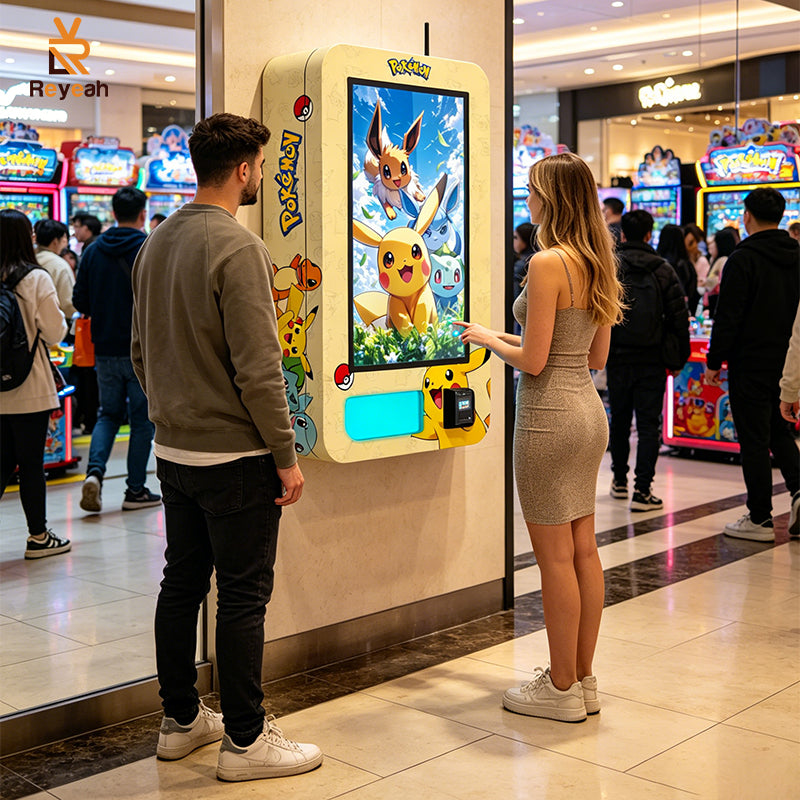
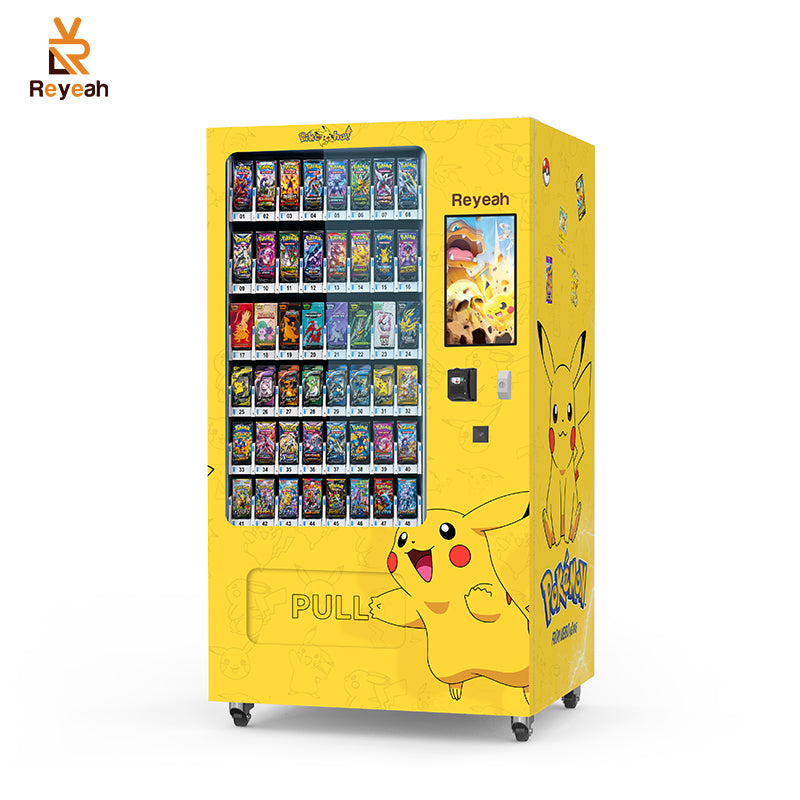
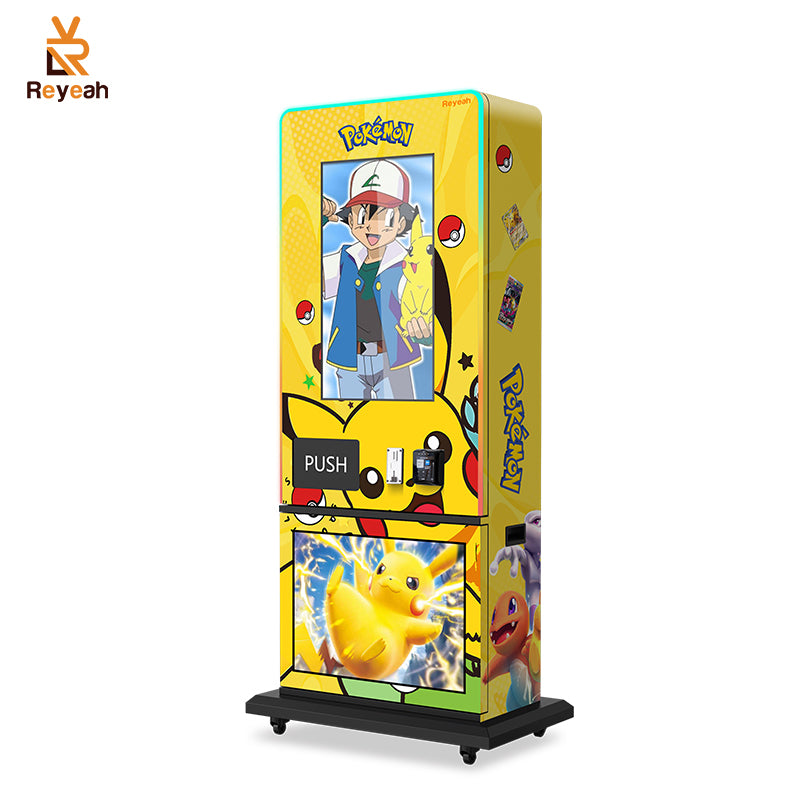
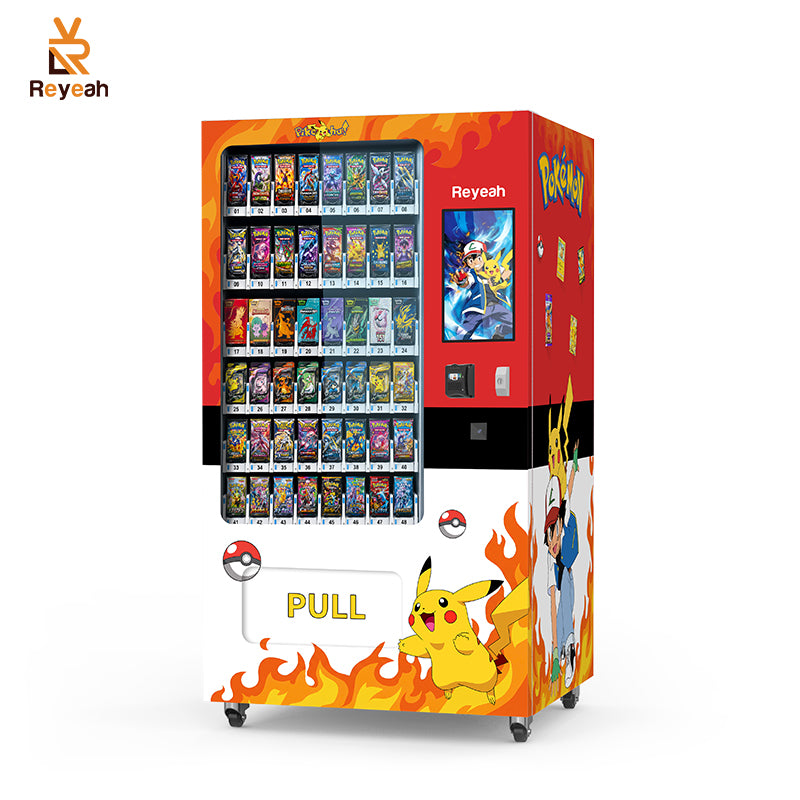
For a hobby shop, a 24-channel floor unit with a 43" screen (TCG-11) fits the range and drives impulse at the door. For a mall unit merchandising boxes, tins and slabs, the 48-channel showcase (CUZ016) keeps the full catalogue visible. For a corridor or a store wall with no floor allowance, the slim wall unit (G02) is the pragmatic choice. The configuration comparison covers the trade-offs in detail.
Reyeah machines ship with cloud telemetry, per-channel inventory alerts and remote price updates — the reporting layer that makes relocation decisions evidence-based instead of guesswork. See the card vending range.
FAQ
Is a mall a good location for a TCG vending machine? It produces the highest absolute revenue and the highest commission and theft exposure. It works when the cabinet is commercial-grade and the agreement has a short exit clause. It is a poor first site if you cannot absorb a slow month.
Do card shops allow vending machines inside? Many do, especially where the machine extends trading hours or absorbs queue overflow. The usual arrangement is a revenue share or a flat monthly fee, with the store providing power and a defined floor position.
How much traffic does a location need? Rather than a traffic number, use a sell-through threshold: fewer than 10 packs per day for three consecutive weeks means the site is not working, regardless of how many people walk past.
Can I put a card machine in an airport? You can, but TCG performs poorly there. Transit buyers are time-constrained and rarely browsing collectibles. Snacks, drinks and electronics accessories are the proven transit categories.
Do I need permission to sell Pokémon cards from a machine? Selling sealed, genuine product is ordinary retail. Using Pokémon branding on the cabinet or implying official status is not — keep the machine branded to your store unless you hold a licence.
What insurance does a vending machine need? Typically contents cover for the machine and stock, plus public liability at each site. Confirm with the landlord's insurer whether you are named on their policy or need your own.
How quickly can a machine be relocated? Floor units on castors move within a day once power and access are arranged; wall-mounted units need the backplate removed and the wall made good, which usually means a site visit and landlord sign-off.
Sources
- Circana, "U.S. Toy Industry Returns to Growth in 2025" (3 Feb 2026) — collectible and licensed toys outperformed; Pokémon reached $2.5B in U.S. sales: https://finance.yahoo.com/news/u-toy-industry-returns-growth-170500214.html
- PSA, "Grading Standards" — relevant when merchandising graded slabs alongside sealed product: https://www.psacard.com/gradingstandards
Venue revenue figures are illustrative planning inputs. Site costs, permits and tax treatment must be confirmed with the landlord and local authority.

Leave a comment