






Short answer: a commercial Pokemon card vending machine should accept contactless card and mobile wallet as the default, keep a bill and coin acceptor where the venue is cash-heavy, and add QR only if your market actually pays that way. The rail that matters is the one your buyer reaches for at 9 pm in a mall corridor — usually a phone, not a banknote. Because the payment stack is hardware, it has to be specified on the purchase order: retrofitting a validator or a QR module after delivery costs more than ordering it.
Three payment methods cover most sites: contactless card and wallet as the default, cash where the venue needs it, and QR where the market pays by scan. This guide sets out which payment methods a Pokemon card vending machine can support, what each one costs per transaction, how to choose rails venue by venue, and what to write into the specification so the machine settles correctly from the first vend.
Fee ranges below are illustrative planning bands for comparison, not quotes from any acquirer. Your processor's rate card and your site's connectivity decide the real number.
Which payment methods can a Pokemon card vending machine accept?
Four families of payment, each with its own hardware. A machine can carry all four, but each one adds cost and a failure mode:
| Rail | Hardware it needs | Where it earns its place | What to watch |
|---|---|---|---|
| Contactless card and mobile wallet | Card reader terminal (Nayax, PAX, Ingenico, Cantaloupe), NFC antenna | Everywhere; the default rail in malls, campuses and arcades | Terminal rental, scheme fees, settlement currency |
| Chip and PIN / insert | Same terminal, with a PIN pad or a shopper-facing keypad | Markets where contactless limits are low or cards are insert-first | PIN pad placement and weather exposure on outdoor sites |
| QR code / wallet apps | QR display on the machine screen plus a payment gateway integration | Asia-Pacific markets, event venues, markets with dominant scan-to-pay habits | Gateway contract, refund flow, screen brightness in sunlight |
| Cash: banknotes and coins | Bill validator with stacker, coin acceptor with hopper or tube | Transit, fairgrounds, family venues, markets with high cash use | Acceptor calibration, float and collection, theft and shrinkage |
Two rails are frequently confused. "Cashless" is not a specification — a machine that takes only contactless cards is cashless, and so is one that takes QR. Write the rails out one by one on the order: contactless, insert, QR, notes, coins.
What does each payment rail cost per transaction?
Card acceptance is a percentage plus a small fixed fee; cash is a capital cost plus a labour cost. They are not comparable by headline rate, so compare them per pack sold at your average ticket:
| Rail | Cost structure | Illustrative planning band | Hidden line |
|---|---|---|---|
| Contactless card / wallet | Percentage of sale plus fixed fee per transaction | Roughly 1.5–3.5% of ticket | Terminal rental, chargeback fees, currency conversion |
| QR wallet | Percentage, often lower than card in Asia-Pacific | Market-dependent; confirm with the gateway | Gateway setup, refund handling, reconciliation effort |
| Banknotes | Capital cost of the validator plus collection labour | Fixed hardware plus collection visits | Jam rate, float, counterfeit rejection, shrinkage |
| Coins | Capital cost plus hopper capacity | Fixed hardware plus collection | Emptying frequency, coin roll handling, foreign coin rejection |
On a low-ticket pack, the fixed fee matters more than the percentage: three small transactions can cost more in fixed fees than one larger one. If your product mix includes multi-pack bundles, the effective rate on those bundles is better — a commercial argument for merchandising bundles next to single packs.
Which payment methods does a Pokemon card vending machine need for each venue?
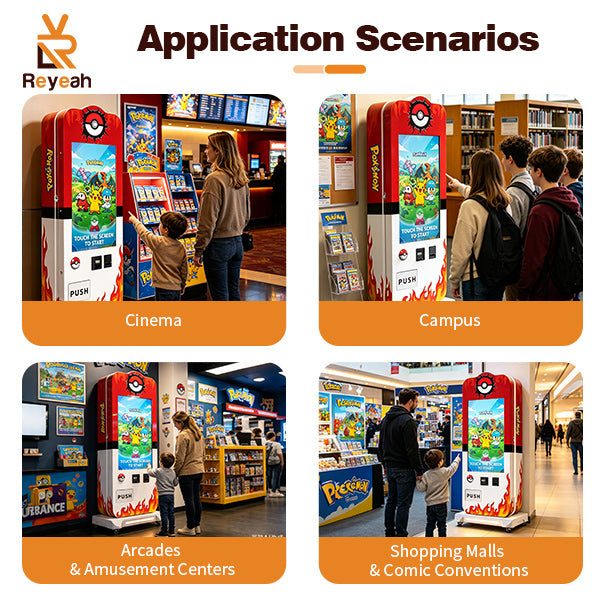
Match the payment methods to the site, not to the brochure. The pattern is consistent across markets:
| Venue | Primary rail | Keep as secondary | Reason |
|---|---|---|---|
| Shopping mall concourse | Contactless card and wallet | QR | Adult footfall, phone-first payment, no cash handling for centre management |
| Arcade / family entertainment | Contactless and cash | QR | Mixed-age spend, parents paying for children, card-payment floors |
| Hobby shop | Contactless | Cash | Regulars with accounts and tournaments; cash still used by younger players |
| Campus | Contactless and wallet | QR | Students rarely carry notes; campus card schemes may need RFID |
| Convention / event | Contactless and QR | Cash | Queue speed is the constraint; cash slows a queue and needs a float |
| Transit and travel hubs | Contactless | Cash | International cards and wallets dominate; cash for unbanked and foreign notes |
Where a venue operator already runs a cashless policy, a coin acceptor is dead capital. Where the site is a seasonal fairground, card-only will lose sales every rainy week when the network drops.
Is cash still worth keeping on a card vending machine?
Often yes, for three practical reasons. Younger buyers without a bank card still transact in cash; some venues take a share of a cash-in-hand economy that card rails cannot capture; and cash keeps working when the site's connectivity fails. The cost is real — acceptor hardware, collection labour, float and shrinkage — so treat cash as a venue decision, not a default.
If you do keep cash, specify the currency set at order. Multi-currency validators are standard on commercial machines, but the note set, the coin tube layout and the firmware currency table are configuration items. Changing a note set later is a service visit, not a setting.
How do refunds and failed vends work?
The payment rail only closes correctly if the machine knows whether the pack actually left the cabinet. That is what a drop sensor is for: the vend is verified before the transaction completes, and an unverified vend can be reversed or re-queued rather than argued about later.
- Card refunds are processed by the terminal against the original transaction. Ask how a refund is triggered remotely — screen prompt, dashboard action, or terminal-side only.
- Cash refunds require a payout mechanism or a manual intervention. Most operators give a credit or a pack, which is cheaper than fitting a note dispenser.
- Disputes are won with data: per-lane stock counts, vend timestamps and drop-sensor logs. Confirm your telemetry exports those three fields before you need them.
- Reconciliation should tie sales by rail to stock depletion per lane. If the dashboard cannot do that, you are reconciling two systems by hand every month.
What happens when the network drops?
Commercial terminals store and forward transactions within limits set by the acquirer, and cash acceptance continues without a network. The risk is the opposite of what operators expect: the machine keeps selling while the cloud dashboard stops updating, so stock counts drift. Ask two questions when specifying: what is the offline transaction limit, and does the machine buffer vend events until connectivity returns? A machine that loses its vend log on a network drop cannot be reconciled.
What should be specified at order time?
- Terminal brand and model — Nayax, Cantaloupe, PAX, Ingenico or Payter, with the exact model number.
- Rails, listed individually — contactless, insert and PIN, QR, notes, coins.
- Currencies and note set — transaction currency plus accepted note denominations.
- Wallet support — Apple Pay, Google Pay, Samsung Pay, UnionPay and any local scheme you need.
- Settlement details — who owns the merchant account, settlement currency and payout schedule.
- Telemetry and SIM — data plan owner, year-two cost, and whether the machine buffers offline events.
- Age and product restrictions — any local rule that requires a prompt or a restricted product set.
- Receipt and refund path — digital receipt, screen confirmation, and how a refund is initiated remotely.
How Reyeah configures payment on card machines
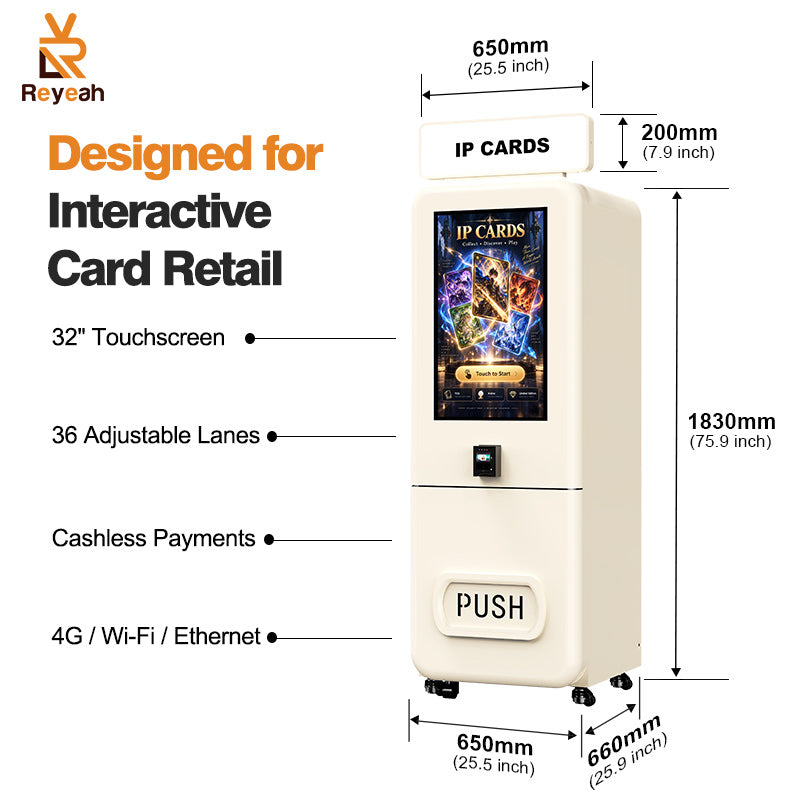
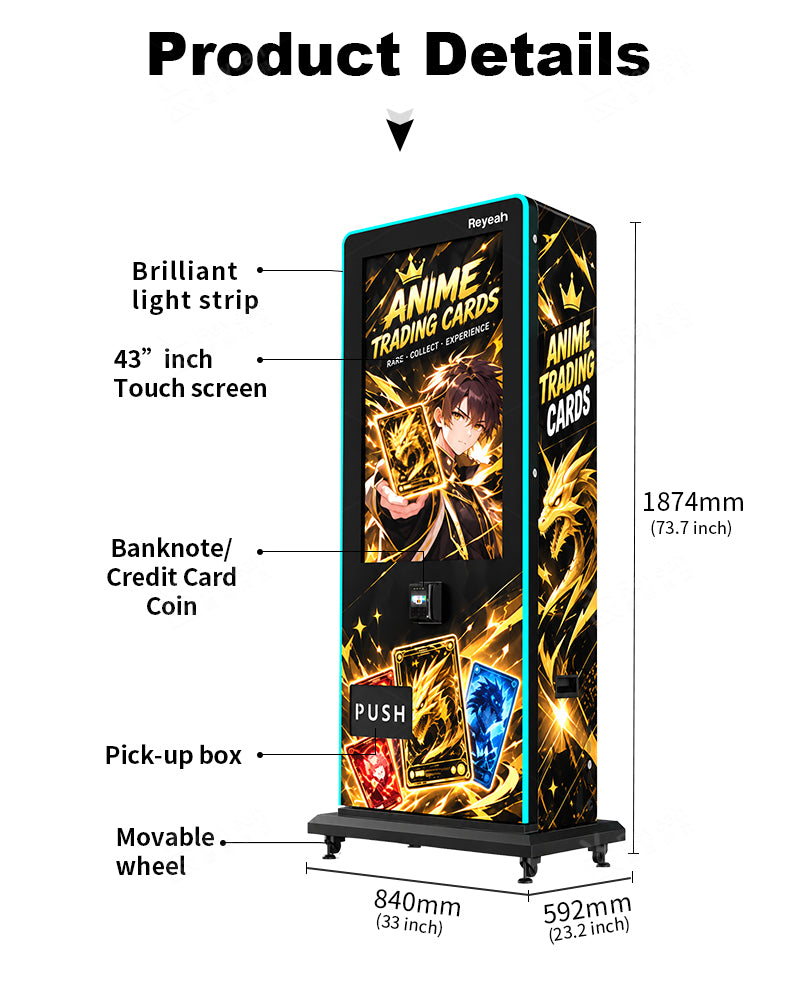
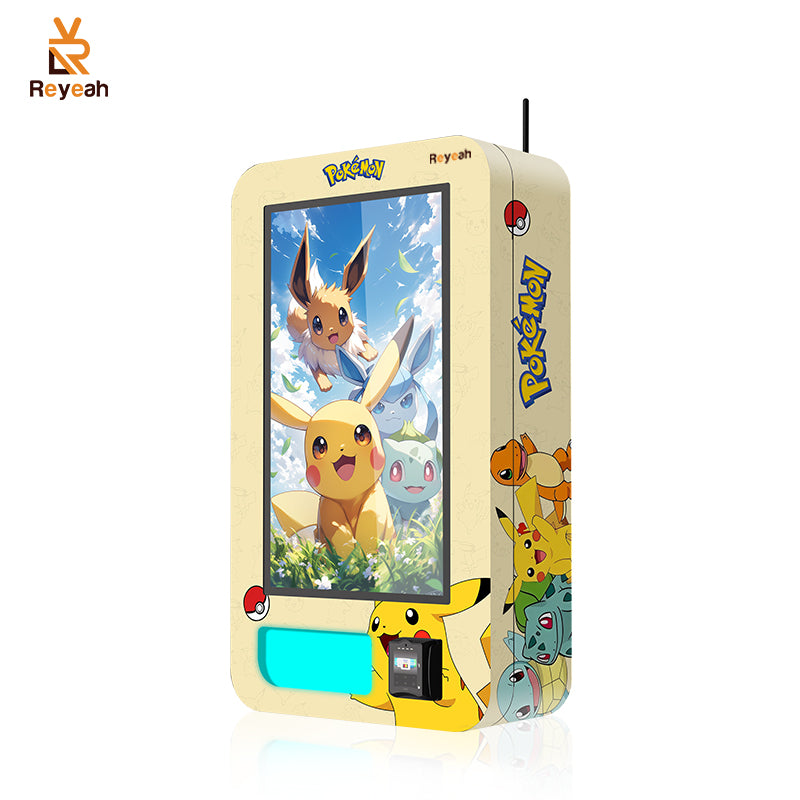
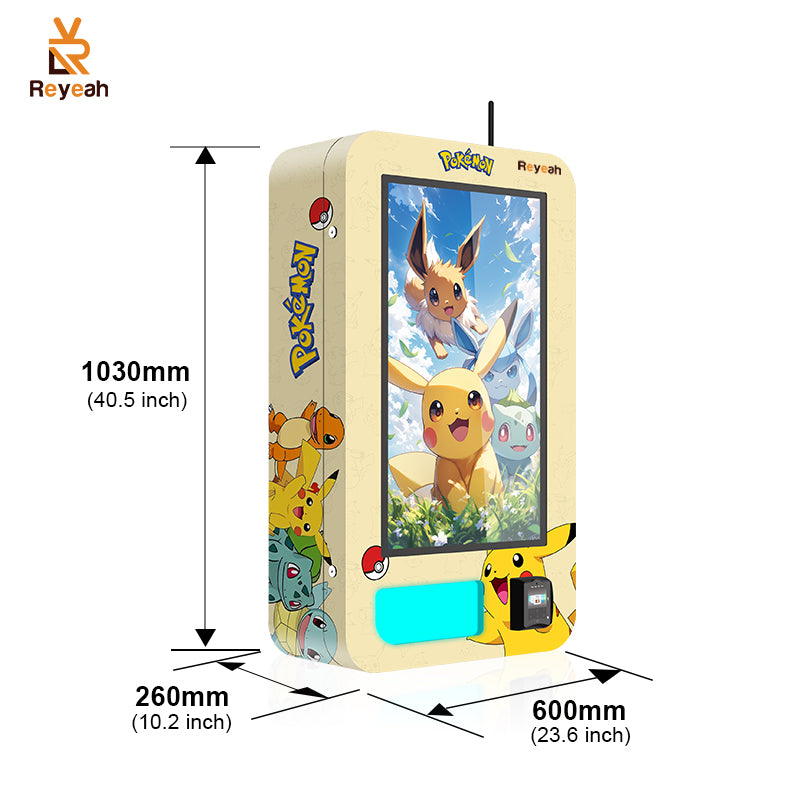
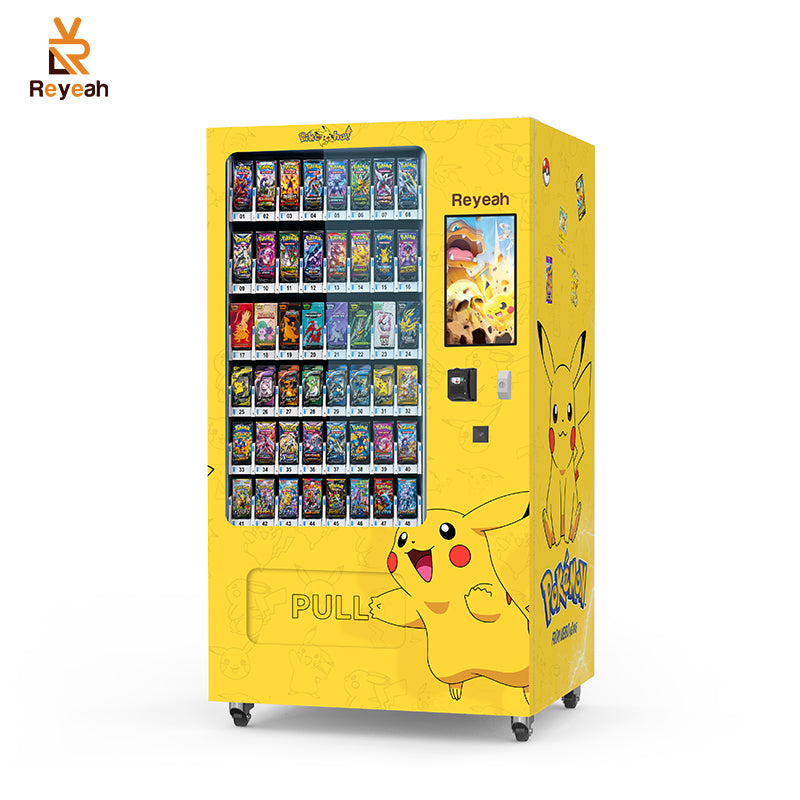
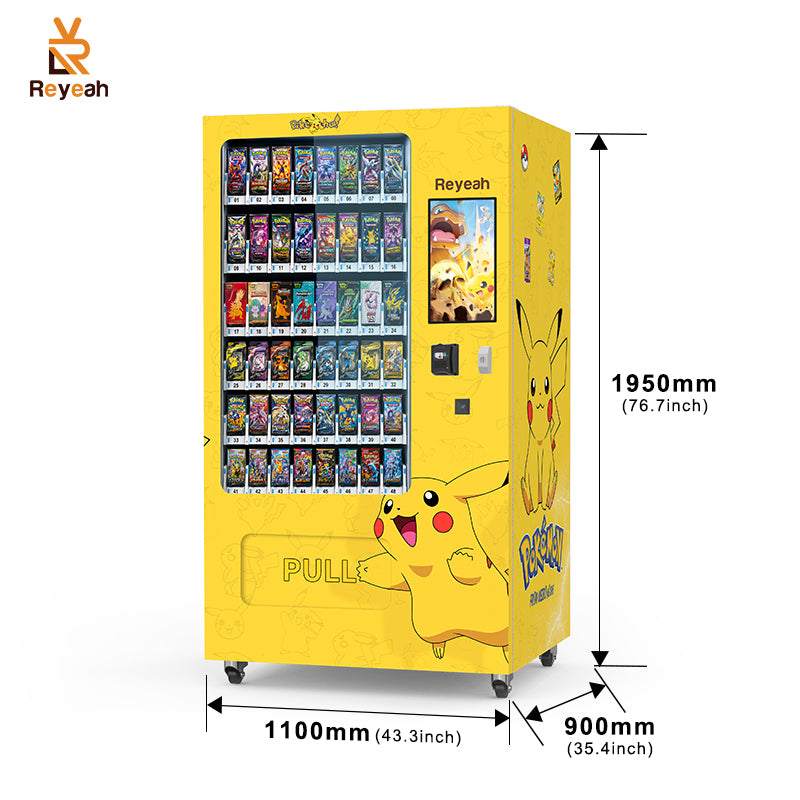
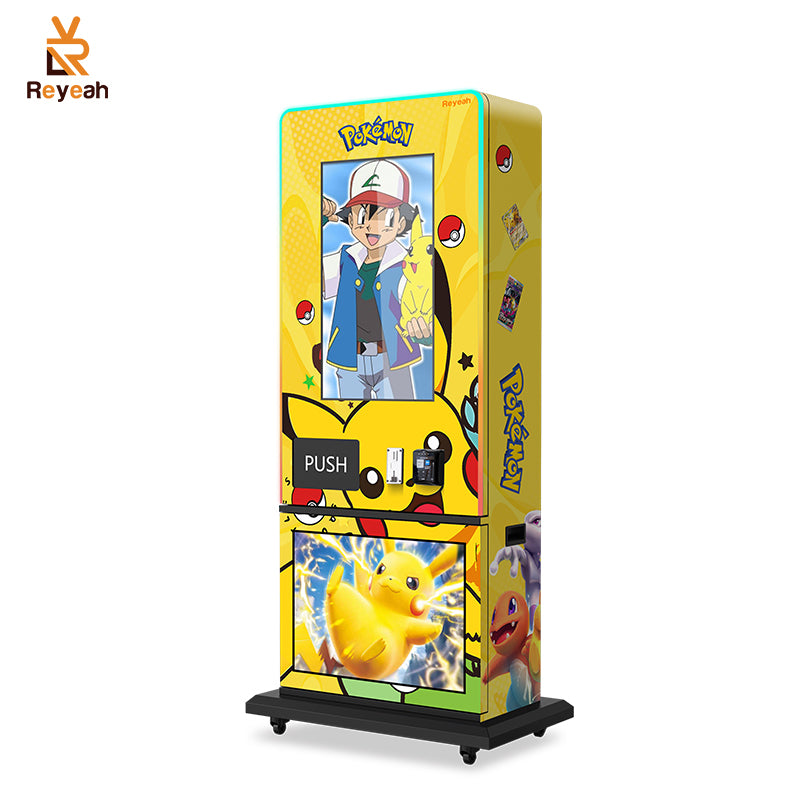
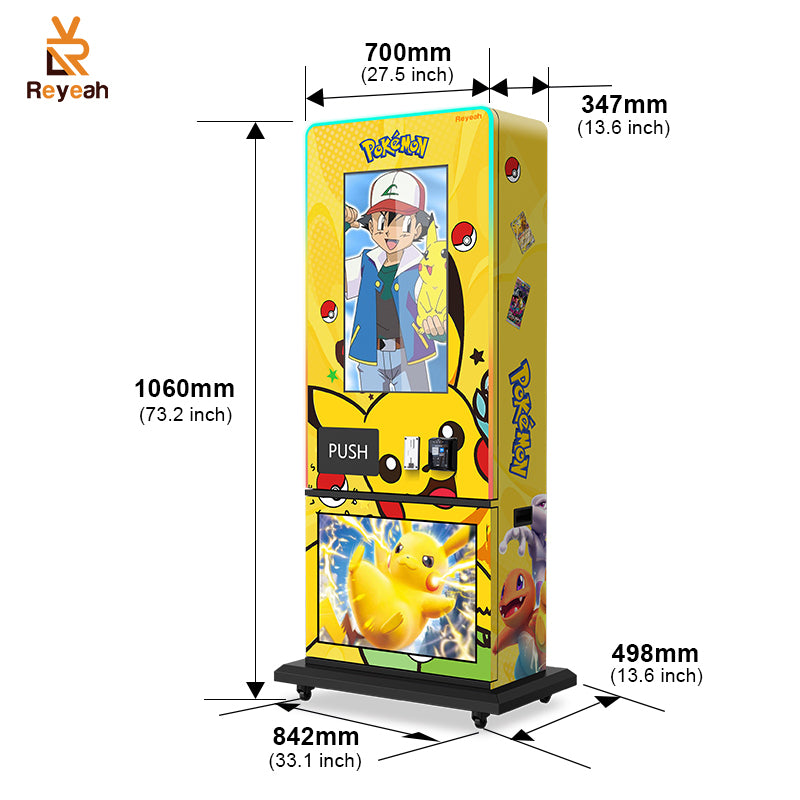
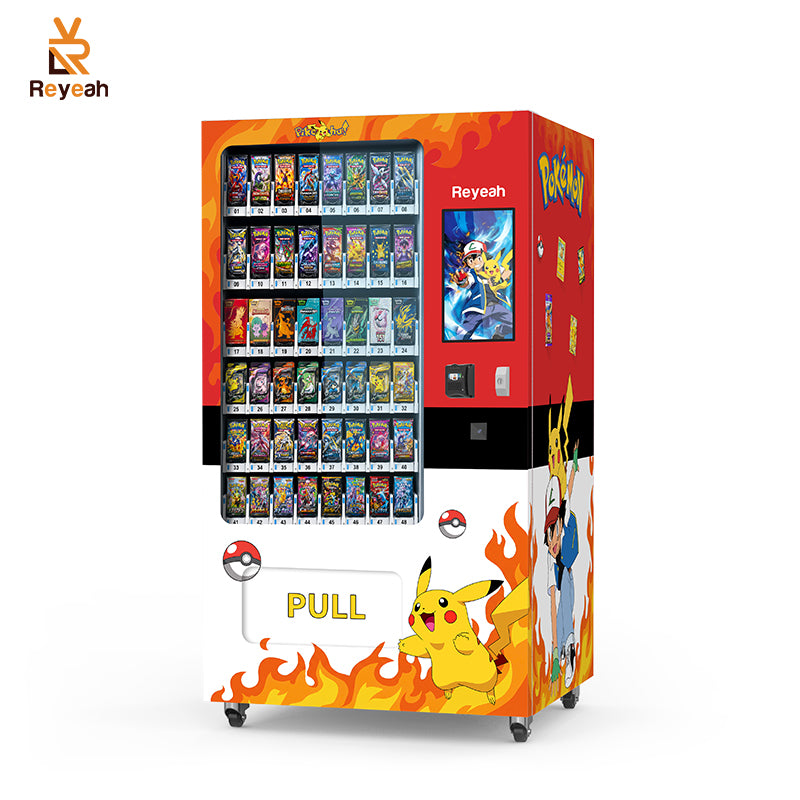
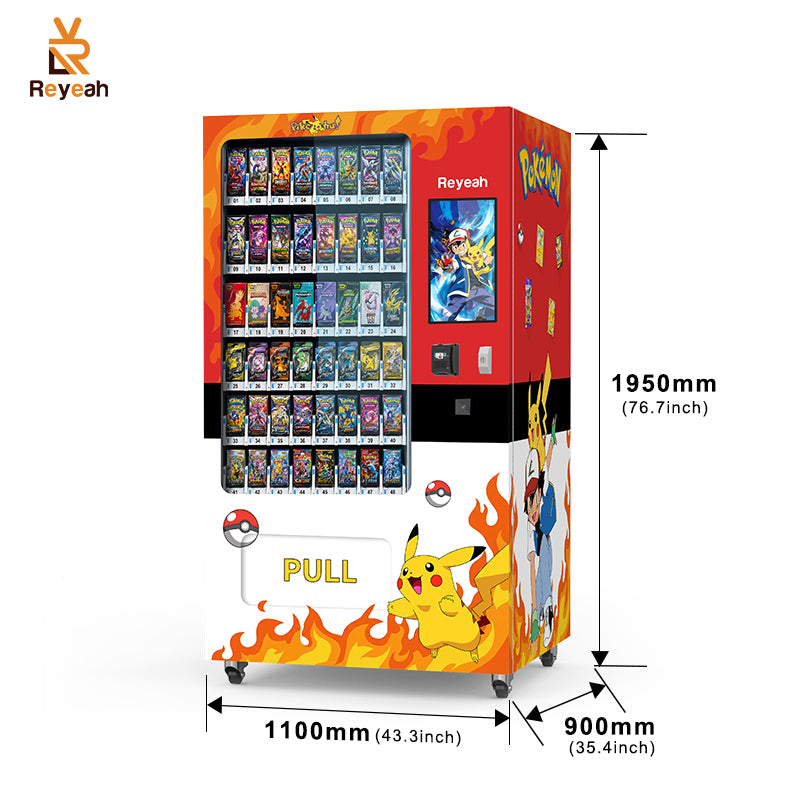
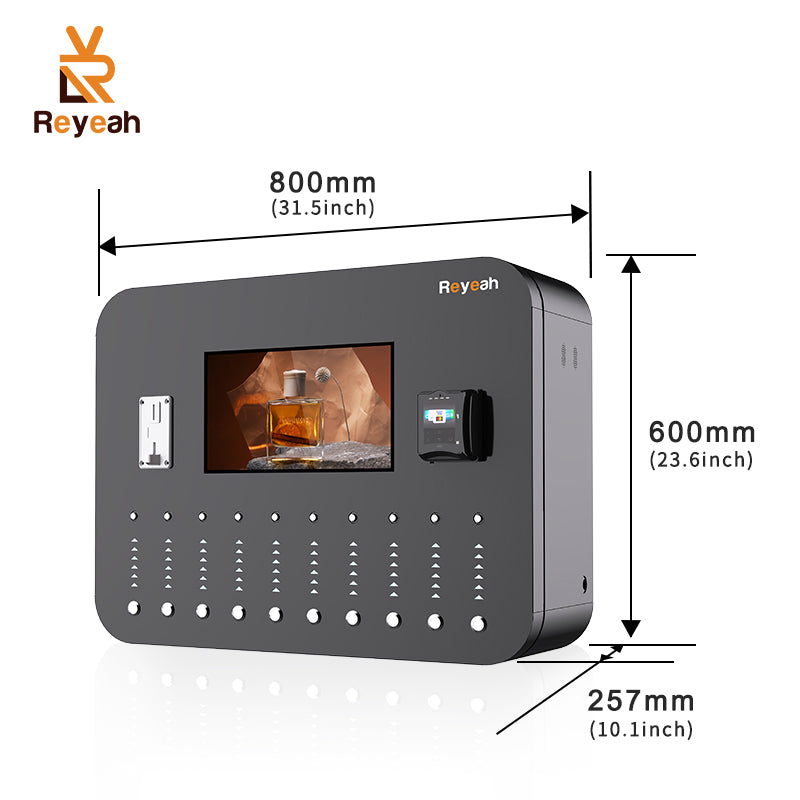
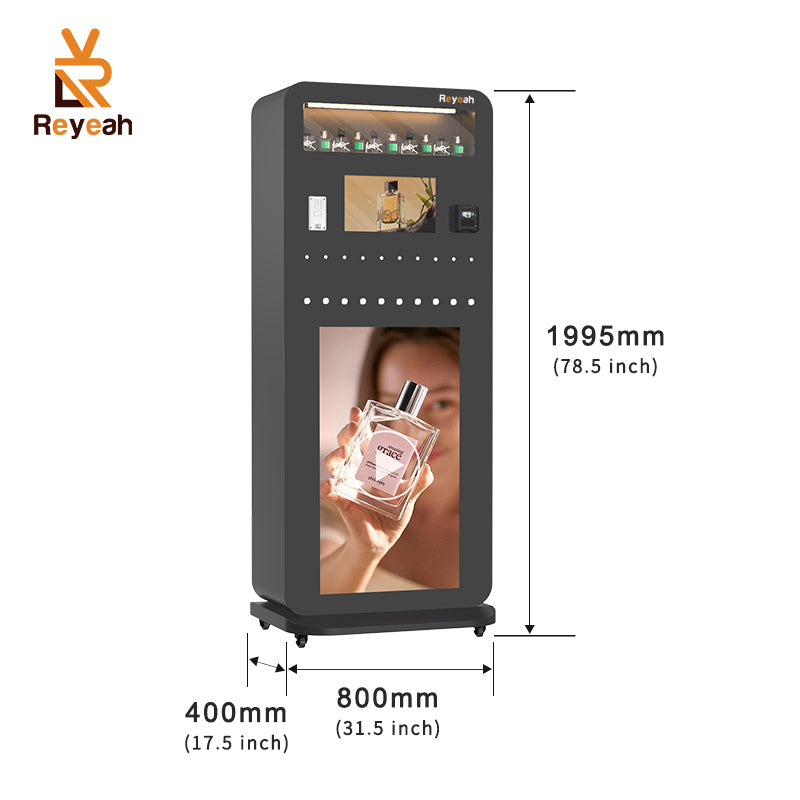
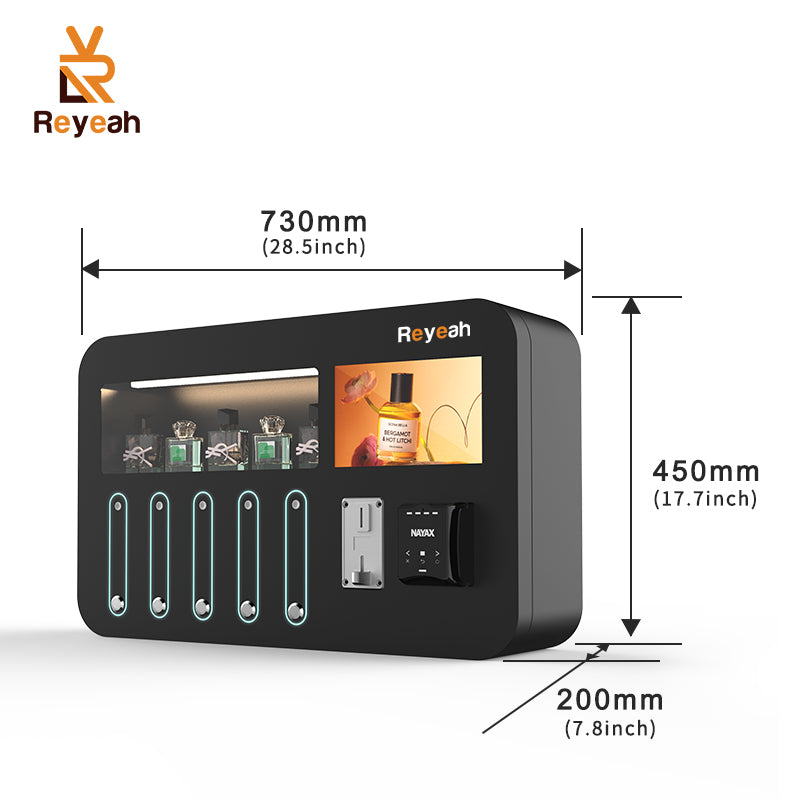
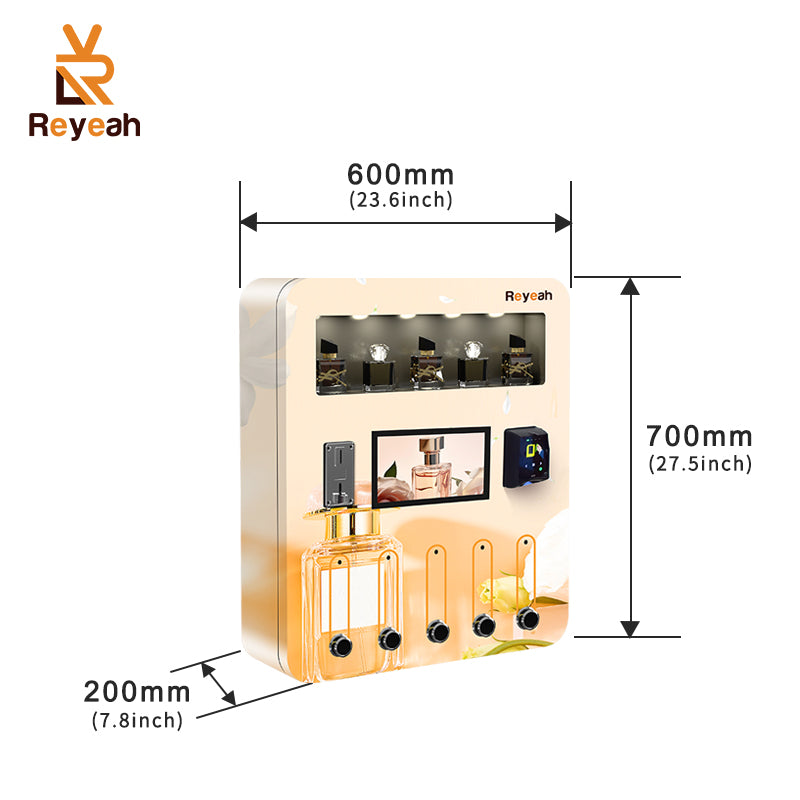
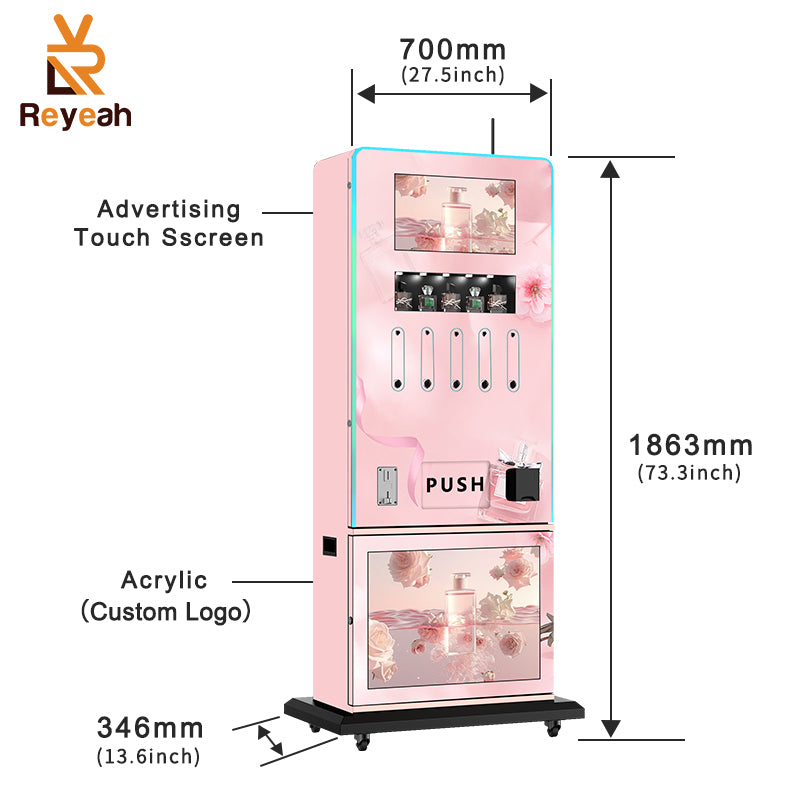
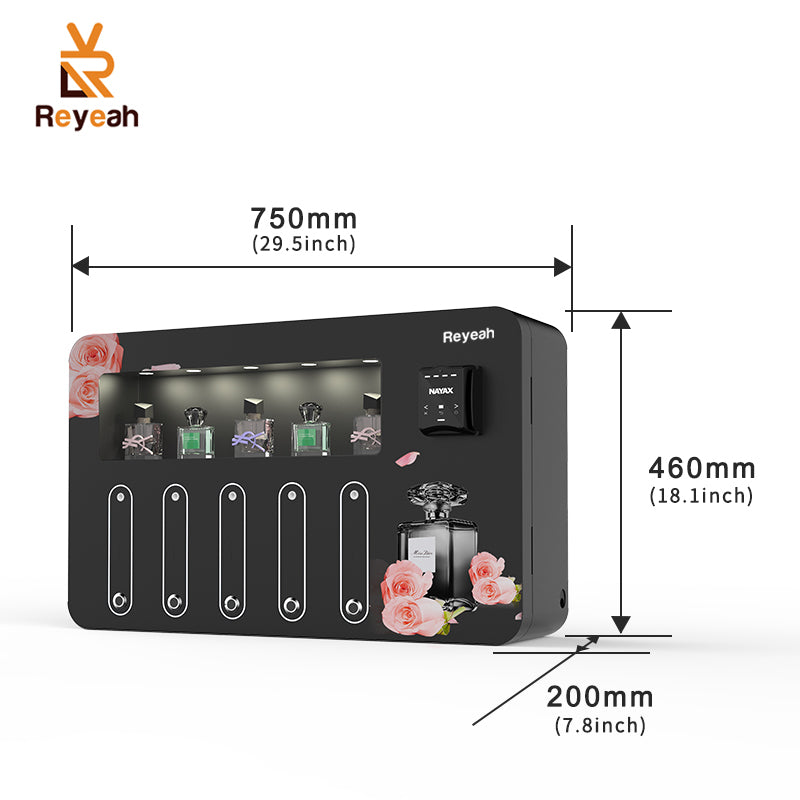
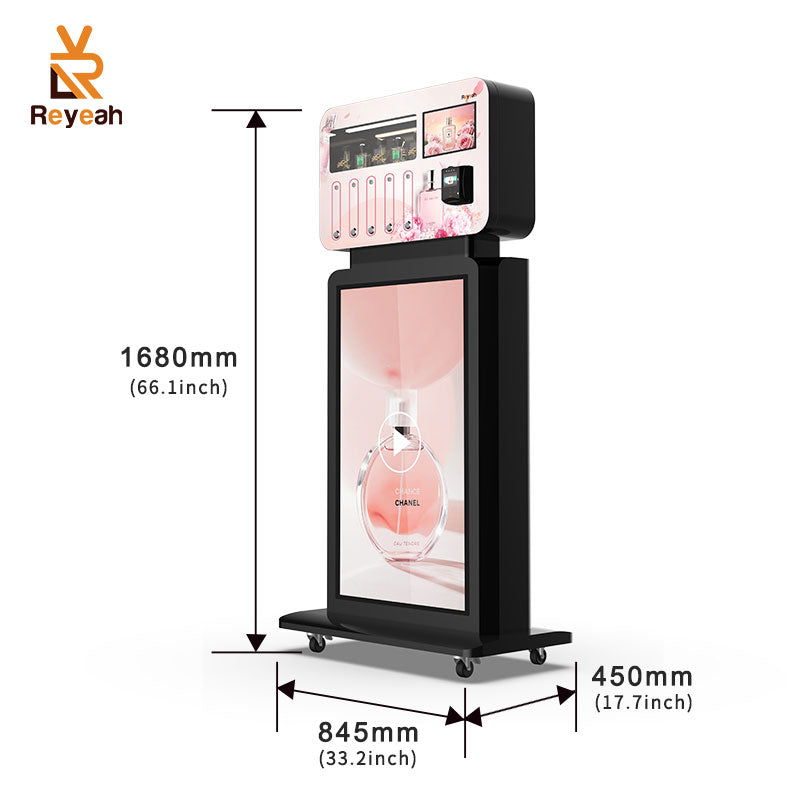
Reyeah card machines are built around a Nayax or Cantaloupe terminal with a configurable rail set. The 43-inch D13 supports card and contactless through a Nayax reader (PAX, Payter and Ingenico also supported), QR and PayPal payment, Apple Pay, Google Pay, Samsung Pay, UnionPay, Amex, Mastercard and Visa, plus banknote and coin acceptors for cash-heavy markets. The 32-inch TCG-12 ships with Nayax contactless supporting Visa, Mastercard, Apple Pay, Google Pay and RFID campus cards. The TCG-11 integrates Nayax VPOS Touch or Cantaloupe terminals with multi-currency bill validators and coin acceptors.
Because the rail set is fixed at build, the practical step is to tell us the market, the venue type and whether you want cash, then let the specification list the exact hardware. Request a factory-direct quote with your payment requirements, and the offer will show each rail as a separate line.
FAQ
Do Pokemon card vending machines accept Apple Pay and Google Pay? Yes, when the machine carries an NFC-capable terminal. Wallet payments ride the same contactless interface as a physical card, so the terminal model — not the machine — determines support. Confirm the wallet list on the specification.
Can a card vending machine give change? Machines with a coin hopper or tube can pay out change in coins; note change usually requires a note recycler, which is a separate and more expensive module. Many operators price in round amounts instead and avoid the module entirely.
What percentage do card payments take from a vending sale? Plan for roughly 1.5–3.5% of the ticket plus a small fixed fee, then add terminal rental. On low-ticket packs the fixed fee dominates, which is why bundle pricing improves the effective rate.
Can I change payment providers after delivery? Usually yes, if the machine exposes a standard interface and the terminal is not soldered into the controller. Ask before you buy whether the terminal can be swapped in your market, and who pays for the firmware change.
Is cashless-only a good idea? It is for staffed retail and for venues with a cashless policy. It is a sales cap at fairgrounds, transit sites and any location where a meaningful share of buyers are unbanked or under 18 without a card.
Sources
- Nayax, vending payment solutions and terminal range: https://www.nayax.com/business_type/vending/
- Nayax, management suite for remote monitoring and settlement: https://www.nayax.com/management-suite/