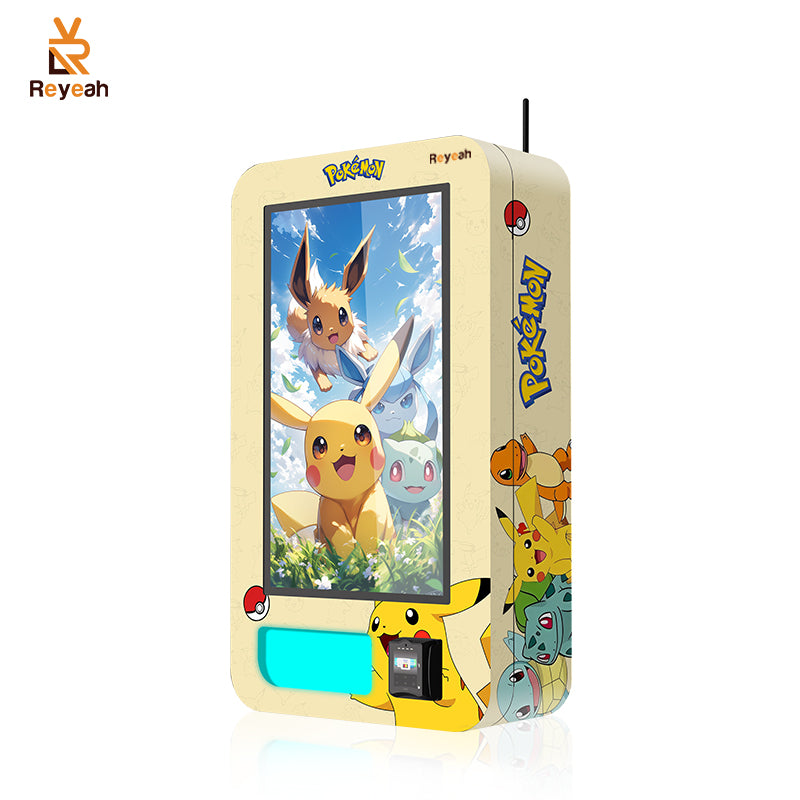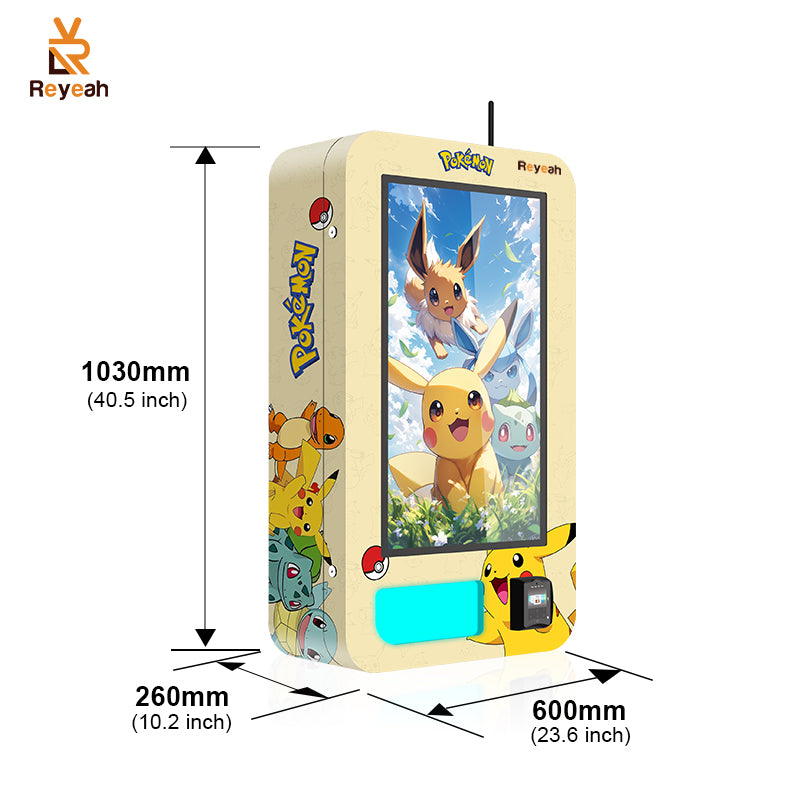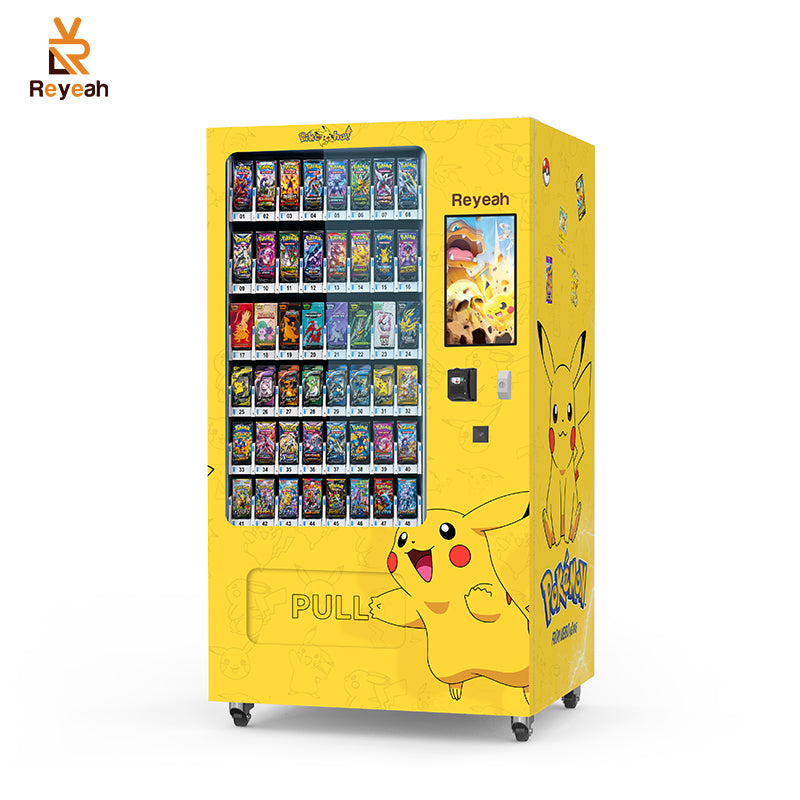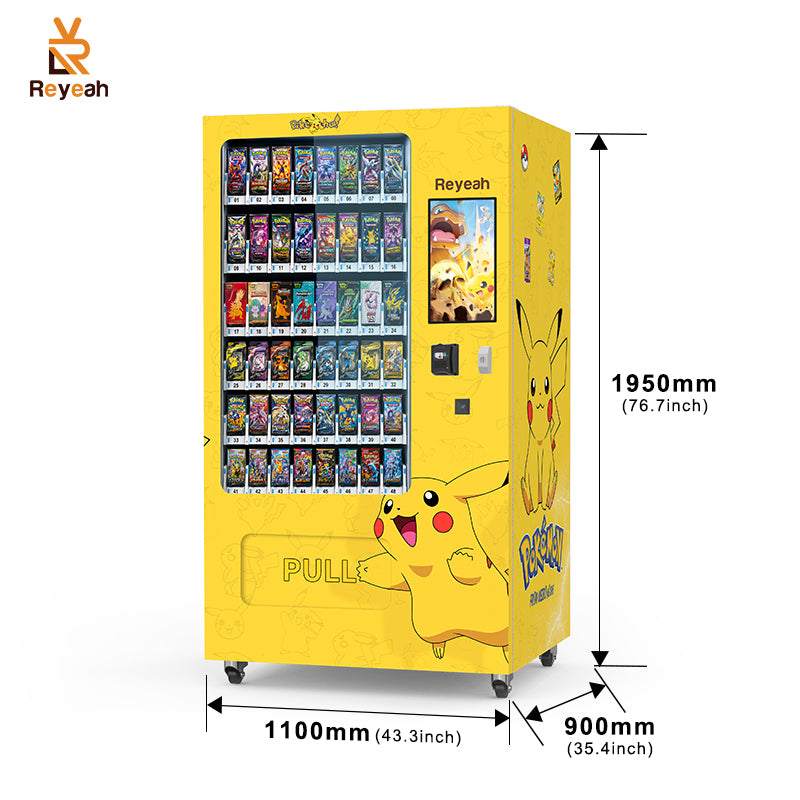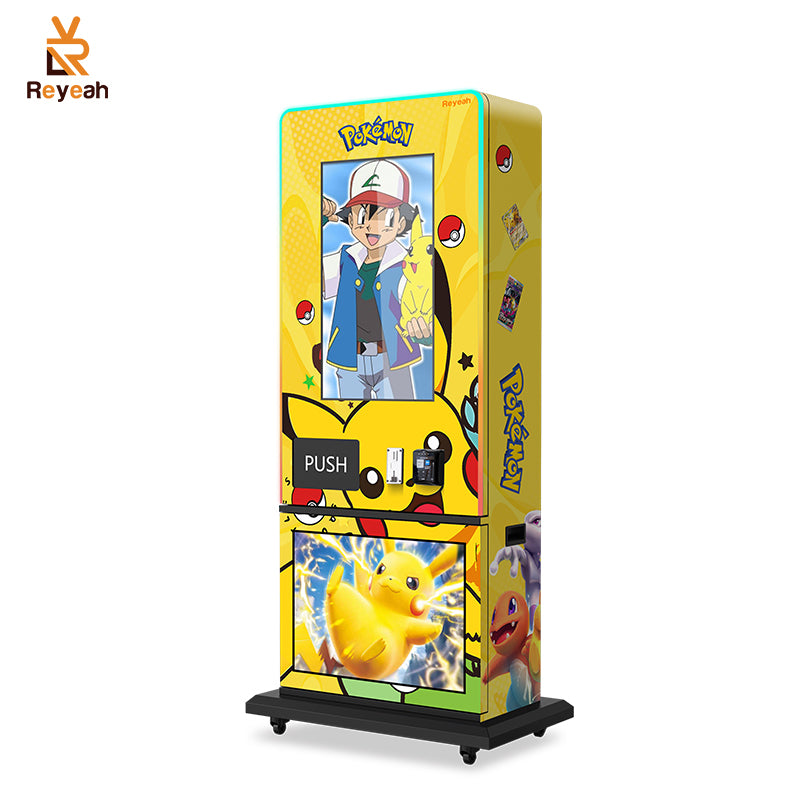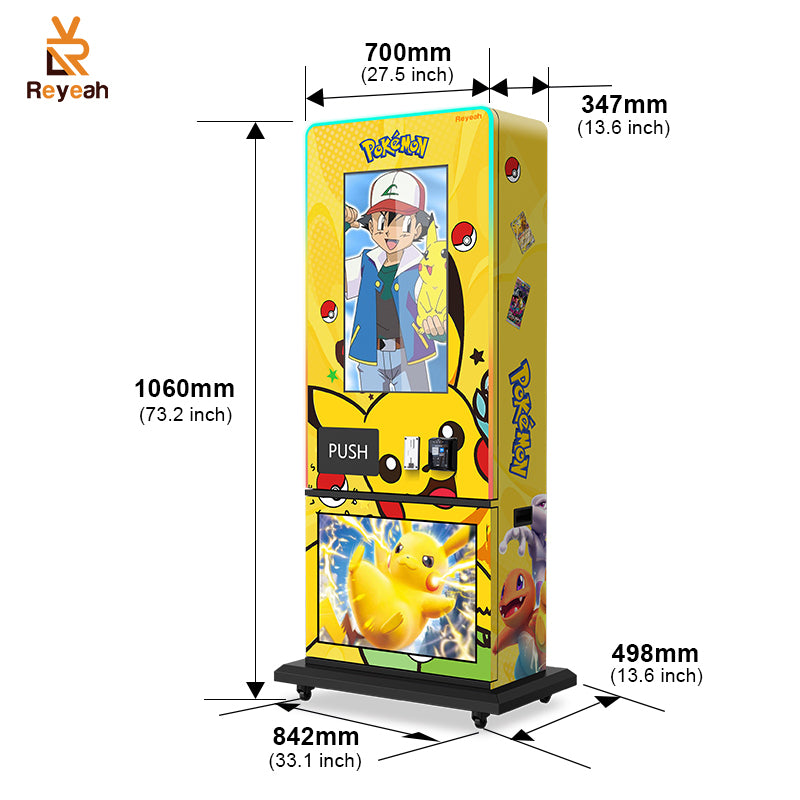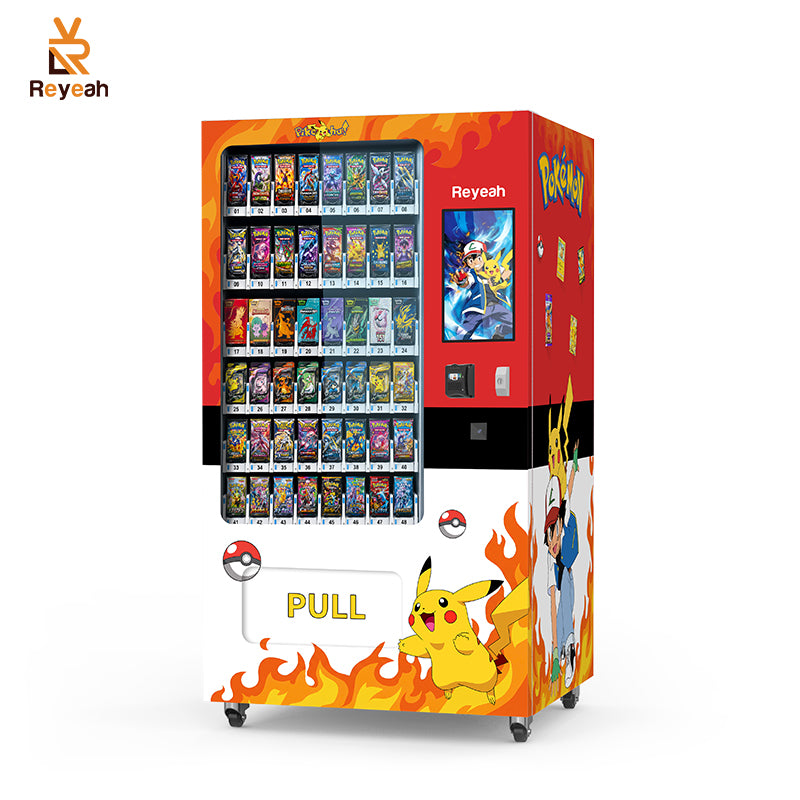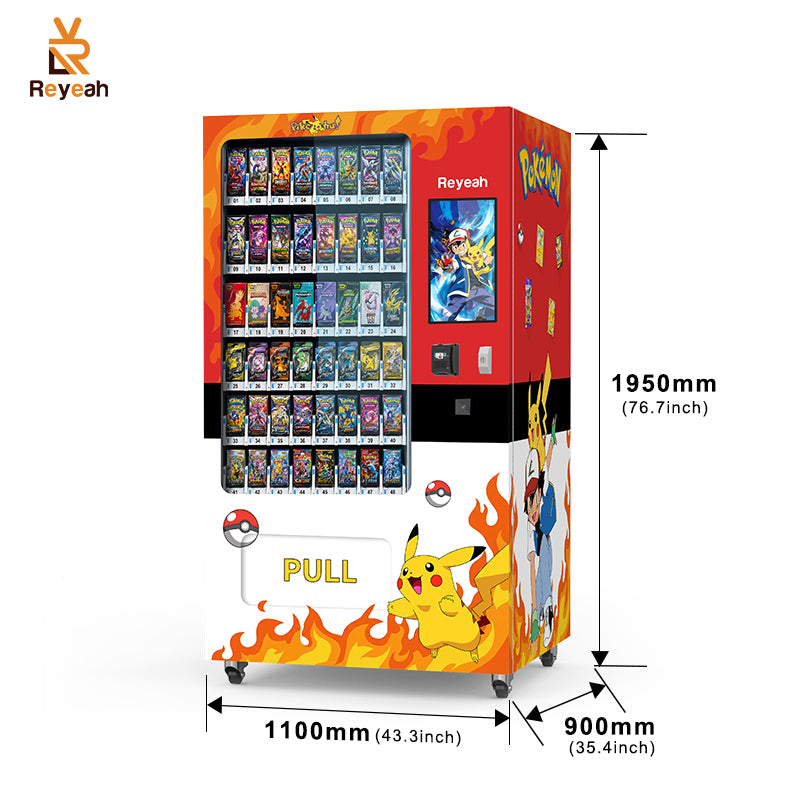

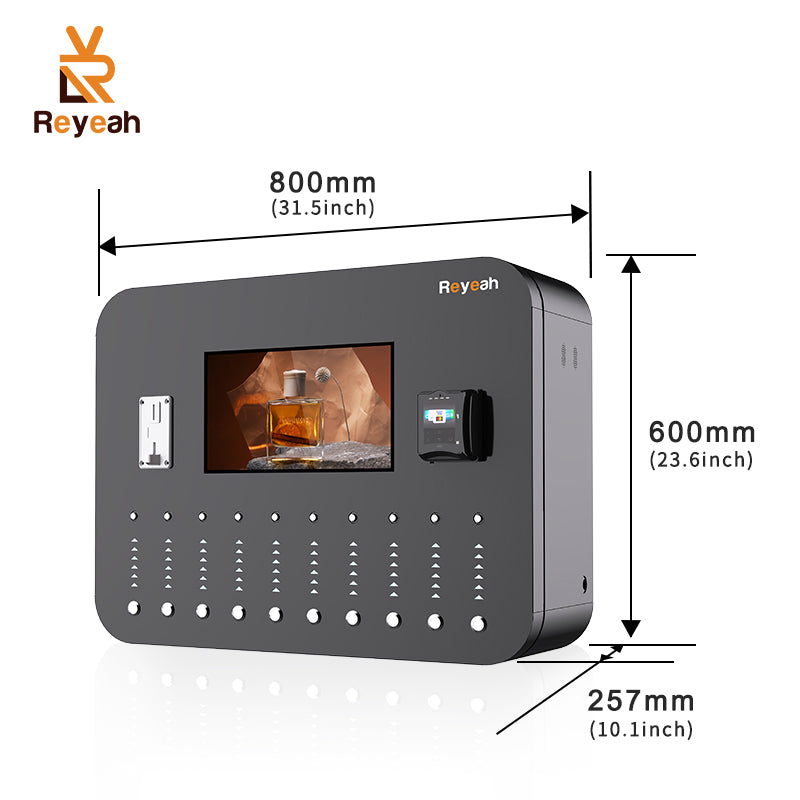

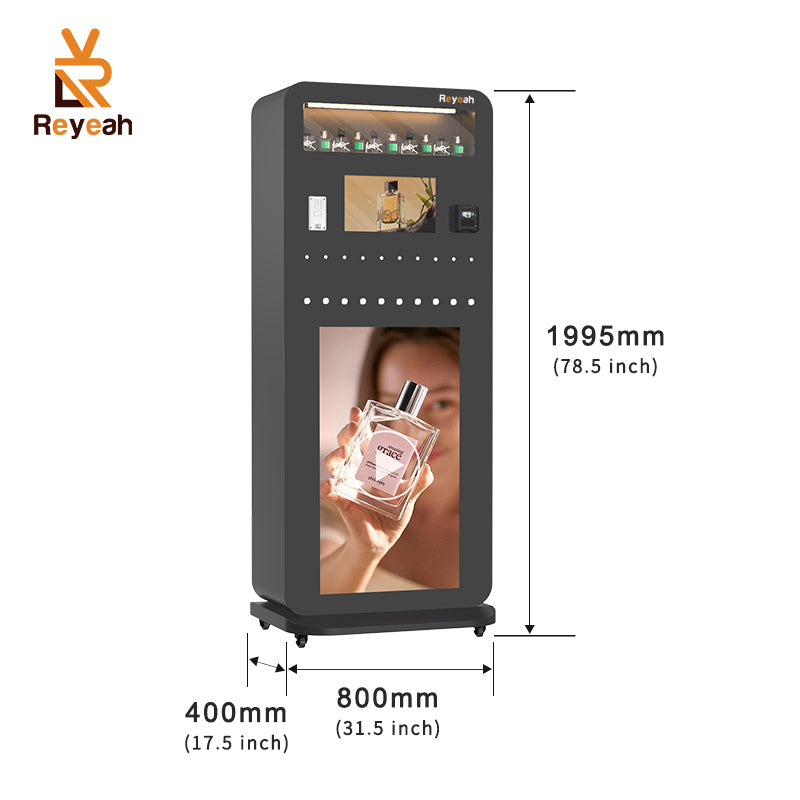

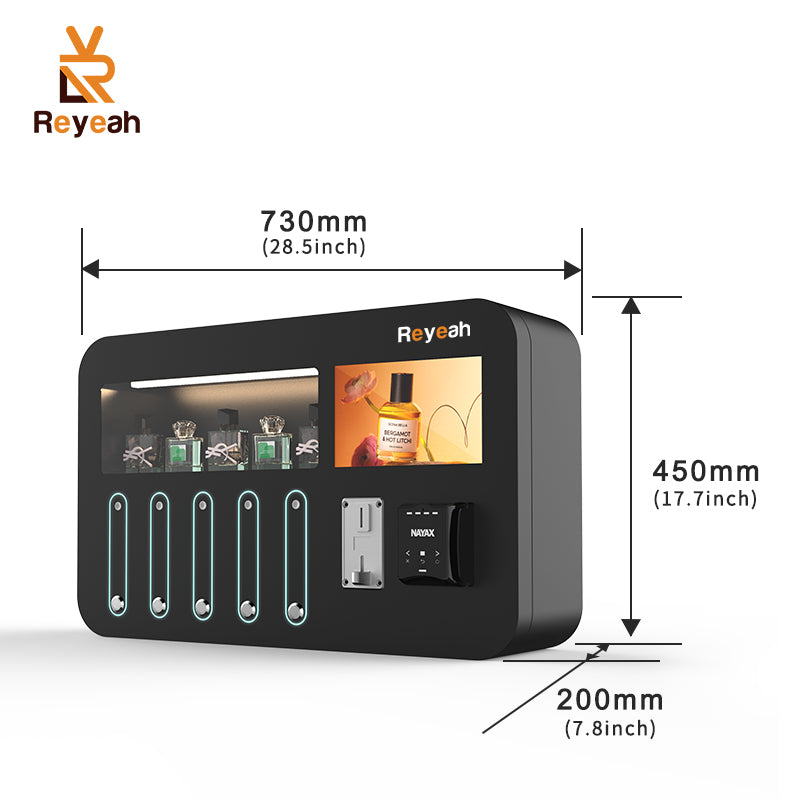

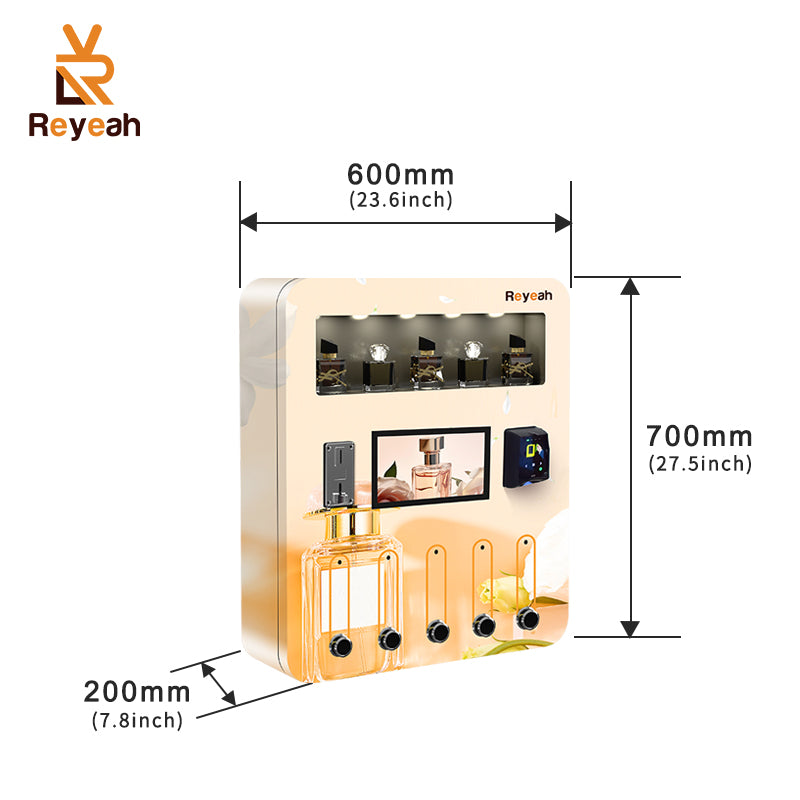

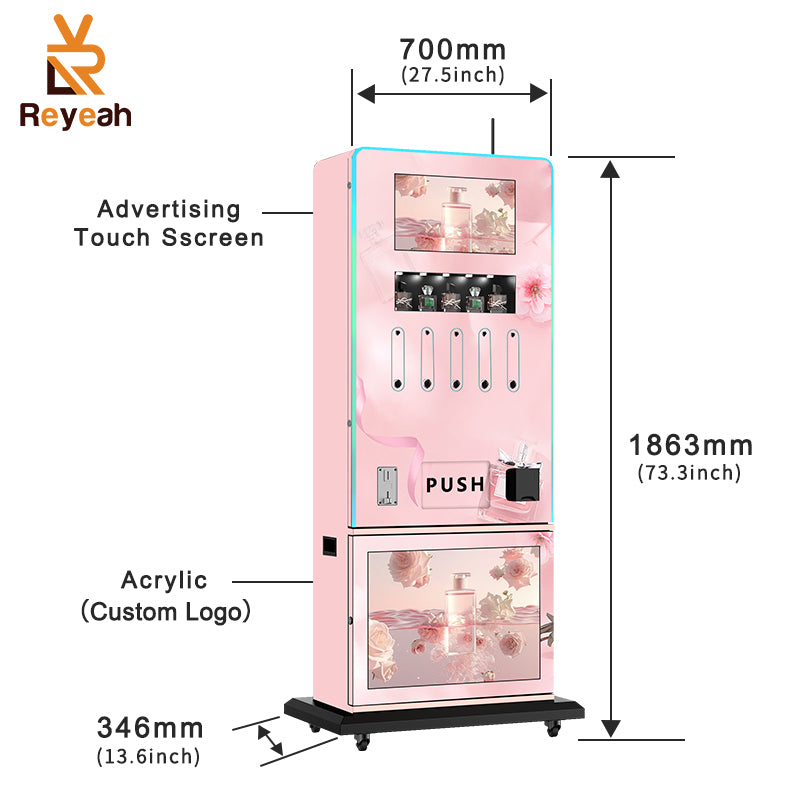

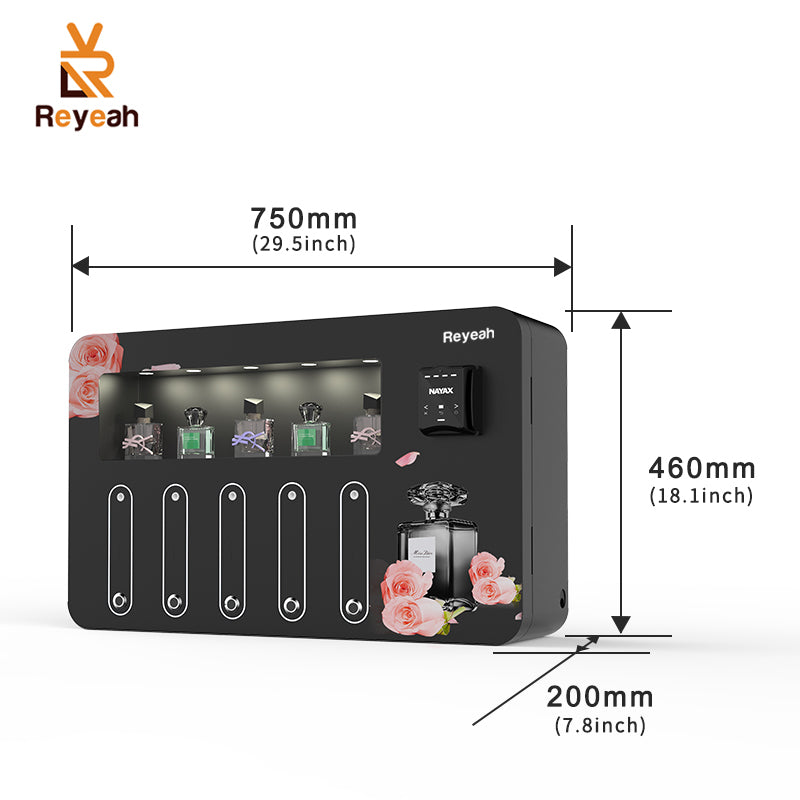

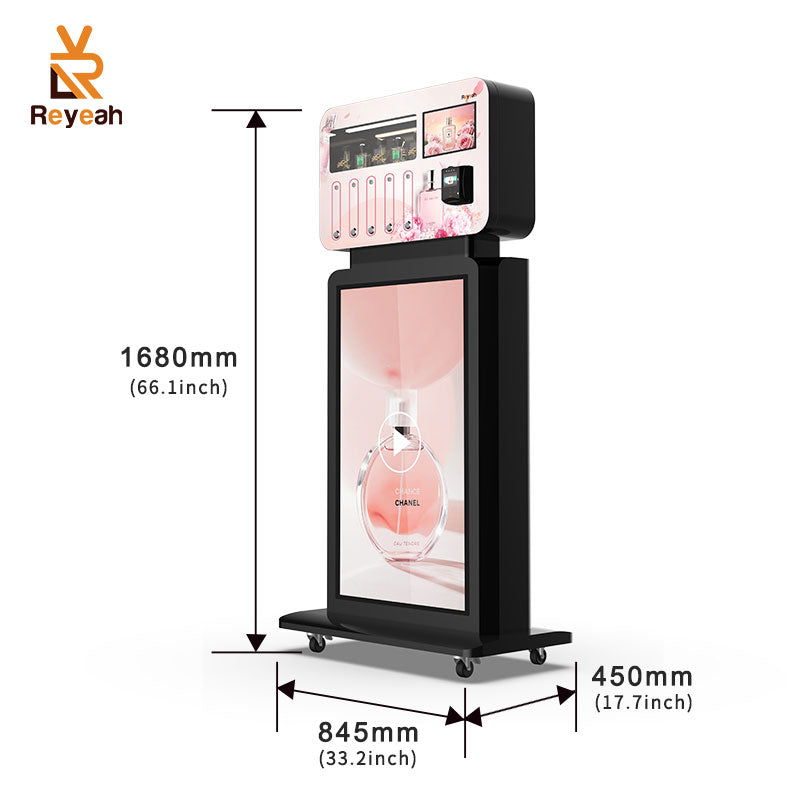
Wall-mounted or floor-standing is the first hardware decision in a card vending project, and it is usually made for the wrong reason — how the machine looks in a brochure. The format decides how much product the machine can hold, how much floor rent you pay, whether the venue will approve installation, and how a customer physically interacts with a booster pack. This guide compares the two formats on the criteria that affect revenue and site approval.
1. What actually differs between the two formats
Six things change between a wall-mounted card machine and a floor-standing one, and only one of them is aesthetic:
- Footprint and rent basis. A wall-mounted unit occupies no leasable floor; a floor-standing unit occupies about a square metre, which is what a mall or an airport charges for.
- Channel capacity. Floor-standing cabinets generally carry more channels and deeper stock per channel; slim wall units trade capacity for placement flexibility.
- Screen real estate. Larger cabinets accommodate larger displays, which matters for a product where the customer needs to read set names, pack counts and prices from a standing distance.
- Service access. A floor-standing unit can be opened from the front or the side in open floor space; a wall unit must be serviced from the front only, in a corridor where people are walking.
- Anchoring and structural load. A loaded wall unit transfers weight into a wall, so the wall type and fixing method become part of the venue approval.
- Delivery path. A tall cabinet has to fit through the venue's service door, into a lift, and around a corner. This is the single most common installation surprise.
2. Where wall-mounted wins
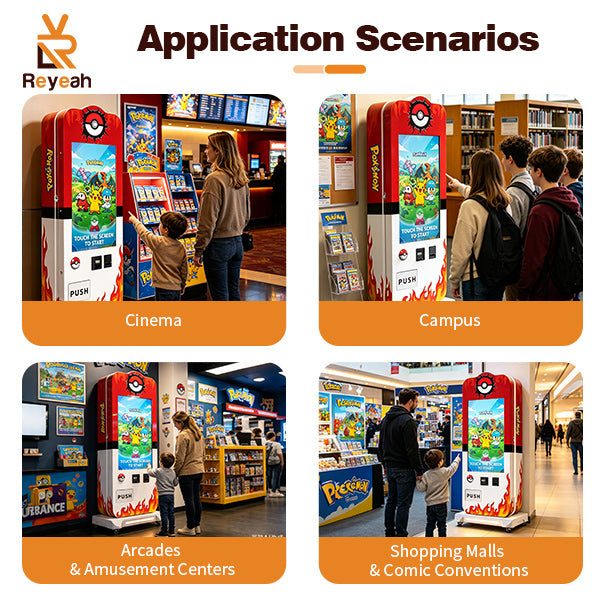
Wall-mounted formats win wherever floor space is scarce, expensive, or contractually unavailable. In practice that is most of the best card vending locations: airport corridors, transit concourses, hotel and casino lobbies, the wall beside a hobby shop's counter, and campus buildings where the facilities team will not release floor area.
The commercial logic is straightforward. If a venue charges rent by floor area, a wall unit removes that line from your cost structure entirely — sometimes converting a $400-a-month position into a revenue-share agreement. The trade-off is capacity: fewer channels and shallower stock per channel, which means more frequent restocking on a busy site.
Two wall-mounted constraints to check before ordering: the wall's construction (plasterboard needs different fixings from concrete, and some venue fit-outs will not accept a heavy wall-mounted cabinet at all), and the height at which the retrieval bay lands. A machine mounted so that a child cannot reach the retrieval bay is fine; one mounted so that an adult has to stoop is not.
Wall-mounted examples in the current range: the slim G02 wall-mounted TCG unit for tight positions, and the D12 slim kiosk where a slim floor-standing body fits better than a wall fixing.
3. Where floor-standing wins
Floor-standing cabinets win on capacity, presence and merchandising. A larger cabinet carries more channels and more units per channel, which lengthens the refill interval and lets you run a deeper product mix — core sets, single packs and a premium line in the same machine. On a hobby shop floor or an arcade, the cabinet also functions as a display: the customer sees a wall of product, which is what converts a browser into a buyer.
Floor-standing also wins on service. Opening a cabinet in open floor space is faster and safer than working in a corridor, and a site with a monthly visit pattern benefits from that every month.
The cost is rent. A mall that charges per square metre will price a floor-standing unit differently from a wall unit, and some venues cap the number of floor-standing vending units per zone. Confirm the permitted footprint, and whether the venue requires the unit to be secured to the floor — several do, for insurance reasons.
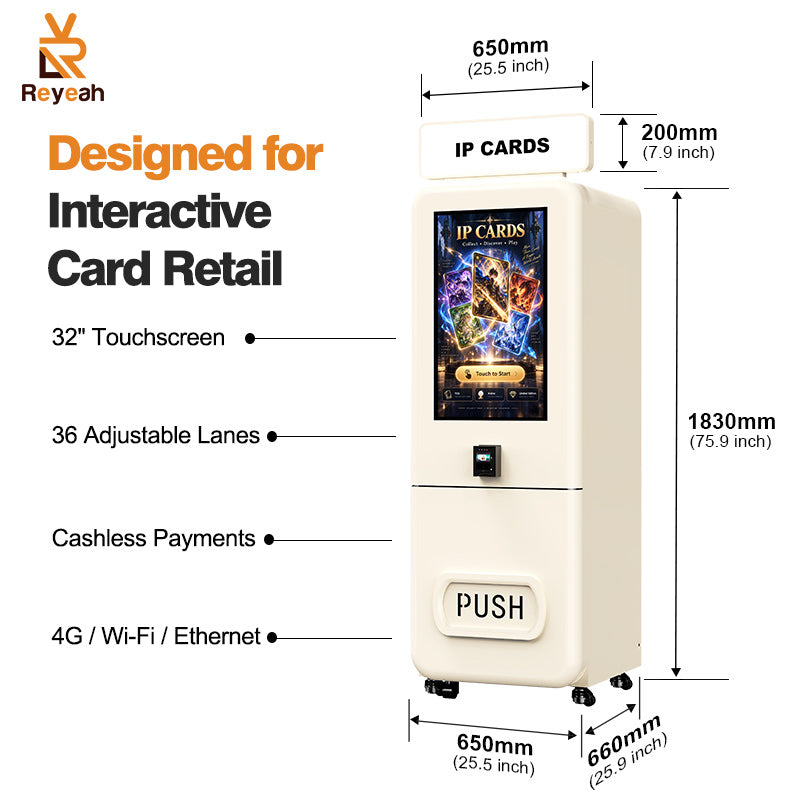
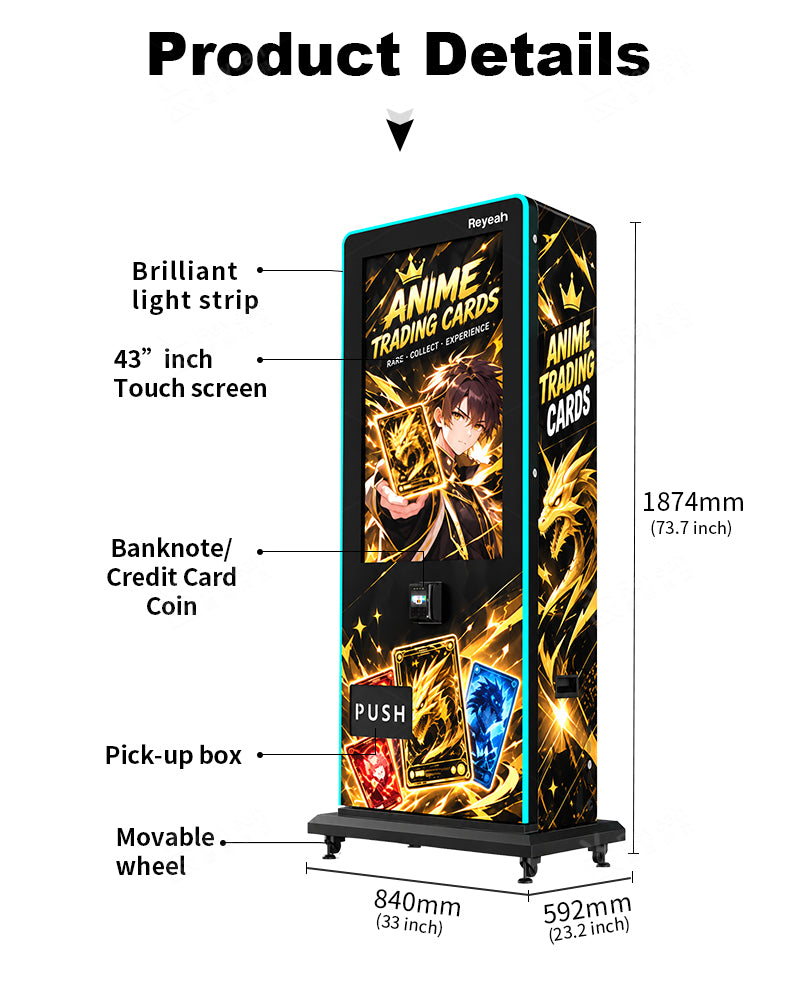
Floor-standing examples: the TCG-11 booster pack vending machine for pack-forward merchandising, and the D13 43-inch touchscreen cabinet where screen size is doing the selling.
4. Side-by-side comparison
| Criterion | Wall-mounted | Floor-standing |
|---|---|---|
| Floor rent | None — wall position only | Roughly 1 m² of leasable area |
| Channel capacity | Lower; faster refill cycle | Higher; deeper stock per channel |
| Product mix depth | Narrow — core sets plus packs | Broad — core, packs and premium line |
| Screen size | Smaller | Larger, readable from several metres |
| Installation | Wall structure and fixing method must be approved | Service door, lift and floor loading must be checked |
| Service access | Front only, in a public corridor | Front or side, in open space |
| Venue approval risk | Lower footprint objection, higher structural objection | Lower structural objection, higher floor-rent objection |
| Best venue | Airport, transit, hotel, campus, shop wall | Hobby shop floor, arcade, mall concourse, convention hall |
5. Matching format to venue
The decision usually resolves itself once the venue is fixed:
- Airport or transit. Wall-mounted. Floor area is priced per square metre and rarely granted to vending.
- Hobby shop. Floor-standing, near the counter, so staff can answer questions about what is in the machine.
- Mall concourse. Floor-standing if the lease grants floor area; wall-mounted if the only permission is on a structural column.
- Arcade or entertainment venue. Floor-standing, because the cabinet competes visually with the arcade floor.
- Hotel or casino lobby. Either, depending on the wall; wall-mounted if the lobby's design review forbids freestanding units.
- Convention or event. Slim floor-standing, because it moves between halls and needs no wall.
6. Installation requirements to confirm in writing
For either format: power at the exact position (voltage, frequency, current draw, and whether the circuit is shared), connectivity (a 4G signal at the position, or a usable Wi-Fi network), and a service access window when the corridor is not busy. For wall-mounted units, add the wall construction and the fixing method, and who is responsible for making good the wall at the end of the term. For floor-standing units, add floor loading, whether floor anchoring is required, and the delivery path measured in millimetres — door width, lift depth and corner radii.
Our specification guide lists the numbers to collect before signing, and our venue guide covers which placements actually convert.
7. Which to buy first
If your first site is a hobby shop, arcade or mall floor, buy floor-standing — capacity and merchandising matter more than rent on a single site. If your first site is an airport, transit location, hotel or campus, buy wall-mounted, because the format is the condition on which the site exists at all.
If you are buying without a signed site — which we do not recommend — buy the format that suits the most venues in your target list, and treat it as a demo unit you will redeploy rather than a permanent installation.
FAQ
Is a wall-mounted TCG vending machine cheaper than a floor-standing one? Usually, because it uses less cabinet material and no stand. The bigger saving is rent: a wall position removes floor area from the lease.
How many channels do I need? Enough to cover the refill interval you can service. A busy venue doing 40+ vends a day wants the higher-capacity cabinet so a weekly visit is not forced.
Can a wall-mounted machine be installed on plasterboard? Not safely as a loaded cabinet unless the wall is reinforced or the unit is braced to structure. Confirm the wall type with the venue and specify fixings accordingly.
Which format is better for a hobby shop? Floor-standing, placed near the counter. The cabinet works as a display and staff can answer questions about what is inside it.
Do floor-standing units need to be bolted down? Some venues require it for insurance. Ask before delivery, because anchoring changes the installation time and the floor repair obligation.
Can I move a machine between venues? Yes, both formats are relocatable, but a wall-mounted unit needs a new fixing assessment at every site and a floor-standing unit needs a delivery route re-measured each time.
Conclusion
Choose the format the venue will actually permit, then size capacity to the refill interval you can service. Wall-mounted removes floor rent and wins in transit-style locations; floor-standing buys capacity, merchandising presence and easier servicing. Reyeah builds both, with 24- and 48-channel configurations and touchscreen or screenless fronts — compare them in the TCG card vending machine range, check the numbers in the cost and ROI calculator, or send us your venue measurements and we will tell you which format fits before you order.