






Short answer: most TCG card vending machines sold under Western brand names are built in Guangdong, so "which country" is the wrong question. The question that decides whether your machine still works in year three is whether you are buying from a company that owns the dispensing mechanism or from a reseller forwarding a brochure. A real manufacturer can show you the spring-lane tooling, the drop-sensor test rig, the patent numbers and the assembly line on a video call. A trading company can show you a PDF. Ask five verifiable questions, require the answers in writing, and a list of twenty Chinese TCG card vending machine suppliers usually collapses to three.
This guide covers how the Chinese vending supply chain is organized, how to separate factories from resellers, the specifications that must appear in a written offer, and the red flags that predict a jam-prone machine six months after delivery.
Reyeah builds TCG card vending machines at its Guangzhou factory and also supplies OEM customers, so the vetting process below is the same one a buyer should run on us.
Why are most TCG card vending machines manufactured in China?
Because every subsystem of a TCG card vending machine is made inside a short drive of the next one, and that is why almost every commercial unit on the market is designed in one of a handful of Guangdong factories whatever brand name ends up on the cabinet. A card machine is not a refrigerator with a coin slot: it is a spring-lane dispensing mechanism, a controller running MDB or a comparable protocol, a bill and coin validator, a payment terminal, a screen, and a steel cabinet. Guangdong hosts all six supply chains, plus the payment-terminal integrators that connect the machine to Nayax or Cantaloupe settlement.
That depth produces two very different kinds of supplier, and both are legitimate — but they are not interchangeable:
- Mechanism owners. They design the lane geometry, the spring pitch, the retrieval bay and the drop sensor, and they hold patents on them. Spare parts exist for a decade because the parts are their own part numbers.
- Assemblers. They buy modules and bolt them into a cabinet, then wrap it in your artwork. Price can be attractive, but when a lane mis-feeds, nobody in the chain owns the geometry, and spare lanes may stop being available when the module supplier changes model.
For a route operator buying five machines, an assembler can be fine. For a hobby chain standardising on one model across twenty sites, the mechanism owner is the only supplier that can guarantee a spare lane in year four.
How do you tell a TCG card vending machine manufacturer from a trading company?
Ask for evidence that costs a trader something to produce. Six checks separate the two within a week, without a factory visit:
| Check | What a manufacturer can produce | What a trader cannot |
|---|---|---|
| Business licence scope | Manufacturing activity listed, with a factory address that matches the audit | Trading or import/export scope only |
| Patents | Certificate numbers where the supplier is the applicant, covering the dispensing or locking mechanism | Generic "we have patents" with no numbers |
| Live video walk-through | Sheet-metal line, assembly bay, ageing/test bay, spares shelf — on a scheduled call | Pre-recorded marketing footage, or excuses about "the workshop is closed" |
| Order traceability | A serial-numbered unit in production for your order, photographed at three stages | Photos of finished machines with no order link |
| Test reports | EMC and safety reports naming the manufacturer as applicant | Reports borrowed from a customer, or with the model number blanked out |
| Change capability | Can re-tool a lane width, add a shelf or change the retrieval bay for your pack format | Can change the vinyl wrap and the logo only |
For a buyer shortlisting Chinese TCG card vending machine manufacturers, the practical test is the video audit: a factory can schedule a walk-through of the sheet-metal line and the test bay, a reseller can only forward footage.
A trading company is not automatically a bad choice — some add real value in logistics, consolidation and after-sales in your market. The failure mode is paying factory-direct prices to a reseller who cannot supply factory-direct support.
What should a TCG vending machine supplier put in writing?
Every line below should appear on the quotation or the proforma invoice, not in a chat message. If a supplier will not commit to a number, treat the number as unknown and price the risk yourself.
| Specification | Why it decides the outcome |
|---|---|
| Channel count and shelf layout | 24, 36 or 48 lanes changes refill interval and how many SKUs you can merchandise at once |
| Lane width range and maximum pack thickness | Booster packs, blisters, tins and graded slabs are not the same size; a fixed lane limits your product mix permanently |
| Dispensing mechanism and drop-sensor type | Spring pitch and delivery verification determine the jam rate and whether a failed vend is detected |
| Screen size, operating system and remote content | Decides whether you can change pricing and advertising without visiting the site |
| Payment terminal model and supported rails | Card, contactless, QR and cash are separate hardware; retrofitting a validator costs more than ordering it |
| Telemetry: SIM ownership and year-two subscription | The machine is cheap to connect and expensive to keep connected if the data plan is bundled at a markup |
| Warranty inclusions and exclusions | Mechanism and wear parts are usually excluded — which is exactly what fails first |
| Spares kit contents and lead time | A machine down for three weeks waiting on a lane is a revenue problem, not a parts problem |
| MOQ per model and per artwork | Standard configurations are often available in single units; custom tooling and printed wraps usually raise the batch size |
| Certification per destination | CE and FCC are not the whole story; local schemes and importer obligations vary by country |
What do CE, FCC and RoHS actually cover on a card machine?
Three different claims get mixed together in most brochures, and the difference matters at customs and at the payment provider:
- Machine-level safety and EMC. The cabinet, controller, motors and power supply are tested as a unit. The report should name your model.
- Payment terminal approval. Card-scheme approval belongs to the terminal vendor and the acquiring bank, not to the vending factory. A factory claiming "PCI certified" for a machine it did not build is a warning sign; the correct answer is "we integrate Nayax or Cantaloupe terminals that carry their own approvals."
- Materials restrictions. RoHS and similar material rules apply to the product placed on your market, and enforcement is the importer's responsibility. Ask for a report per destination rather than a generic certificate.
If your destination requires a local scheme (UKCA, EAC or a national equivalent), confirm in the offer who prepares the file and who pays for it. Suppliers who have shipped to your market before will answer in one sentence; suppliers who have not will answer with a brochure.
How should a first order be structured?
The cheapest way to de-risk a first purchase is to separate the sample decision from the production decision:
- Buy or borrow a demonstration unit first. Not a video — a machine you can load with your own packs.
- Run a 48-hour trial. Fifty dispensing cycles per lane type, the thinnest and thickest pack you intend to sell, a deliberate network disconnection, a refund, and a cash-acceptor calibration.
- Inspect before shipment. A third-party pre-shipment inspection on the actual serial numbers is inexpensive relative to a container of machines with the wrong lane pitch.
- Put the delivery date on the proforma invoice. Production lead time is a promise until it is written down with a booking reference.
- Order the spares kit with the machines. Lanes, springs, fuses, a cleaning kit and the retrieval-bay sensor. Shipping spares later costs more than the parts.
What are the red flags?
- A price 30% below the market median with identical specifications. Something in the specification is not identical. Usually the cabinet gauge, the validator, or the drop sensor.
- No patent numbers, but "we have many patents." Patent numbers are public; a supplier who will not share them is telling you something.
- Refusal of a live video audit. A factory can schedule a walk-through; a reseller cannot.
- Willingness to print any brand artwork without authorisation. A supplier who will put a licensed character on your machine without paperwork will also sell that machine to your competitor.
- No spare-parts list. If the offer has no part numbers, year-four support does not exist.
How Reyeah works with first-time importers
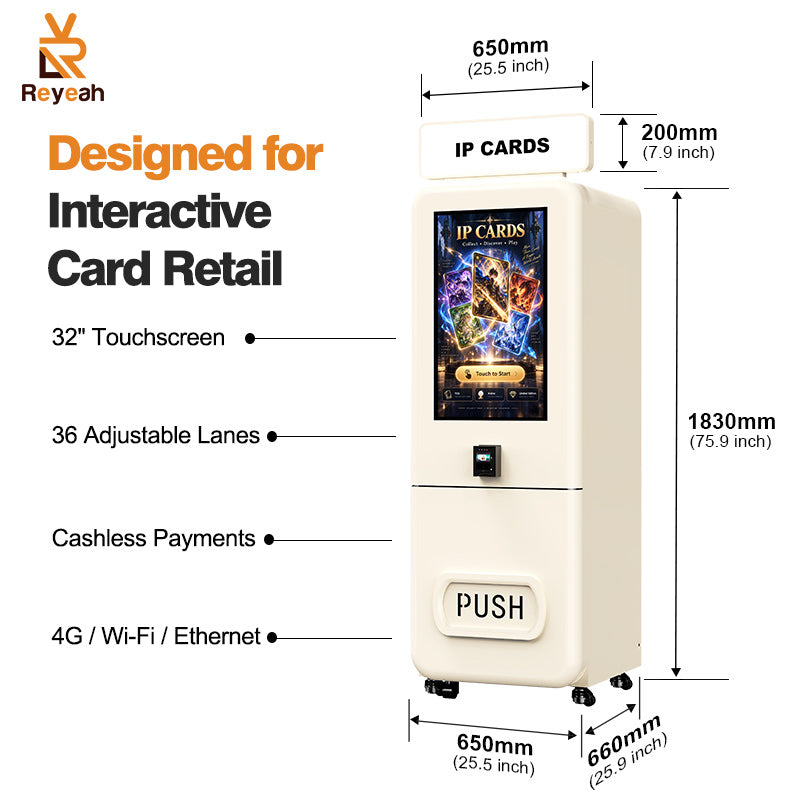
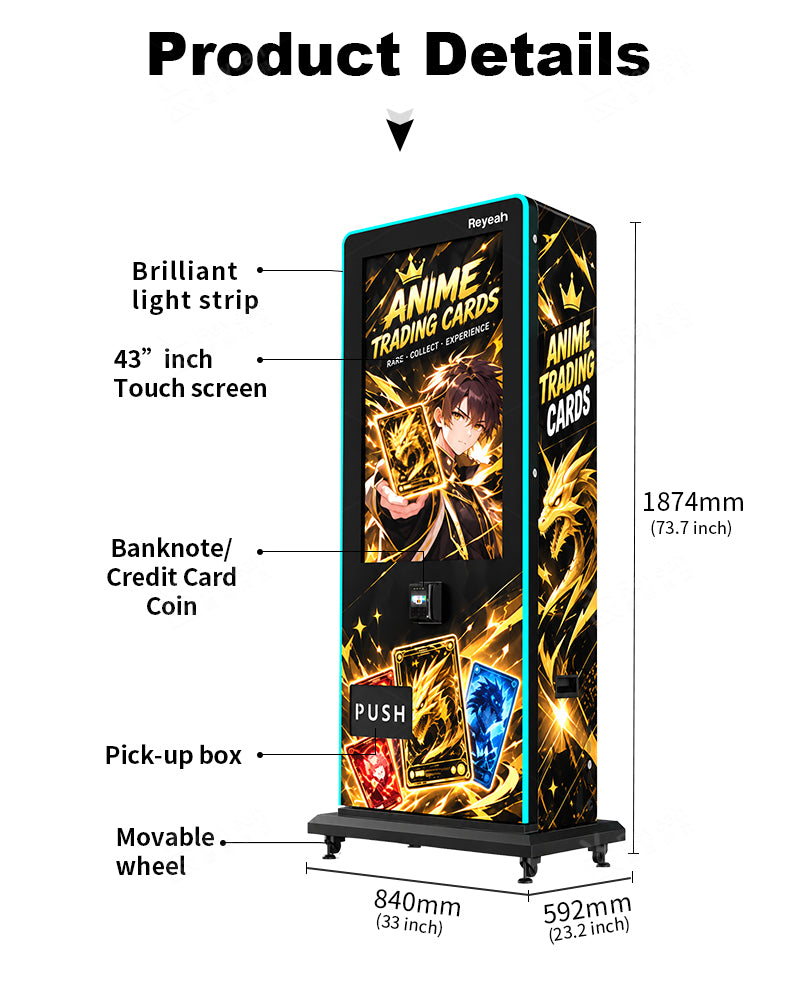
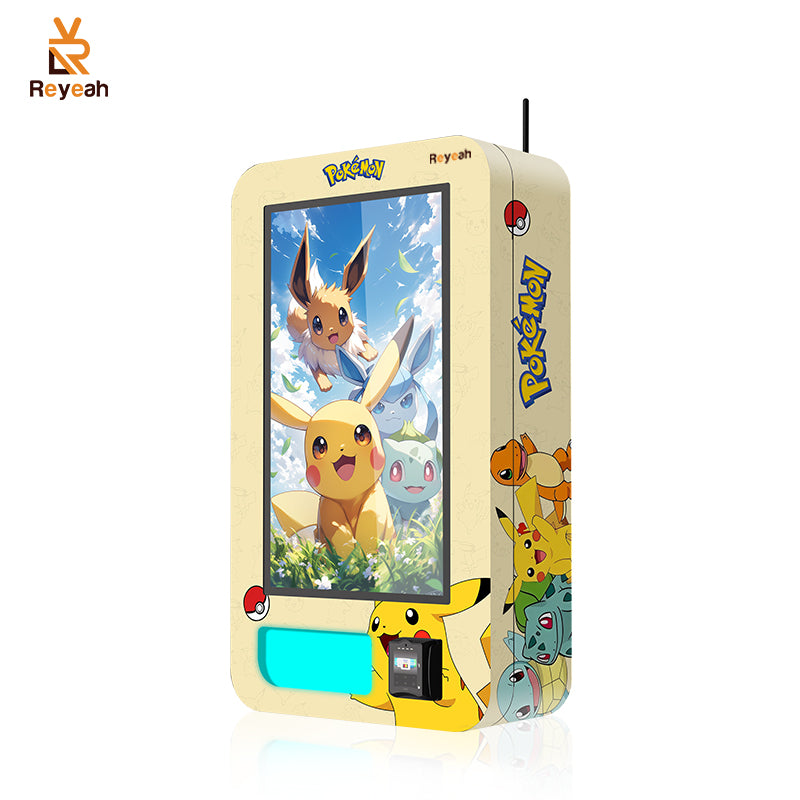
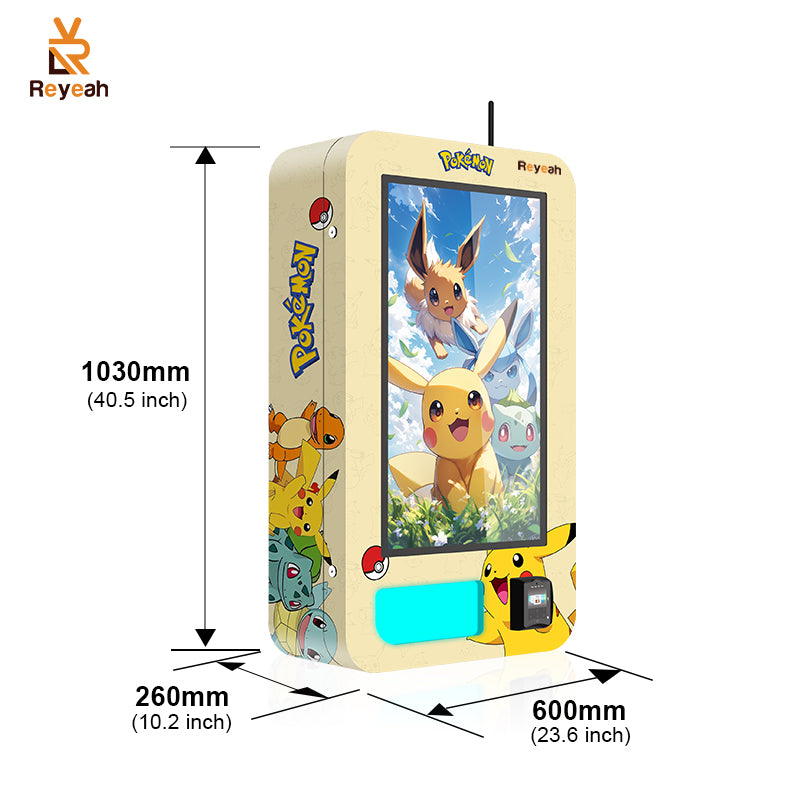
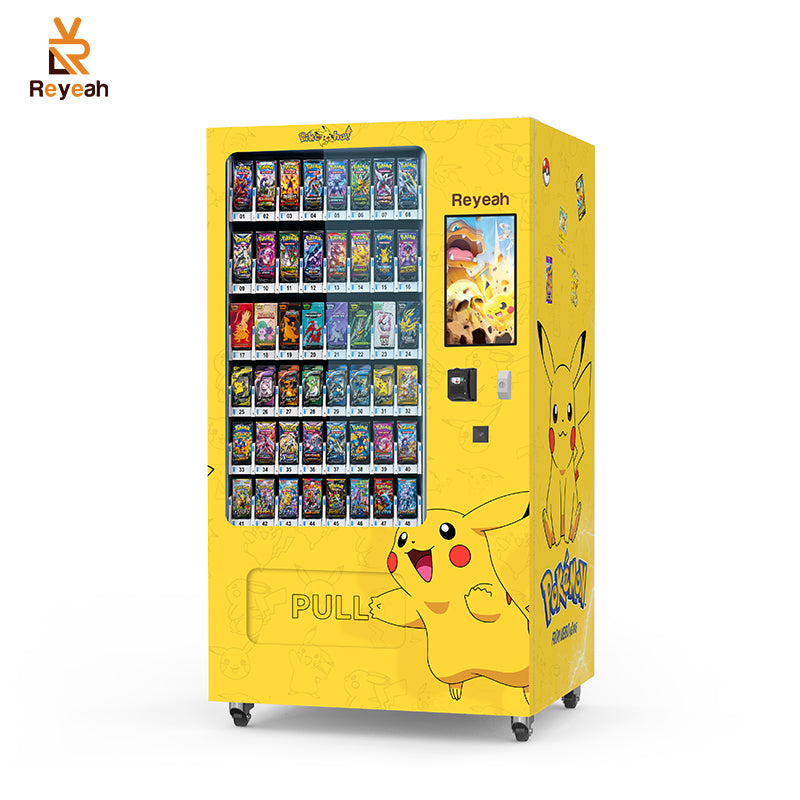
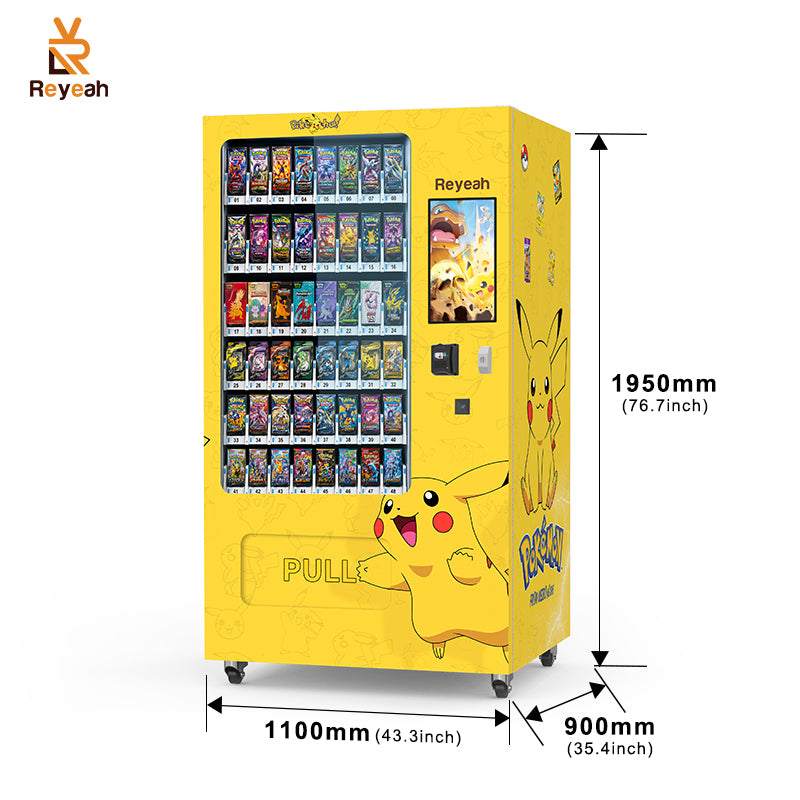
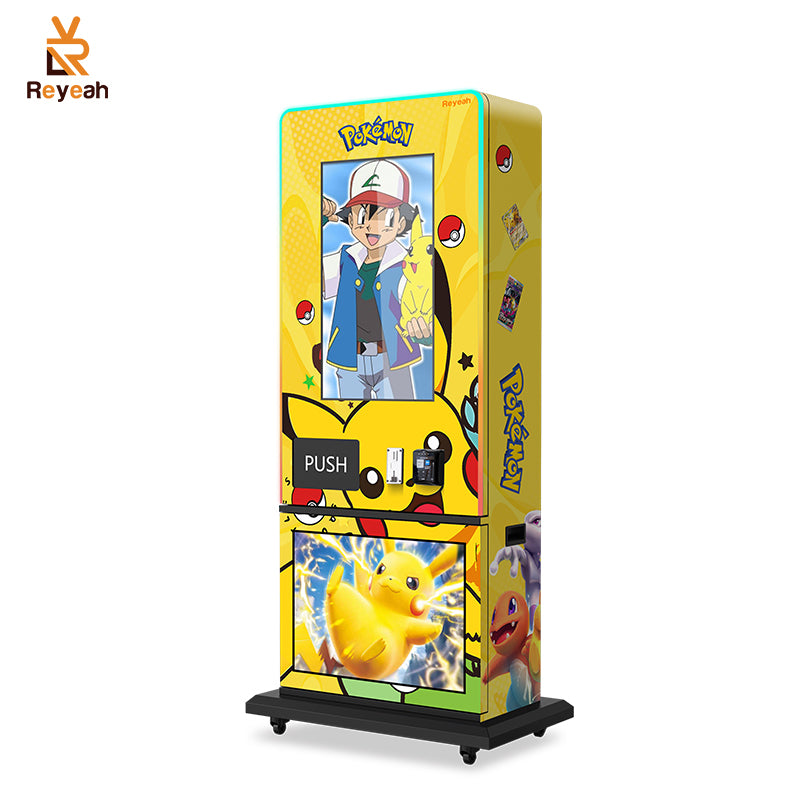
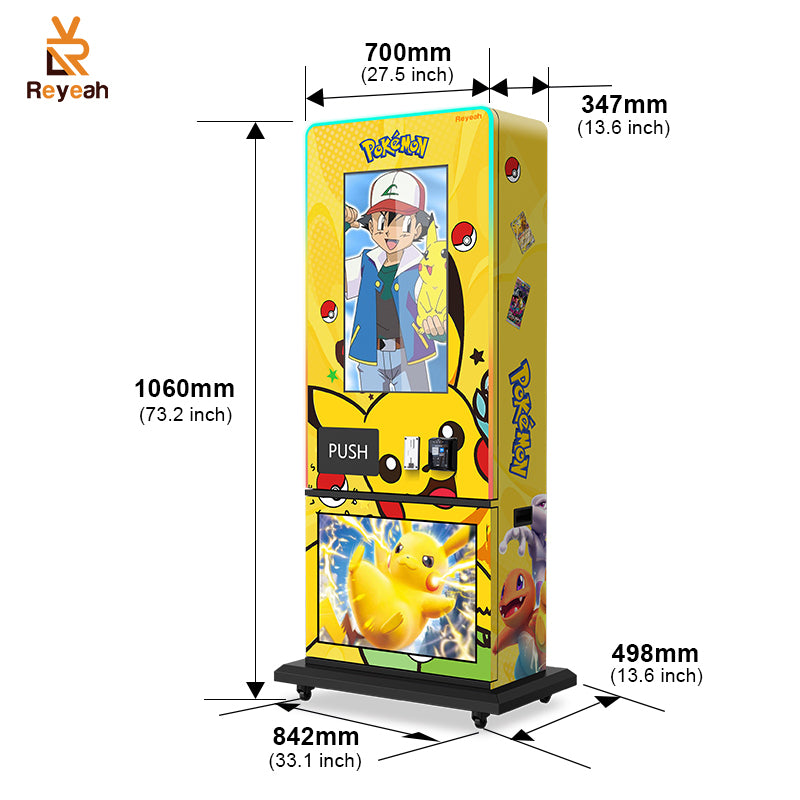
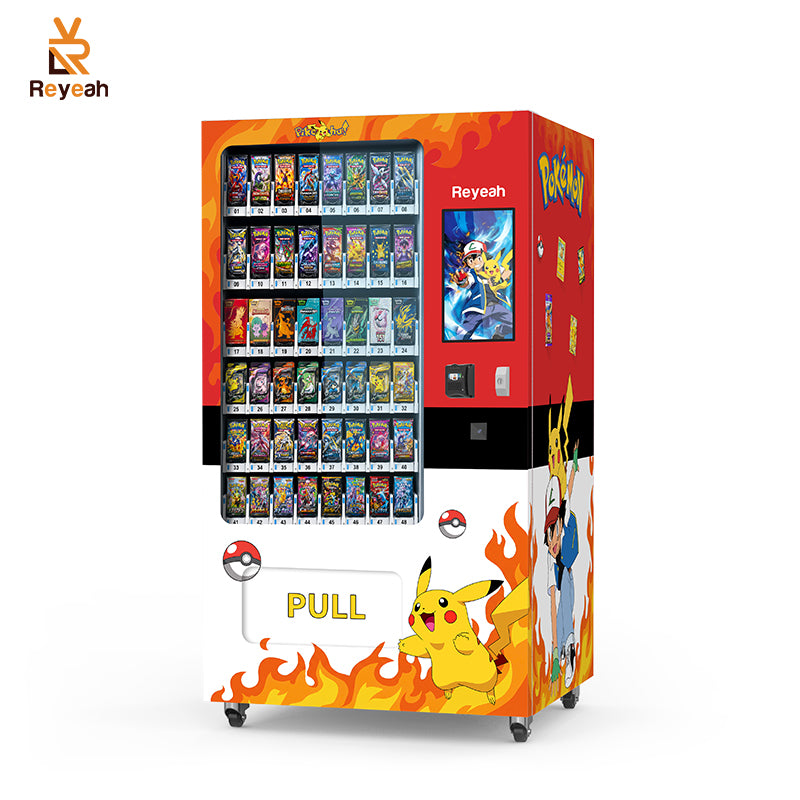
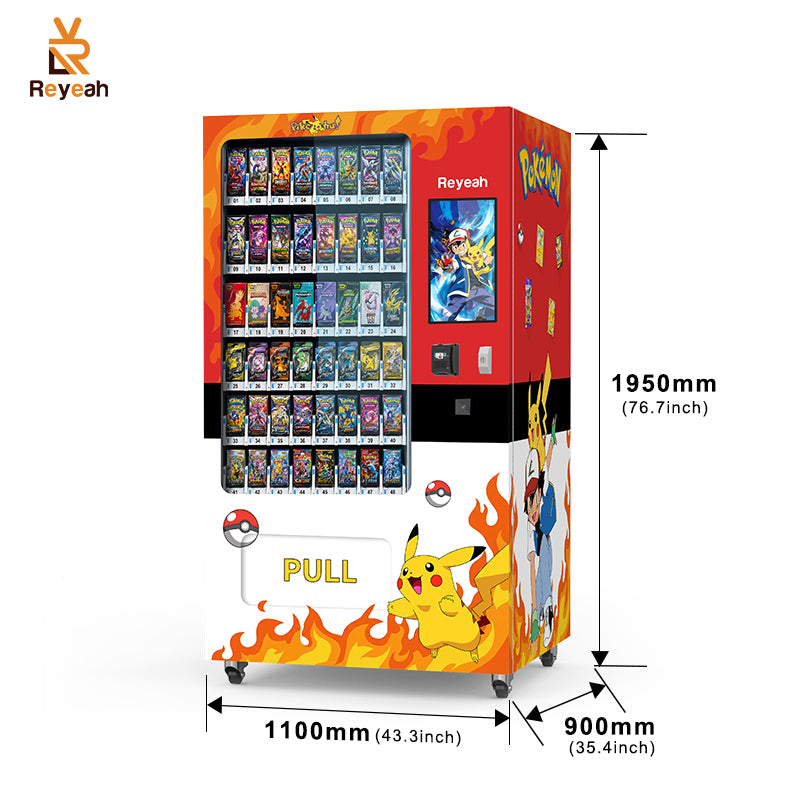
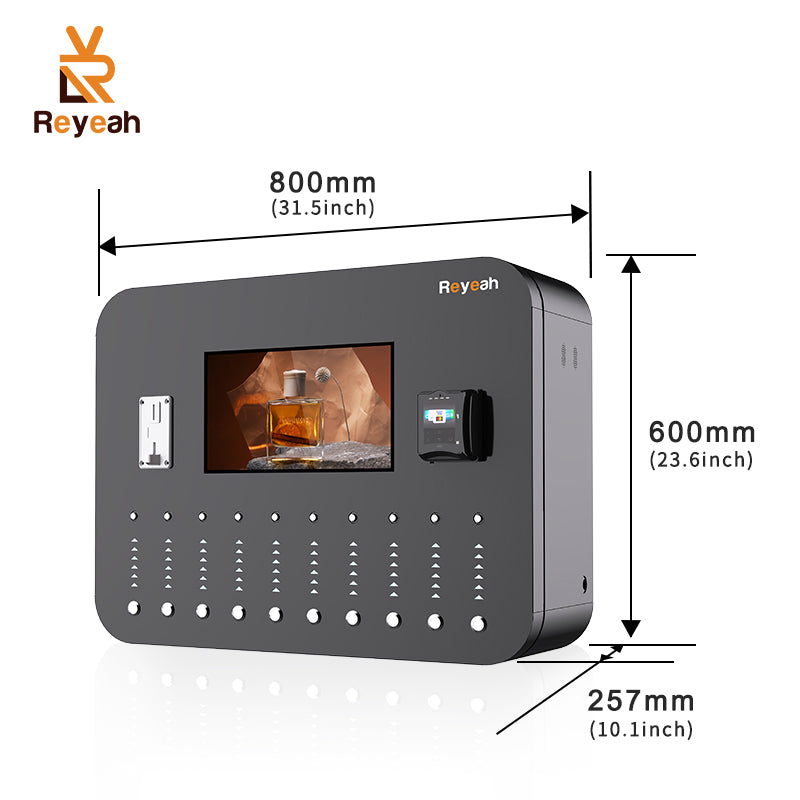
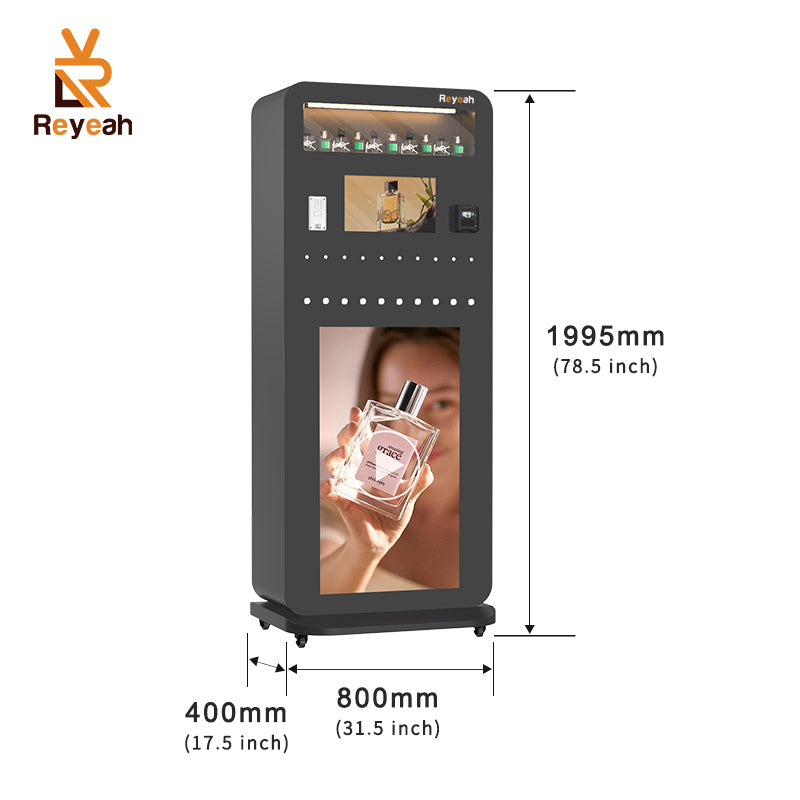
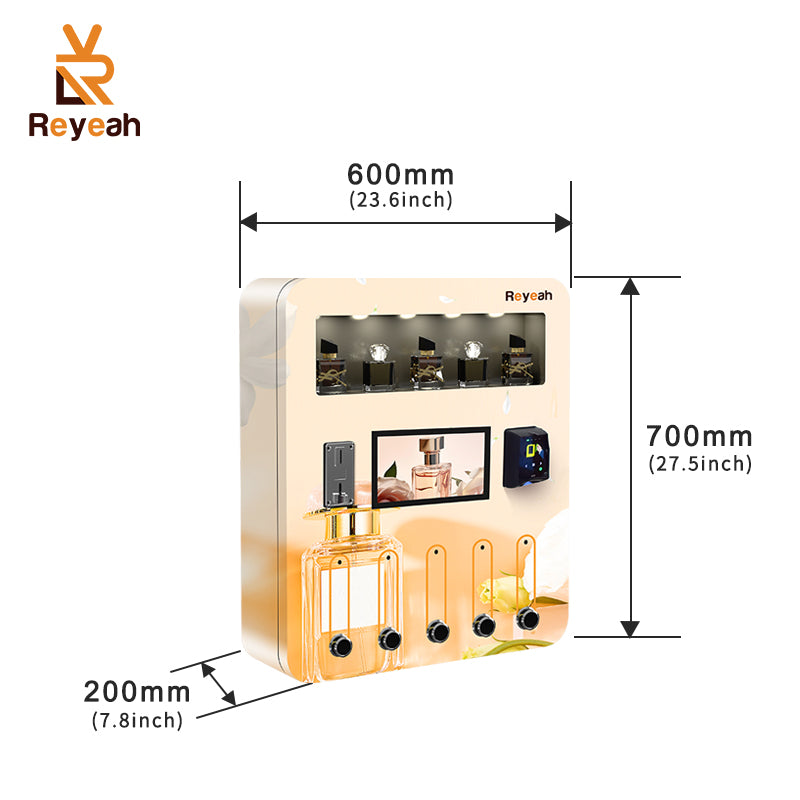
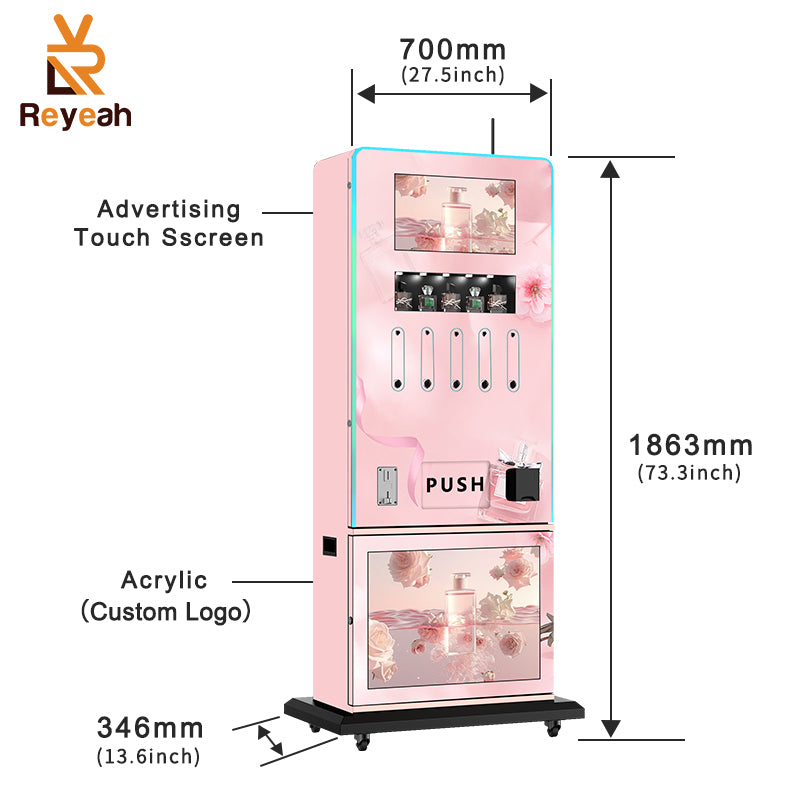
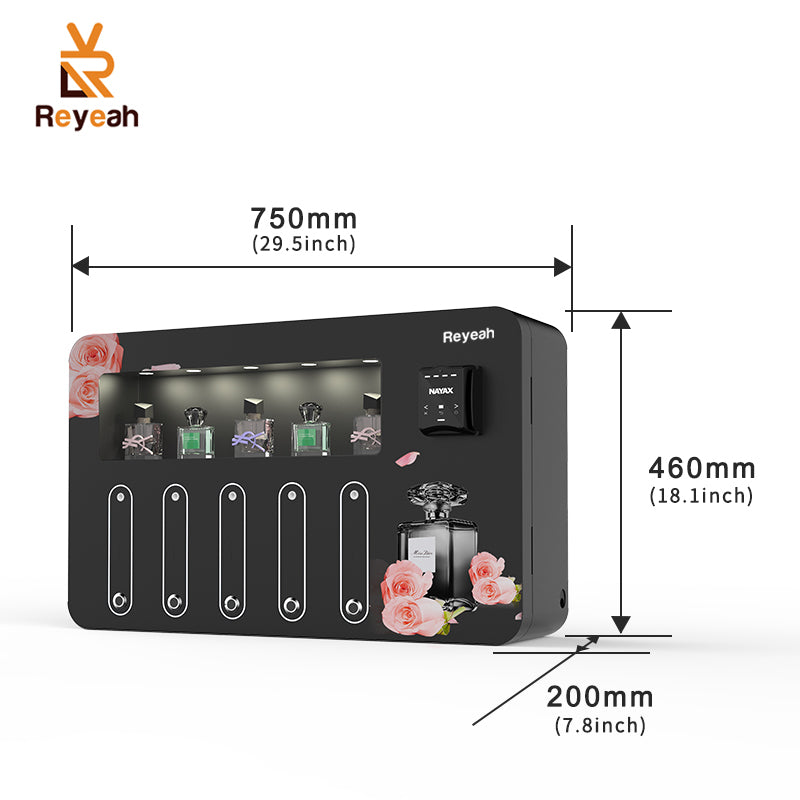
Reyeah manufactures TCG card vending machines in Guangzhou with more than 15 years in vending, 100,000+ machines produced a year, 300+ patents and a 50-engineer R&D team. The card range covers the formats buyers usually shortlist: a 36-lane 32-inch model (TCG-12) that merchandises booster packs, blisters, tins and graded slabs in one cabinet; a 24-channel 43-inch floor unit (TCG-11) for mall and hobby-shop sites; a 48-channel glass showcase (CUZ016) for high-footfall retail; and the wall-mounted G02 for venues with no floor space.
All of them integrate Nayax or Cantaloupe cashless terminals, multi-currency bill and coin acceptors, and 4G/Wi-Fi/Ethernet telemetry with remote pricing and content updates. Units ship with a one-year factory warranty and lifetime technical support, and OEM/ODM work covers tooling, artwork and UI rather than vinyl only.
If you are comparing suppliers, send the same eight-line specification list to every one of them and request a factory-direct quote against it. Comparable offers are the only way to see which supplier is cheap and which one is simply missing a line.
FAQ
Who are the best TCG card vending machine manufacturers in China? There is no credible ranking, only a shortlist that survives verification. Screen suppliers on four things: patents they own, a live video audit of the production line, a written specification with part numbers, and spare lanes available for the model you buy. Three suppliers that pass all four are worth more than twenty ranked by price.
Where can I find reliable Pokémon card vending machine suppliers? Start with referrals from operators in your own market, then vending trade shows, then direct factory websites. Marketplaces are useful for discovery and weak for verification — treat every listing as a lead, not a supplier, and run the same audit on all of them.
What is the minimum order for a commercial card vending machine? Standard configurations are frequently available as single units because production is build-to-order rather than batch. Custom tooling, printed wraps and unique lane geometry raise the minimum batch, and the exact number belongs on the proforma invoice rather than in a chat.
How long does production and shipping take? It depends on configuration and destination, and only the delivery date on the proforma invoice is binding. Ask for the date with a booking reference; a supplier who gives a date and then misses it has told you what after-sales will look like.
Can a Chinese manufacturer put my brand on the machine? Yes — full-body wraps, illuminated toppers, custom UI and packaging are standard OEM/ODM work. Artwork and tooling are one-off costs, so order them with the first batch instead of retrofitting them later.
Do I need a sourcing agent? Only if you are consolidating several suppliers or need import financing. An agent adds a margin and removes direct access to the factory; for a single-machine order, dealing with the manufacturer directly is usually faster and cheaper.