



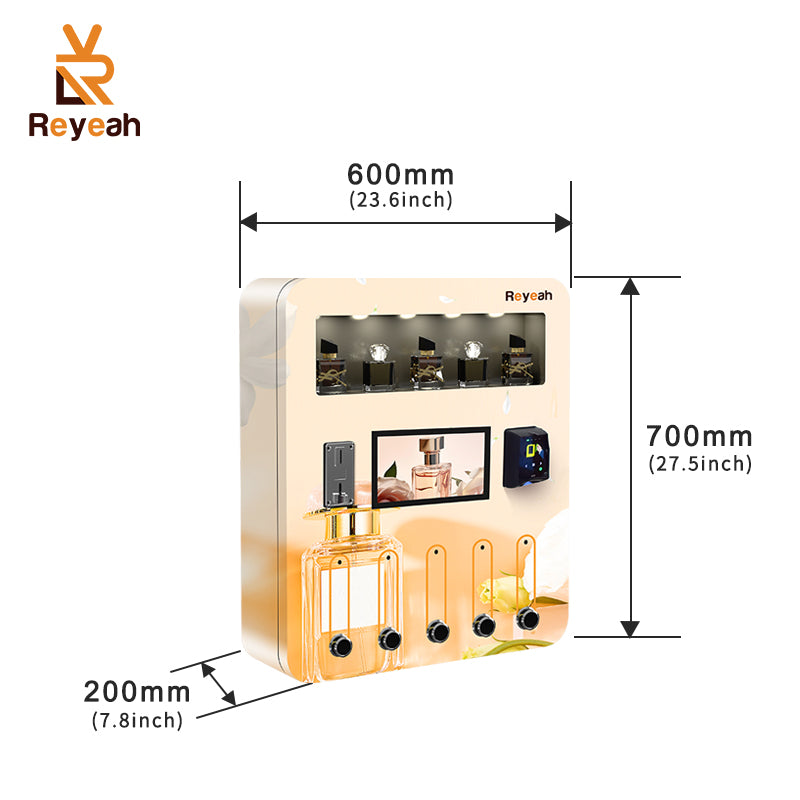

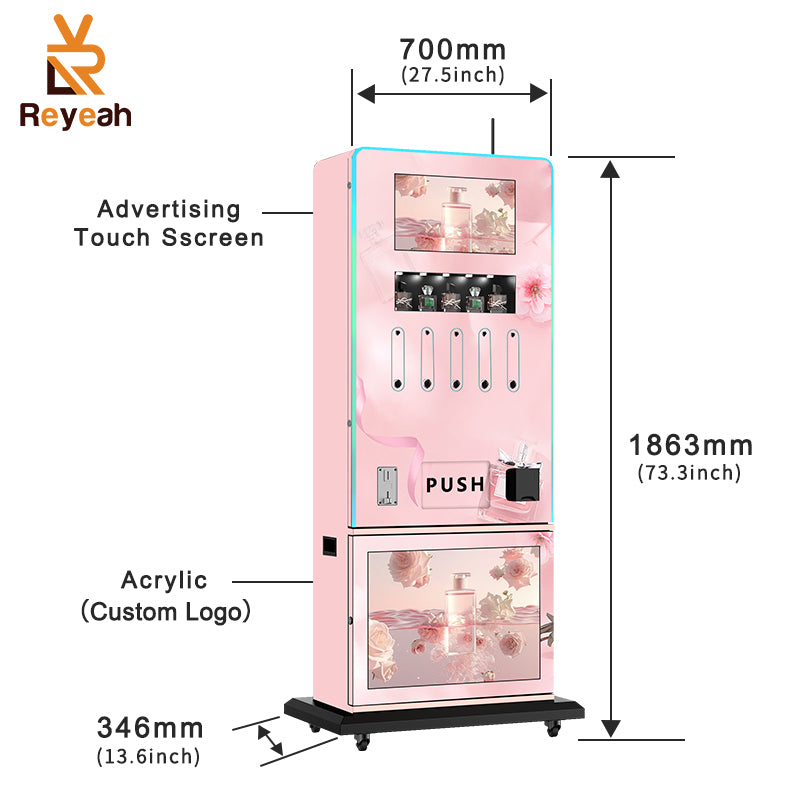

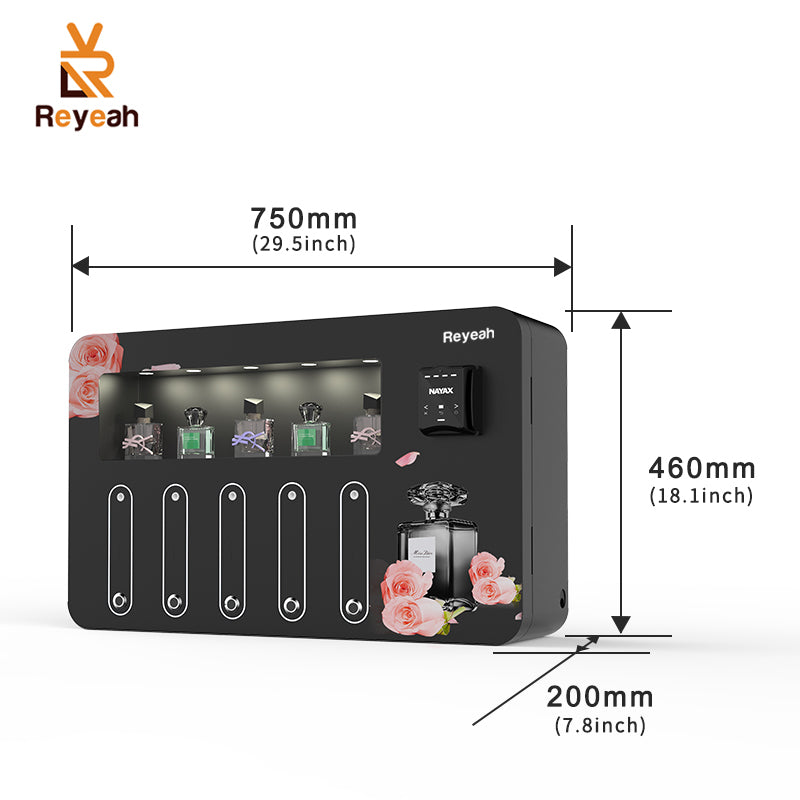

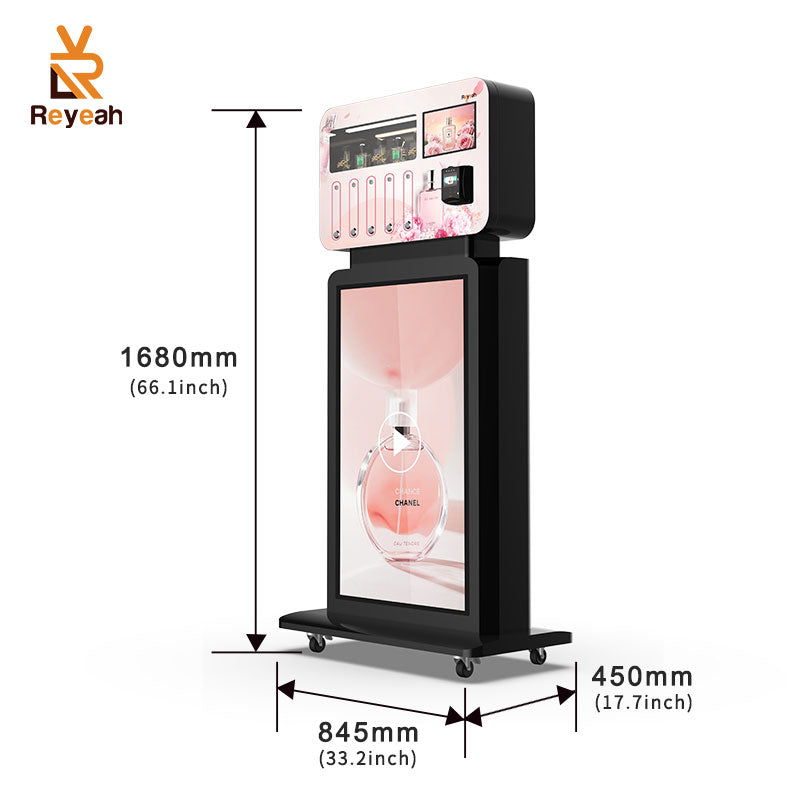
Three formats sell fragrance from a small footprint: a perfume vending machine, a scent kiosk with a member of staff, and a conventional perfume shop. They are usually compared on capital cost, which is the least useful number available. The difference that decides the outcome is cost structure — how much of your monthly spend is fixed whether or not anyone buys, and how many hours a day the format can trade without a person standing in it.
1. The three formats, defined
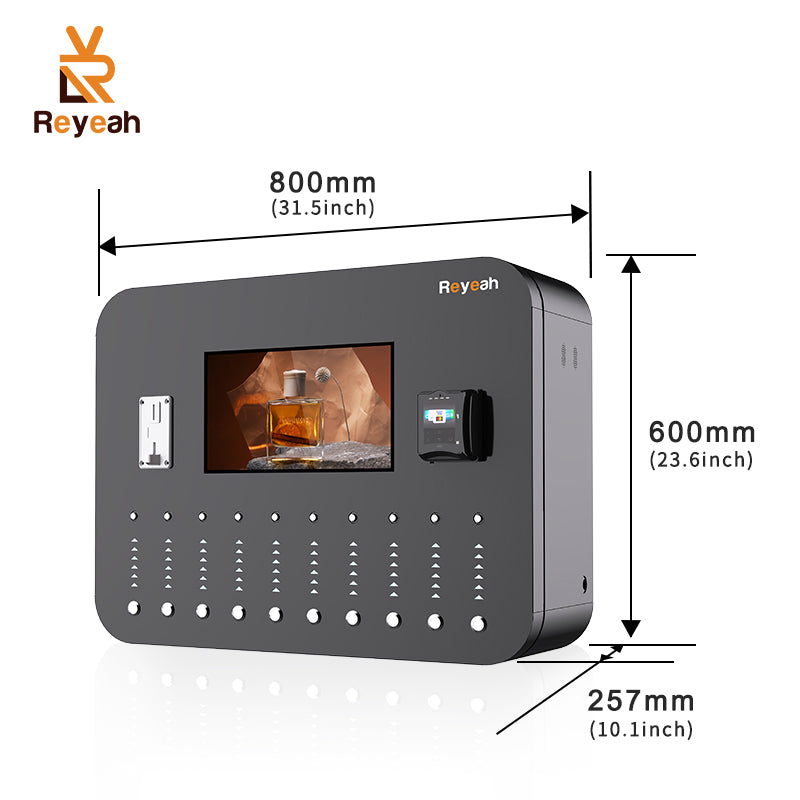
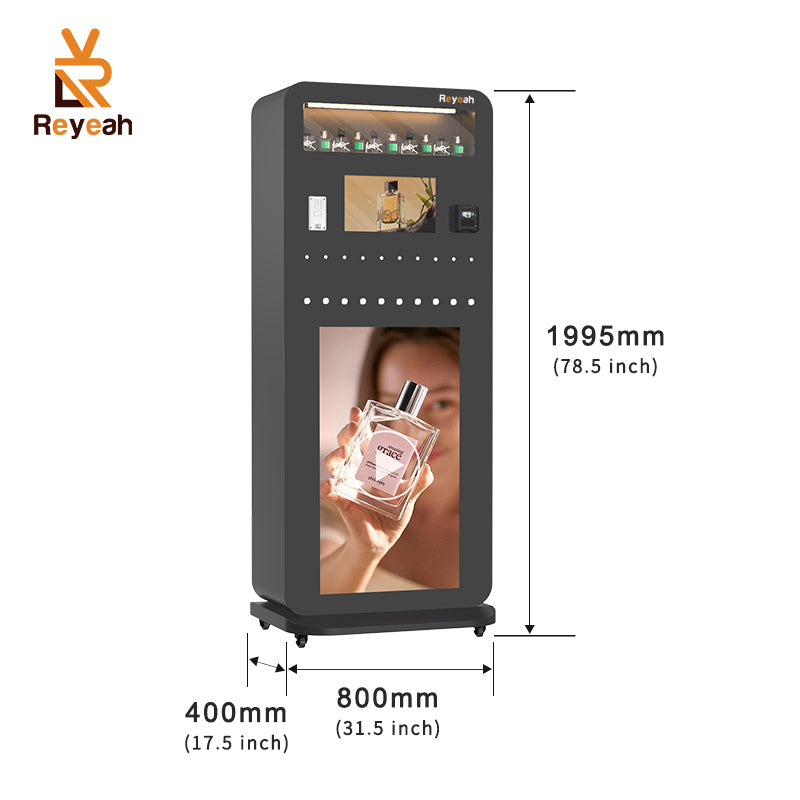
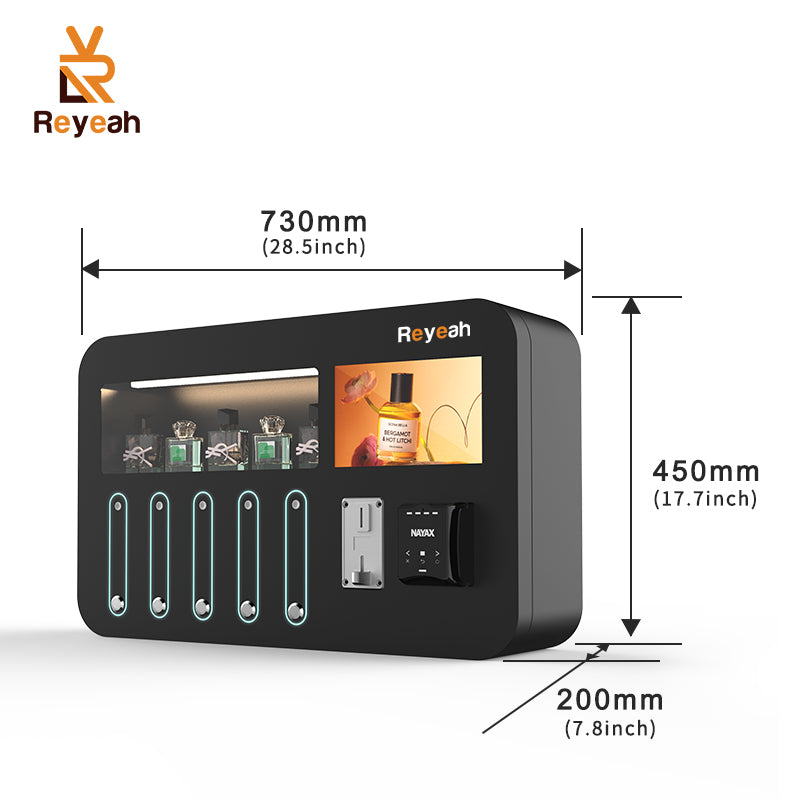
Perfume vending machine. Unattended unit, five to ten fragrance channels, fixed dose per vend, cashless payment, remote telemetry. Trades the venue's opening hours, needs a refill visit rather than a shift.
Scent kiosk. A staffed island in a mall or department store, typically 4–8 m², offering assisted sampling, gift wrapping and often full bottles. Sells experience and advice; carries payroll.
Perfume shop. A leased unit with fit-out, stock depth, staff, POS and usually a licence for a brand portfolio. Highest ceiling, highest fixed cost, longest commitment.
2. Cost structure, not capital cost
The useful comparison is monthly fixed cost against realistic revenue per square metre. The table below uses one set of explicit planning assumptions so the arithmetic is checkable — replace the assumptions with your own market's quotes before deciding anything.
| Line | Vending machine (1 m²) | Scent kiosk (6 m²) | Perfume shop (25 m²) |
|---|---|---|---|
| Capital before stock | Machine + freight + duty + spares | Counter, fixtures, lighting, signage | Fit-out, fixtures, POS, deposit |
| Monthly rent / commission | Low, often revenue share | Mid — mall island pricing | High — retail unit pricing |
| Payroll | None on site | 1–2 staff per shift | 2–3 staff across trading hours |
| Trading hours | Venue hours, no staff constraint | Mall hours, staffed | Mall hours, staffed |
| Time to open | Days to weeks | 4–10 weeks | 3–6 months |
| Exit cost | Move the machine | Break the licence, sell fixtures | Lease remainder plus fit-out write-off |
Worked example, using round assumptions: a machine site at $2,000 monthly all-in cost (rent, fragrance, payment fees, one refill visit) needs 1,258 sprays a month at $2.00 with a $1.59 contribution to break even — about 42 a day. That is a busy but ordinary hotel or mall site. A kiosk at $9,000 monthly all-in needs roughly 5,660 sprays, and a shop at $22,000 needs about 13,840. Every additional dollar of payroll moves those thresholds up, and payroll is the line that does not flex with a quiet week.
3. Revenue per square metre
A perfume vending machine is the only one of the three that can plausibly return more than its footprint costs, because it sells from a wall or a single square metre and it trades without staff. A kiosk earns more per site in absolute terms, but across six square metres and two salaries. A shop earns the most in absolute terms and the least per square metre in most secondary locations.
The comparison flips in exactly one situation: a premium mall where the venue will not permit a vending unit at all. In that case the kiosk is not a worse format, it is the only permitted format — and the machine belongs in the hotel or the pharmacy next door.
4. Which format fits which venue
| Venue | Best format | Why |
|---|---|---|
| Hotel lobby | Vending machine | Guest dwell, no space for staff, 24-hour trade |
| Mall concourse | Kiosk, with a machine as the low-cost test | Assisted sampling converts; rent per m² is high |
| Airport terminal | Vending machine | Staff cost per hour is prohibitive; wall space is the only space |
| Beauty salon or pharmacy | Vending machine | Too small for any staffed format |
| Street-front retail | Perfume shop | Window display and stock depth drive the category |
5. Break-even and payback
Payback is where the vending model separates from the other two. A machine's capital is small and its monthly fixed cost is close to variable, so a site that produces 20 sprays a day can pay the machine back inside a year at a $1.59 contribution — roughly $950 a month against a modest capital base. A kiosk or a shop needs months of trading, a staff roster and a stock position before it reaches the same point, and a slow first quarter is paid for out of pocket rather than absorbed by a low fixed cost.
Model it yourself rather than taking a rule of thumb: our cost and ROI calculator takes vends per day, dose, fragrance cost, price and commission, and returns contribution and payback.
6. The hybrid that most operators end up running
The formats are not exclusive. The strongest configuration is a vending machine inside or beside an existing fragrance business: a salon or boutique gets incremental sampling revenue from a wall it already pays for, and the machine's per-channel sales data tells the owner which scent to bring into full-bottle stock. The reverse also works — a machine as the low-cost proof of a venue before committing to a kiosk licence.
If you are adding a unit to an existing shop, choose a wall-mounted format so you do not give up selling space, and set the price below your in-store tester-to-purchase ladder so the machine samples rather than competes. Our comparison of 5 versus 10 nozzle machines is the relevant next decision.
FAQ
Is a perfume vending machine cheaper than opening a perfume shop? Both the capital and the monthly fixed cost are far lower, and the machine can trade without staff. The trade-off is range and assisted selling, which is why shops still win on street-front retail.
How much can a scent kiosk earn compared with a vending machine? A staffed kiosk can earn more per site in absolute terms, but it carries payroll, a longer licence process and a larger footprint. On revenue per square metre, the machine usually wins in secondary locations.
Do I need staff to run a perfume vending machine? No. You need a refill and cleaning visit, typically every few weeks per site depending on tank volume and vends per day.
What is the break-even volume for a vending site? At a $1.59 contribution per $2.00 spray and $2,000 of monthly all-in cost, about 1,258 sprays a month — roughly 42 a day. Lower-cost sites such as salons break even at a fraction of that.
Can a machine and a shop share the same venue? Yes, and it is a common setup. Place the machine where it does not compete with the counter, and price it as a sampling entry point rather than as a discount channel.
Conclusion
Compare formats on fixed cost and trading hours, not on capital. A vending machine wins wherever the venue has dwell time, no space for staff, and a rent that scales with sales; a kiosk wins where assisted sampling is the product; a shop wins where stock depth and window display are the draw. Reyeah supplies the machine side of that decision in wall-mounted and floor-standing configurations — browse the perfume vending machine range, size the site in the ROI calculator, or send us the venue and we will model it.